

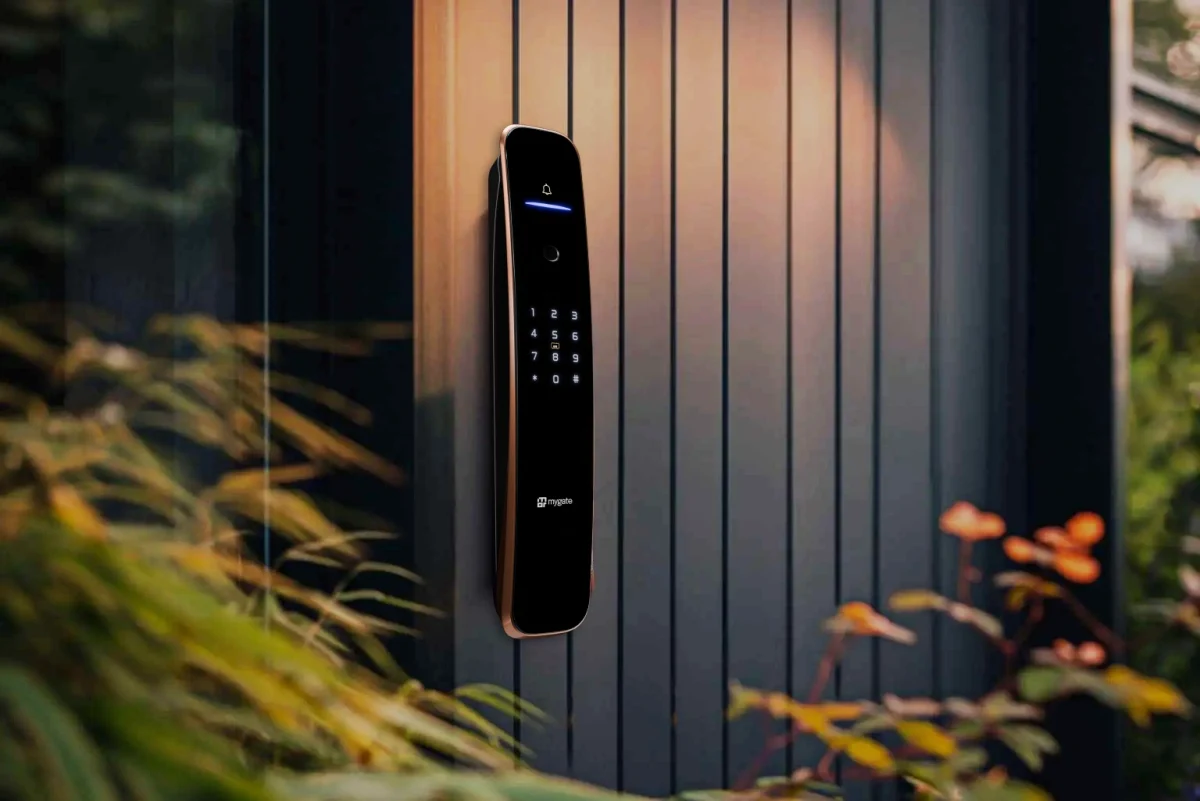
Smart locks are most often discussed in the context of gated apartment complexes, where a society’s existing security desk, CCTV coverage, and visitor logging already form a first layer of protection before anyone even reaches your front door. Independent houses and villas do not have that layer. Whoever reaches your main door is the first and often only checkpoint, which makes the choice of lock a meaningfully bigger decision than it might be for a flat inside a managed community.
This guide looks at smart locks specifically from the perspective of independent house and villa owners in India, covering what to look for, how installation and access differ from apartment settings, and the practical, everyday considerations that matter most when there is no shared building security to lean on. Several brands sell smart locks in India today, and Mygate is one of them, having built its lock range specifically around Indian household conditions rather than adapting a generic international product, which is worth keeping in mind as the priorities below are laid out.
Why is the calculus different for standalone homes?
In a gated society, a smart lock is one part of a layered security setup. There is usually a manned gate, a visitor log, sometimes CCTV coverage of common areas, and in many cases, an app that lets residents pre-approve guests before they even reach the building. The smart lock on the front door is the last step in a chain that already has several checkpoints before it.
An independent house or villa, particularly one that stands outside a managed gated layout, does not have this chain. The main door lock is effectively the first and last line of defense against unauthorized entry, which changes what actually matters most when choosing one. Features like tamper alerts and intrusion logs go from being a nice addition to genuinely important, since there is no other system quietly watching who approaches your door.
This also changes how you think about multiple entry points. Independent houses commonly have more than one usable entrance, a main door, sometimes a back or side door, and a gate at the property boundary, each of which is a potential access point that deserves its own consideration rather than assuming the main door alone covers the property.
What to prioritise when there is no society security layer
Reliable tamper detection
Since there is no watchman or CCTV network automatically covering your door, a lock that actively alerts you the moment someone attempts to force or manipulate it becomes one of the most important features, not an optional extra. This is the difference between finding out about an attempted break in after the fact and being notified while it is happening.
A dependable backup access method
Independent homes are more likely to have family members coming and going at different times, sometimes without a phone on hand, whether that is children returning from school, domestic help arriving for scheduled hours, or elderly family members who may not be comfortable relying on an app. A lock with multiple independent unlock methods, fingerprint, PIN, RFID card, and a physical mechanical key as ultimate backup, matters more here than in a setting where a security desk can also let someone in if the lock has an issue.
Strong battery backup
Power interruptions remain common across much of India, and in an independent house, there is no building generator or shared backup power system to fall back on the way there sometimes is in larger managed complexes. A lock with genuinely long lasting battery life, along with a clear low battery warning well before it actually runs out, is a more critical requirement for standalone homes than it might be in a setting with more infrastructure redundancy around it. This is a specific area Mygate has designed for directly, building its locks with extended battery backup precisely because power cuts are still a regular part of daily life in many parts of the country.
Weather and build durability
Independent houses and villas often have doors directly exposed to the elements, whether that is a front door facing direct sun and rain, or a lock mounted on an external gate rather than a covered building entrance. Locks built and tested specifically for Indian climate conditions, handling heat, humidity, and monsoon exposure without degrading, matter more here than for a lock mounted inside a covered apartment corridor. Mygate’s smart locks, for instance, are built around this exact requirement, with hardware and locking mechanisms selected to hold up under frequent daily use and typical Indian weather rather than being adapted from a design meant for a different climate.
Covering multiple entry points
Unlike a flat with a single front door, independent houses and villas frequently have more than one point that needs securing. Thinking through this properly before installation avoids leaving an obvious gap.
The main door is the obvious starting point and usually where the most feature rich lock makes sense, since it sees the most daily traffic and is the primary entry residents and guests use. A back or side door, common in many independent house layouts, is often overlooked but represents a real vulnerability if left on a traditional lock while the front door gets all the attention. A boundary gate, where the property has one, is worth considering separately, since a smart lock on the gate combined with one on the main door creates two independent layers rather than relying on a single point of failure.
Not every property needs a smart lock on every single entry point immediately, but it is worth deliberately deciding which doors matter most rather than defaulting to only the main entrance simply because that is the most visible and most commonly discussed use case.
Managing household help and family access
Independent houses and villas commonly involve a wider circle of regular visitors than a typical flat, domestic help, gardeners, drivers, and sometimes extended family who come and go on a predictable schedule. This is an area where smart locks offer a genuinely practical improvement over a traditional key.
Recurring timed access allows household staff to be given entry only during their specific working hours, rather than holding a permanent key that works at any time, including outside the hours they are actually expected on the property. OTP based access is useful for one off situations, a delivery, a repair visit, or a guest arriving while the homeowner is away, letting a temporary code be generated and shared without creating a permanent credential.
For families with multiple members, registering individual fingerprints or separate PINs for each person, rather than sharing one universal code, also creates a clearer record of who actually entered the house and when, which becomes genuinely useful if a security question ever comes up.
Installation considerations specific to independent homes
Independent houses often have more variation in door type and construction than the relatively standardised doors found in many apartment complexes, which is worth accounting for before installation.
Wooden doors, common on many independent house main entrances, generally support smart lock installation without major issues, though the door’s thickness and existing hardware cutout should be checked against the specific lock model’s requirements. Metal or grille gates, often used as an additional boundary layer in independent homes and villas, may need a different lock type suited to that specific structure rather than assuming the same model used on the main door will fit.
Professional installation support, where available, is worth using rather than attempting a DIY fit, particularly for a first time smart lock installation, since incorrect fitting can affect both the lock’s performance and its ability to properly engage the backup mechanical key when needed.
Should you start with just a lock, or a broader smart home setup
For independent houses and villas specifically, it is worth thinking about whether a smart lock should be the only investment, or the first piece of a slightly broader home security setup.
A standalone smart lock on its own meaningfully improves access control and gives you visibility into who enters and when. Pairing it with a video doorbell or an entry point camera adds a visual layer that a lock alone cannot provide, letting you see who is at the door before anyone unlocks it, which is particularly useful for a property without any existing gate level surveillance. This is not a requirement, and a smart lock functions completely independently without additional hardware, but for a standalone home taking on the full responsibility of its own security, it is a reasonable next step to consider once the lock itself is in place.
Common concerns independent house owners raise
A few questions come up repeatedly among independent house and villa owners specifically considering a smart lock, distinct from what typically comes up in apartment settings.
What happens during an extended power outage. A quality smart lock is built with battery life measured in months of typical use, not days, and the mechanical key backup ensures access is never fully dependent on the electronics regardless of how long an outage lasts.
Can the lock be forced open more easily than a traditional deadbolt. Reputable smart locks are built with security certifications and physical hardware comparable to or exceeding standard mechanical locks, with the electronic components adding detection and alerting capability rather than replacing physical security with something weaker.
What if the property has poor internet or WiFi coverage. Locks with WiFi and Bluetooth hybrid connectivity can generally still be operated locally through fingerprint, PIN, or card access even without a live internet connection, with remote features like app based unlock requiring connectivity only when that specific function is used.
Is a smart lock worth it if the property already has a security guard or watchman. Yes, since a lock secures the specific entry point itself, which a guard patrolling the property boundary does not directly control. The two serve complementary rather than overlapping roles.
Where a brand like Mygate fits into this
Given the priorities laid out above, tamper detection, multiple independent unlock methods, strong battery backup, and durability suited to Indian conditions, it is worth looking at how a specific option like Mygate stacks up, since it is one of the more widely used smart lock brands in the Indian residential market.
Mygate smart locks combine fingerprint, PIN, RFID card, OTP, and mechanical key access in one unit, along with WiFi and Bluetooth hybrid connectivity, so the lock functions locally even without a live internet connection and adds remote features when connectivity is available. Tamper alerts and intrusion logs are built in, which directly addresses the standalone security concern independent house owners face without a society level monitoring layer. Installation support is available so the lock is properly fitted for the specific door and gate types common on independent houses and villas, rather than leaving fitting entirely to self installation.
None of this means Mygate is automatically the right choice for every property, and it is worth comparing specific models against your own door types, number of entry points, and budget before deciding. But for a homeowner using the priorities in this guide as a checklist, Mygate is a reasonable starting point to evaluate directly against those criteria, since it was built with this specific use case, independent homes without a shared building security layer, already in mind.
A practical checklist before buying
Before choosing a specific smart lock for an independent house or villa, it helps to work through a short list of practical questions. How many entry points actually need securing, not just the main door. Does the property experience frequent power cuts, and if so, how long does the lock’s battery realistically last under regular use. Are there household staff or family members who need scheduled or temporary access rather than permanent credentials. Is the door material and thickness compatible with the specific lock model being considered. And is professional installation support available in your area, rather than relying entirely on self installation for a first time setup.
Working through these questions before purchasing tends to prevent the most common regret independent house owners report, buying a lock suited primarily for apartment use and only realising after installation that it does not fully address the specific access and security needs of a standalone property.
FAQs
Are smart locks suitable for independent houses, not just apartments?
Yes. Smart locks work the same way on independent house doors as they do on apartment doors, and in many cases matter more for standalone homes since there is no shared building security layer already in place.
Do smart locks work well in villas within gated layouts?
Yes. Villas function the same as independent houses from an installation and access standpoint, and if the villa community has its own broader security platform, many smart locks can also integrate with that system for added convenience.
What happens if there is a power cut at an independent house with a smart lock installed?
Quality smart locks include long lasting battery backup along with a mechanical key as an ultimate fallback, so access is never entirely dependent on continuous power.
How many smart locks does an independent house typically need?
This depends on the number of entry points that need securing, commonly the main door and sometimes a back door or boundary gate, rather than assuming a single lock on the front door covers every access point.
Can household staff be given limited access hours with a smart lock?
Yes. Recurring timed access allows staff such as domestic help or drivers to be granted entry only during their specific working hours, rather than holding a permanent key or code.
Is a smart lock still useful if an independent house already has a watchman or guard?
Yes. A guard covers the property boundary, while a smart lock secures the specific entry point itself, and the two work as complementary layers rather than duplicating each other.
Is Mygate a good option for independent houses and villas specifically?
Mygate builds its smart locks around Indian household conditions, including battery backup for frequent power cuts and hardware suited to varied climate exposure, along with fingerprint, PIN, RFID, OTP, and key access in one unit. It is worth evaluating against the priorities in this guide alongside other brands before deciding.
Conclusion
Independent houses and villas face a genuinely different security context than apartments inside a managed society, since there is no existing gate level checkpoint or shared surveillance layer to rely on. This makes features like tamper detection, reliable battery backup, weather resistant build quality, and flexible access management for household staff more important considerations than they might be in a flat. Thinking through entry points, household access needs, and installation requirements specific to a standalone property, rather than assuming an apartment focused approach applies equally, leads to a setup that actually matches how independent homes are used day to day.