

Electric vehicles have become increasingly popular in the wake of heightened environmental awareness and government push to the adoption and penetration of EVs under the FAME scheme (Faster Adoption and Manufacturing of Hybrid and EV) launched in 2015. Customers are gradually waking up to the many benefits of EVs, such as zero emissions, less maintenance, and lower running costs. However, currently, there are several roadblocks to making the FAME mission a success owing to several reasons. Longer recharge times, unavailability of adequate infrastructure for charging stations, limited range due to low capacity batteries are a few of the main problems that the corporate and government sectors are trying to resolve.
Electric vehicles (EV) sale in India is projected to grow at 43.13% from 2019 to 2030 while the charging infrastructure (CI) is forecast to grow at a CAGR of 42.38% in the coming years, according to research. With more and more EVs plying the road and residents purchasing them in more numbers in cities, housing societies have to make way for charging infrastructure.
In 2019, the Ministry of Housing and Urban Affairs released a directive for alloting parking space for electric vehicles in residential and commercial areas.
According to the new policy, a minimum “20% of all vehicle holding capacity/parking capacity” at the premise is required to be reserved for EVs in residential and commercial buildings. Guidelines with respect to the amendment to Model Building Bye-Laws state that, “Additionally, the building premise will have to have an additional power load, equivalent to the power required for all charging points (in a Public Charging Station) to be operated simultaneously, with a safety factor of 1.25.”
What this means for a housing society is that they will have to take stock of their current parking situation and make room for electric vehicles while also making arrangements for infrastructure to bear additional power load in the premises. Individuals with EVs must have a domestic meter with slow chargers that are required as per the EV. The mode of charging is a single charging gun.
However, power load sanction within the premises, according to the bye-laws, state that, “load capacity assigned to each premise should be kept with a safety factor of 1.25 with a long-term vision of 30 years.”
The guidelines further give specifications for private charging as well, which is AC slow charging for private buildings and grounds as opposed to DC fast charging for public charging outside of residential premises. The ownership of the charging station is private, to be paid by the member, i.e. charging infrastructure installed by a homeowner is meant for self-use (non-commercial basis). In the context of slow charging, it further explains, “The home private chargers are generally used with 230V/15A single-phase plug which can deliver a maximum of up to about 2.5KW of power. The Electric Vehicle Supply Equipment (EVSE) supplies AC current to the vehicle’s onboard charger which in turn converts the AC power to DC allowing the battery to be charged.”
EV owners should also ensure that the socket to charge the vehicle should be connected to their meter. It’s not necessary that the charging socket should be installed only in close proximity to the meter room. It could be installed near the EV parking space and the wall can be insulated for safety. Open parking spaces can also have charging points on a nearby wall or pillar (or any mounting structure) with connected wires on the ground, but they should be secured firmly in a way that they’re not damaged.
The government also suggests that the cost of power consumed by the individual charging unit connected to the metering system should be included in the resident’s monthly maintenance bill. Buildings are also responsible for accommodating open metering so that visitors can charge their EVs. Spot payment options should be made available under such circumstances.
Societies should approach a reliable EV charging solutions agency for installing charging units in the premises as going DIY with uncertified service staff might cause maintenance and operational issues in the future.
In Phase II of the FAME scheme, the government has already approved 2636 charging stations in 62 cities; residential societies in these cities will find it easy to hire vendors that can provide end-to-end solutions to installing the infrastructure.
The coronavirus may have caused massive disruption around the world in different ways, but it has brought about one uniform change in the life of a professional – the remote working scenario. As people adapt to the new normal of work from home, many new challenges have hijacked productivity and output. Some of these hiccups are lack of team spirit, depression, lack of focus, and the ability to cope with remote working isolation. Redesigning our home space and dedicating a part of it as a long-term workspace is not only vital but also quite fun if you use your imagination.
Table of contents
1. Minimal, clutter-free style
2. A dash of color in monochrome
3. Functional, practical office furniture
4. Out in the open
5. Wall art, vision boards, and organizers
6. Clean, fresh, bright patterns and abundant lights
7. The executive desk
8. The active office space
Let’s explore some interesting design ideas to liven up your home workplace with zest and positivity.
Minimal, clutter-free style
The new work from home mandate requires the rewiring of the brain to orient it towards a slower pace of working due to lack of the usual office environment. Naturally, the more cluttered and congested your home office, the more distracted and unproductive your work hours. Try the Japanese Tea Room styling to create a minimal, neat, and tidy look or divide the home office into two separate zones with a simple desk on one side and a bean bag or a chaise/barcalounger on one side on a plain rug with a small houseplant in the corner. Marie Kondo it with getting rid of that which doesn’t spark joy and peaceful ambience.
A dash of color in monochrome
Not all home offices have to be dreary and boring. Paint your space in subtle beige, grey, or pale white and let some bright and bold colours burst into the decor in the form of colourful lampshades, curtains, cushions, and chic hippy patchwork chairs or grunge themed ottomans.
Color therapy has been known to aid in increasing awareness, reducing stress, bringing focus, calmness, and healing.
Functional, practical office furniture
Protection against viruses can be a new theme in the way you design your home office now that you’re in the long haul. Check out Isku+, the antimicrobial furniture collection. If that’s out of your budget, get good quality anti-bacterial wipes and surface cleaners. Get some copper-covered table and furniture instead of steel, plastic, and glass, the materials on which the coronavirus lives the longest. If your work requires you to have physical meetings at home office, build a customised table to accommodate disinfectant supplies and place a foot-operated sanitizer operator at the office door.
Out in the open
Sitting all day long within four walls can be a little intense sometimes. Make an alternate portable office set-up and extend your workplace to your backyard, patio, verandah, or the balcony while maintaining thematic consistency into the two spaces such as potted plants/flowers, a curtained enclosure with similar office desks, same lighting, so that your work face and work mode is still on whether inside or outside. Incorporating natural elements, greenery, and open-air in your workspace is a luxury more people can afford now.
Wall art, vision boards, and organizers
Instill in your home office some spirited enthusiasm with funky wall art, illustrations, posters, and even motivational quotes that get your work mojo going. Adding a little zing to your workplace with loud and boisterous themes, attractive wall organizers, and sleek and contemporary art/furniture will make you feel inspired to get to work as soon as you step into your home office.
Clean, fresh, bright patterns and abundant lights
If you want a totally non-intrusive workspace environment with realistic office feels, cover the home office surfaces and walks in symmetrical or geometrically diverse patterns/wallpapers with plenty of ceiling light, wall lights, and high-end work desk and chair. Simulating actual office decor at home will prepare you to be productive throughout the day due to the psychological association.
The executive desk
Who hasn’t wanted one of those shiny, big CEO desks that ooze confidence, purpose, and authority? Make yourself the boss of your day every day while getting work done on a classy, wooden-finished desk with magnificent drawers and cabinets for storage and multi-purpose uses. You’d even have enough surface space to fit in an elegant table lamp, photo frames, book-ends, bobbleheads, figurines, and other personal memorabilia. It’ll be like the desk you have at the actual office, but only bigger and better.
The active office space
Turn your office into a part-time yoga studio and a mini gym if you’re weary of sitting down all day long and want to keep the momentum going with some light stretching and treadmill turns every couple of hours through the day. It’ll keep the lethargy away and keep you overall healthy, agile, and full of energy.
And these are just a few ideas to start with. Add your personal touch, signature themes, and original ideas to make your home office even more attractive and stimulating for remote working.
About MyGate
MyGate is India’s largest gated community management app, benefiting thousands of housing societies, developers, society facility managers, and millions of homeowners in every Indian city.
Disclaimer: Thank you for visiting our site. The information provided by MyGate (“we,” “us” or “our”) on https://www.mygate.com (the “Site”) is for general informational purposes only. We strive to provide our readers with accurate information that helps learn more about the topics. It is not intended as a substitute for professional advice. We do not accept responsibility for the accuracy of information sourced from an external entity or take personal/ legal responsibility for your use of this information.
 Get Details on WhatsApp
Get offer details for your society
COVID
Going green seems hard at first because it requires a fundamental change in consumer, behaviors and regimented habits from decades. But one step at a time towards sustainability can go a long way in contributing towards a greener community and healthy lifestyle.
Presenting 10 green living tips with ideas to get you started on your journey towards creating a positive environmental impact.
1. Avoid single-use plastic and disposables
Cut down on products that have use-and-throw plastic wrapping, including candies, colas, chips, and PET bottles of water. Replace disposable products with reusable ones, e.g. napkins with tissues, plastic bottles with refillable jars, glass/clay cups with styrofoam cups, small grocery pouches with bulk purchases, plastic bags with jute/cotton bags, ziplock bags with Tupperware containers, and more.
2. Save electricity
Install solar panels and smart meters to consume less electricity. Other measures to consider are:
- turning off the power strip connected to electrical appliances
- using CFL instead of regular light bulbs
- use natural light throughout the day
- buy energy-efficient appliances
- take the stairs as often as possible
3. Conserve water
Take shorter showers and install low-flow faucets and toilet fixtures. Water can also be conserved by:
- Greywater reuse
- Using washing machines/dishwashers when fully loaded
- Using watering cans instead of the hose
- Installing dual-flush toilets
- Practicing rainwater harvesting
- Use native plants while gardening
4. Watch what you eat
- Instead of buying processed food and genetically modified items, go natural with organic fruits, vegetables, and herbs.
- Say no to junk food and sugary, oily snacks
- Eat fresh food and avoid food leftovers unless perfectly preserved for nutrients to stay intact
- Consume at least 400 grams of fruits/vegetables per day
- Learn about/consume food sources rich in minerals and vitamins instead of food supplements.
5. Shop sensibly
Buy what you need, don’t unnecessarily hoard.
- Buy items wrapped in recyclable paper/cardboard, cloth, jute, natural fabrics, or biodegradable materials like cornstarch, mushroom, peanut, seaweed, etc.
- Should plastic packaged products be bought, check for recycling symbols at the back.
- Buy and sell second-hand items, used products
- Bring your own bags
- Reuse and repurpose everyday items
6. Reuse of daily stuff
Don’t throw away containers, clothes, curtains, jars, boxes, furniture if they can be repurposed to meet a new need or reused a couple of times more.
- Reuse toilet roll holders to organize accessories drawers
- Make cell phone holders and lamps from used plastic bottles
- Make photo frames, wall organizers, and bookends from old furniture parts.
7. Burn less fuel
It’s unwise to waste petrol to get to work in different vehicles when you can carpool with friends, family or neighbors.
- Walk or take bicycles for short distances instead of taking cars and bikes
- Invest in an electric car for the future instead of petrol and diesel vehicles
- Take shared cab rides instead of solo rides
8. Move those muscles
Work out for at least 30 minutes a day or an hour every alternate day to stay healthy.
- Try power yoga instead of the gym
- Try healthy eating instead of dieting
- Take up adventure sports instead of regular weekend plans
- Do fun activities like frisbee, soccer, martial arts, or join a dance class, Zumba, Parkour, etc.
- Multi-task while finishing up an audiobook during your walks or chores
- Walk on grounds/gardens with bare feet to be grounded by nature
9. Use zero-waste trackers and fitness apps
Your green living progress can be monitored and improved by the use of various tools and technologies. Explore options like:
- Apps that monitor your daily steps/calorie intake, exercise routines, etc.
- Fridge tracking apps that help you reduce food waste, alert expiration dates, etc.
- Waste tracking and recycling apps
- Apps to reduce plastic consumption
- Apps that track carbon footprint
10. Be a sustainability champ overall
Try to spread awareness gently among people through leading by example, not preaching.
- Carry out individual and community-wide composting
- Set up rain barrels during monsoon
- Advocate and practice sustainable gardening and eliminate lawns
- Use compost, not chemical fertilizers
- Volunteer at environmental NGOs
- Form self-help groups to raise solid waste management compliance awareness
- Leverage social media groups and platforms to connect with other waste warriors
- Learn about sustainable architecture and use ideas in your own house/building (e.g. indoor plants, living walls, natural insulation, biomimicry, etc.)
- Eat at organic restaurants
- Host zero-waste events and parties
- Join city-wide/ regional/ municipality-based cleanliness drives
- Grow sustainable plants/herbs at the office
- Segregate waste in green, blue, red bins
- Practice the 12 principles of permaculture
- Educate children, adults, and housekeeping/service staff on reducing their carbon footprint
Birds, our feathery friends are extremely important for biodiversity and filled with natural intelligence and beauty. If you’re considering growing a terrace, balcony, or backyard garden, birds will add an animated splendor to the aesthetics. They consume insects, bugs, and weeds to facilitate your gardening efforts. They help with flower pollination and pest control naturally. Here’s our guide to attracting birds to your home in a safe and organic way.
1. Research the type of birds that flock your neighborhood
Scour the internet to find out birds common to your geographical area. Get information from bird-watching groups and forums. Download bird ID apps that are designed to give you information on local, exotic, and migratory birds specific to the Indian subcontinent. Merlin Bird ID is a good app, to begin with. You can also try using bird call apps but play short snippets on low volumes so as to not disturb anyone, including the birds.
2. Grow native plants
You must create an organic habitat to attract birds with native plants that are indigenous plants growing naturally in a particular region. They are adapted to the local climate and are a natural habitat for birds and local wildlife for shelter and safety. Native flowering plants also attract songbirds. Visit your local nursery to select a variety of plants to attract sunbirds too. Sunbirds like to suck nectar from flowers. Hibiscus, Hot Pokers, Erica are good choices if they’re native to your region. Or else any red and orange flowers are attractive to sunbirds. If you love songbirds, you can try daisies, marigold, juniper and berry plants should do the trick. However, make sure you pick a diverse variety of native plants with berries, seeds, fruits and flowers to attract different bird species.
3. Don’t manicure the garden
Birds recognise what is natural and what is artificial. They love dense foliage and the presence of worms, leaves, seeds, pollen, and nuts. If you keep your garden pristine, the birds will not have enough appeal to visit. However, you can clear certain areas of the garden to prevent decay and dirt. But not to the extent that it looks and feels too landscaped. However, do keep the area free of cats, hawks and rodents, and invasive plant growth.
4. Use tiered landscaping
Not everything should be at the same height and of the same design. Birds shouldn’t end up competing and fighting for space. Different species of birds have different nesting and feeding habits. So even if you have little space in your backyard or balcony, try different placements. Arrange a low shrub corridor/circle close to the floor and place medium length plants on the sides while keeping a bunch of taller plants and hanging pots branching out into the open. Rearrange the tiers as per the needs of the birds. Plant vertically and horizontally.
5. Provide them with sustenance all year round
Add a number of bird feeders, birdhouses, and birdbaths to your garden. Birds need three things, shelter, food, and water to visit regularly.
Platform or tray-style bird feeders are the most common, however, you can also mix it up with Hopper style or tube style feeders as different types of bird species are attracted to different types of feeders. Make sure you get a wooden, glass, or metal feeder which is squirrel/rat-proof, place it visibly, and clean it regularly. Depending on the type of birds you want to invite, fill them with birdseed, mixed nuts, mealworms, unsalted peanuts, millet, corn, bread, and kitchen scraps. But do not put junk food or processed food. Refill the feeders and maintain the food supply even during winters as they’re likely to visit in the cold season for an easy supply of food.
Water is a must for attracting all birds. Birds who may not be interested in food may be attracted to bird baths especially during summer and spring. Ensure the water is fresh and clean. Birds love preening, splashing around in water apart from drinking it as well.
You can also consider installing birdhouses or nesting boxes for cavity-nesting species.
6. Don’t use chemicals
Using chemical pesticides and fertilizers to grow your garden isn’t the best approach for providing natural surroundings to the birds. Instead use natural compost, plant-based herbicides, and homemade garden fertilizer to make a healthy ecosystem for plants as well as birds.
7. Keep the birds away from windows
Bird mortality is largely increased due to birds flying into the windows. Birds don’t have the ability to differentiate between the glass reflection and the real thing. Use insect screens, fabric shutters, tape strips, tempera paint, nets, or any material over the window that will eliminate reflection and cushion a bird’s fall in case it collides with the window. You can also try zen curtains which are also known as Bird Savers.
Although it would be wise to attract the right quantity of birds. If you overdo everything and use excessive techniques, too many birds will flock to your garden and create havoc with bird droppings and jostling. Appropriate bird netting, decoys, and scarers can be used to regulate bird visits.
As per the new mandate from TRAI custom SMSs cannot be sent from 01 Feb 2021. This rule from TRAI prohibits us to support bulk SMS on platforms such as MyGate. Please note, all other features will function normally.
Click here to read TRAI’s Guidelines.
FAQs
1. What does this mean?
Telecom Regulatory Authority of India (TRAI) has mandated that from 01 Feb no custom SMSs can be sent. Due to this, MyGate is not able to support sending of group SMSes via our Group SMS feature.
2. What features are impacted by these regulations?
MyGate’s Group SMS feature that was used by admins to send custom SMSs to residents will no longer be supported.
3. What other MyGate features does this impact?
No other MyGate features are impacted by this.
4. Will MyGate send SMSs for other modules like OTP for login, invoice generation, Helpdesk assignment, dues reminder, etc?
Yes, all other SMSes will continue to be generated and sent. Only the Group SMS feature will be impacted.

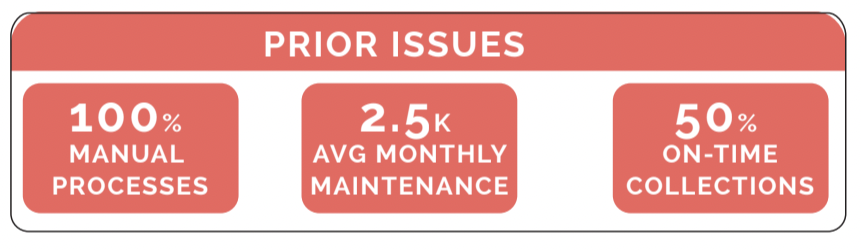
Satyanarayana Enclave is an 18-year-old society in Hyderabad with 240 units. Until October 2018, the society relied entirely on manual processes for maintenance collection. Security guards went door to door with bills and the committee needed to put a lot of effort into collecting maintenance. Even after all this, on-time payments were under 50%. Moreover, this effort prevented the committee from spending time on more rewarding tasks, such as ways to lower their high maintenance charges.
How the society turned its situation around
In October 2018, the society shifted to digital processes, which made their work easier and freed them up to try out new things. Here’s what they did:
Hybrid billing
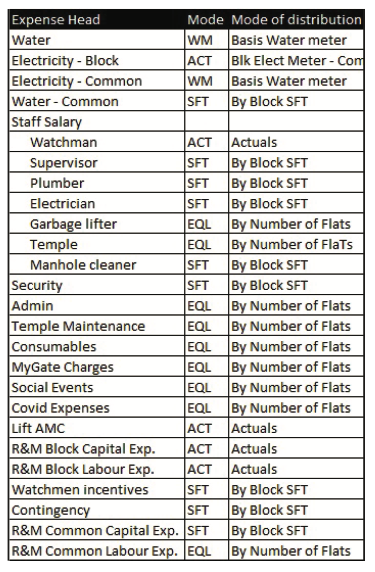
Prior to 2018, each type of unit (1/2/3 BHK, duplex homes and penthouses) paid maintenance according to the unit size of the apartment, and sometimes, for amenities they were not using at all. Once a hybrid model was adopted, flats are charged maintenance for some items based on the flat area and, for others, on a fixed basis. Security and housekeeping expenses, for example, are now shared equally.
Slot booking
To lower bills, the society dropped clubhouse charges from the maintenance structure and instead began charging for amenities based on usage, says Mr. Lokesh Yellapu, General Secretary, Satyanarayana Enclave.
Itemised billing
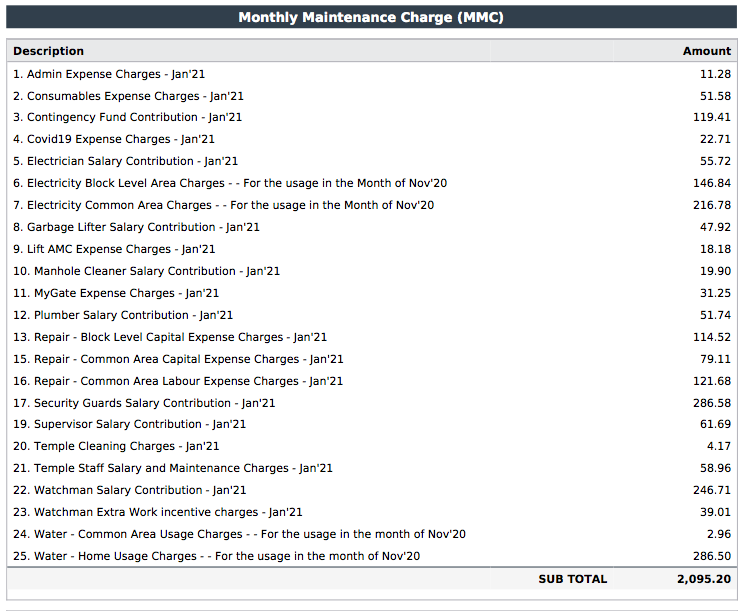
Formerly, money was collected under a few heads and residents wouldn’t know how it was being used. In the interest of better communication and transparency, the society now provides detailed, itemised monthly bills to communicate exactly why money is being collected.
Planning for contingencies
A 10% contingency fee is charged on the maintenance amount so that any emergency repairs can be completed quickly. Any extra expenditure is charged in 2-3 instalments.
Partnering with residents
Over the past two years, a few sub-committees of residents were set up to help the RWA in its work. These are constituted of experts in different fields and include:
- Vendor management panel: Residents who are experienced at research and comparative analysis of different vendors and the types of services they provide
- Negotiation panel: A team with superior negotiation skills to get the best deals from vendors
- Tech panel: Technology enthusiasts and professionals who are involved in digital adoption and transformation
Impact of Satyanarayana Enclave’s efforts
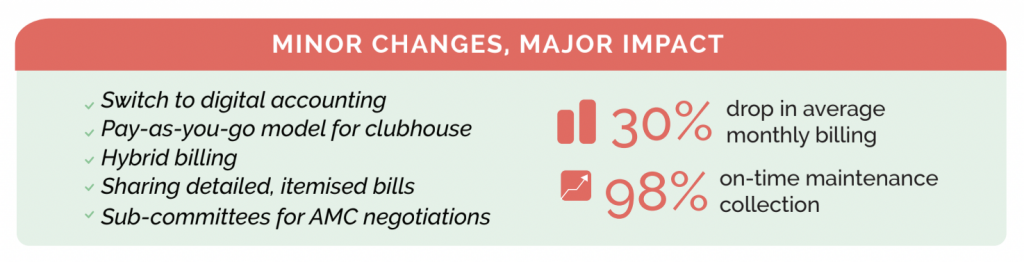
All of these initiatives together, over the past 2 years, have kept the 18-year-old society looking as good as new, at a cost that is not burdensome to residents.