

Garbage may not mean much for those who are blind to its worth, but for Bangalore’s MJR Pearl Apartments, Kadugodi, garbage is gold. This eco-conscious apartment complex turns 200 kgs of daily wet waste into 2 tons of compost every month.
How do they do it? With a resident community composting expert and supportive households that showed unity in reaching a shared goal of sustainable waste management and disposal.
The society, MJR Pearl was established in 2017 and sits on 5 acres of land and houses 413 units on its premises. They have allotted 50 square metres inside the premises to create a BBMP-mandated decentralised waste management facility.
Waste management scenario before composting
Prior to community composting, the society had a massive composting machine bought at a cost of Rs 8-10 lakh, but it had stopped functioning. Additionally, the society used to also spend Rs 40,000-50,000 on labour, power, maintenance, repair, and composting ingredients. After the adoption of a completely natural technique of composting, they get 100% organic compost with a singular cost for manpower, which is around Rs 12,000-15,000 per month for one compost handler.
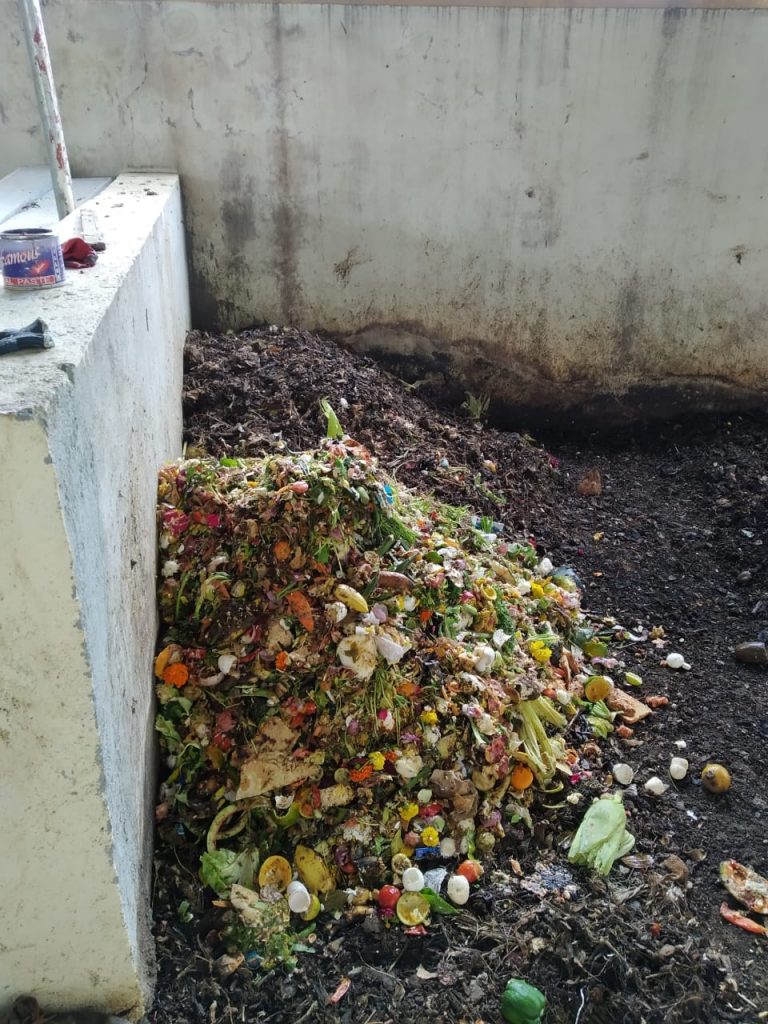
Muralikrishna Pattaje, member of the society, IT professional and composting enthusiast, championed the green practices in MJR Pearl. Owing to his previous tryst with community composting, Muralikrishna was used to producing around 700 kgs of compost per month for six years. He moved into MJR Pearl, already armed with prior experience and skills to make the community composting operation a success.
“The managing committee at MJR Pearl is highly conscientious and supportive when it comes to hands-on waste management and disposal onsite. In fact, there was already 100% waste segregation among all the units. However, the wet waste was being disposed of by a vendor instead of being composted. Funding was not a big challenge because we didn’t invest in expensive in-vessel composting systems. We did everything ourselves and thanks to cohesive efforts of the residents and the MC, our community composting endeavour took off and is being carried out successfully.”
Our earlier composting machine was huge but all it did was crush the waste, not compost it. Moreover, since no air and sunlight were available; it created anaerobic conditions and foul smells, he says.
The planning stage
Figuring out how to compost at a large scale, selecting composting models and services and estimating the costs is always a major challenge for any society starting their own composting operation. “But at MJR Pearl, the planning went quite smoothly since the Managing Committee was already willing to lend help. Besides, I was familiar with the specifics thoroughly so setting up was easy,” says Muralikrishna.
The implementation
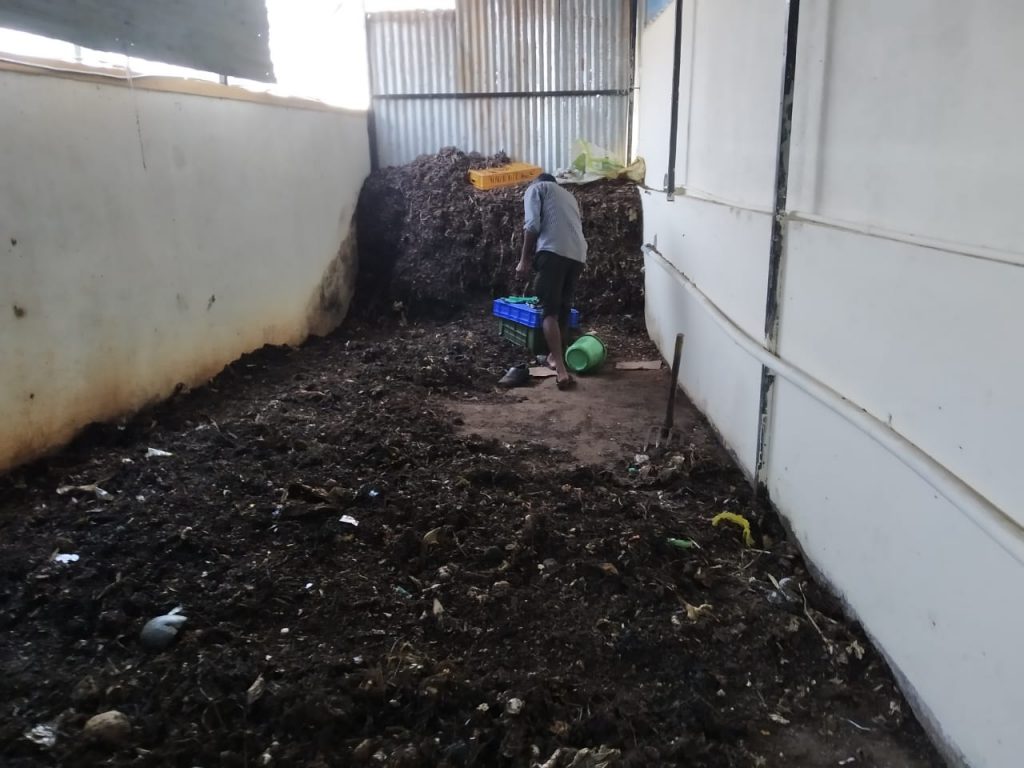
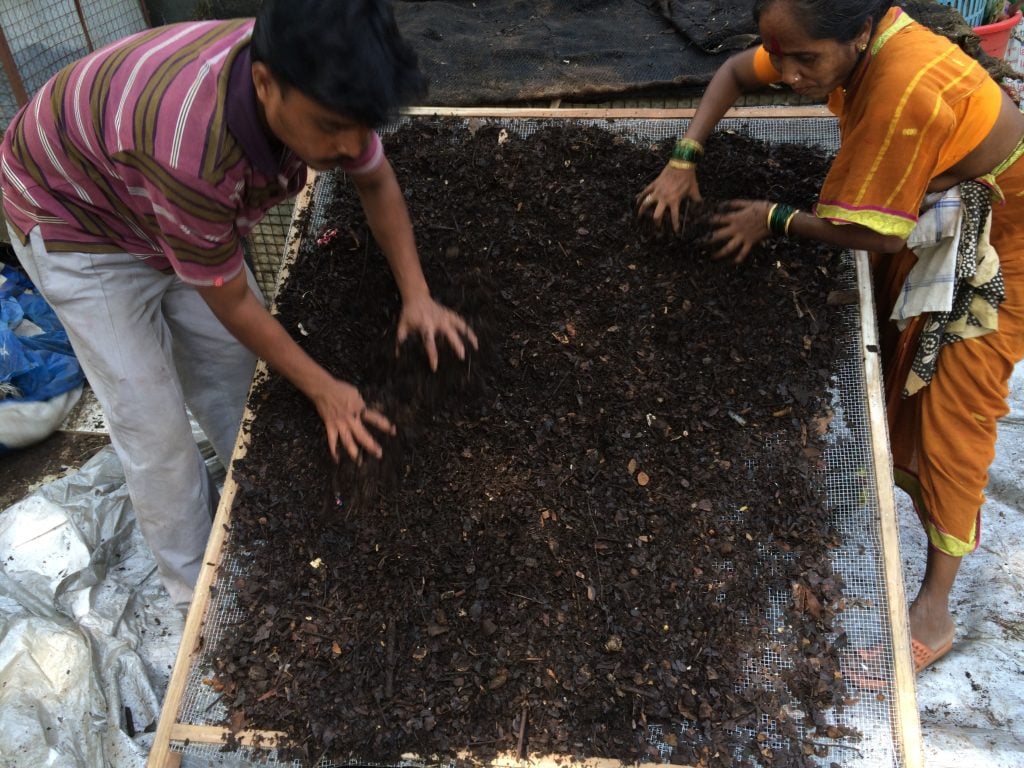
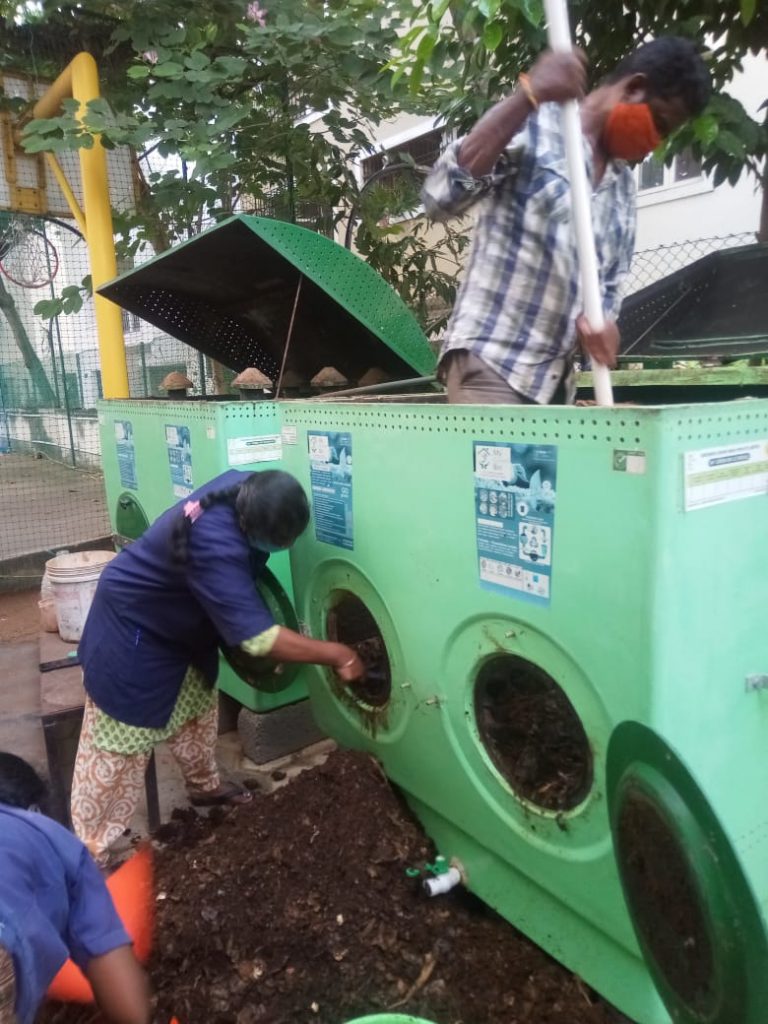
As there was no lack of space in the premises, the society has created a centralised wet waste management solution that uses natural aerobic composting. Segregated waste is collected from each household daily. It is then dumped into a rectangular enclosure with walls and left for composting with the right ratio of nitrogen (wet waste), carbon (dry cardboard, dry leaves or sawdust), water, air and sunlight. The pile needs to be rotated regularly for proper flow of air and sunlight so that there is enough heat and the microbes can grow. “We don’t use worms, yeast or chemicals for accelerating the process. The enclosure is a large rectangular room which is rain-proofed from the top, but is built to allow adequate air flow”, Muralikrishna explains. The room is enclosed by walls on two sides. The mix is kept for a month and rotated regularly for a month until the compost is ready. It is then filtered and the large chunks that remain are reused for the next batch.
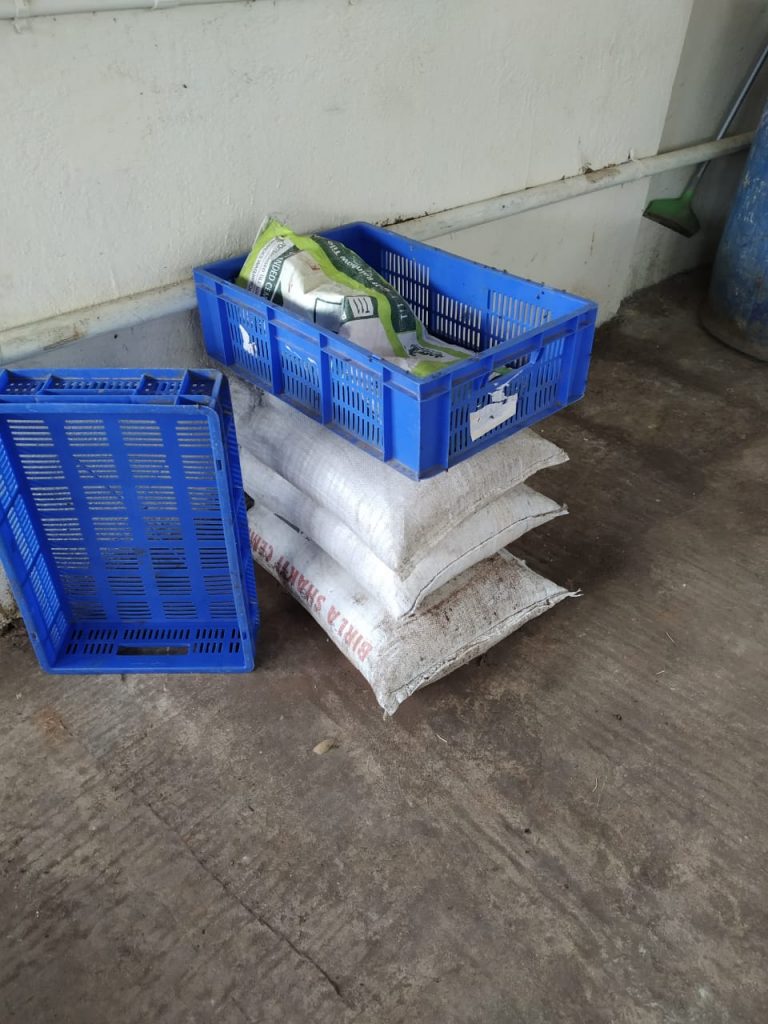
The first batch prepared in May this year produced 300 kgs of compost. In five months, MJR Pearl has made 2 tons of compost. The entire process is handled using gardening tools for mixing and two plastic crates for filtering. No leachate is produced since it pollutes groundwater. At the same time, turning the pile ensures no foul smell is created and residents are not inconvenienced. A trained handler is appointed by the society to carry out the entire execution and maintenance.
Challenges faced
Initially, there were a few hiccups such as bad odour since it was the very first attempt. Later, this was resolved. The residents are not actually involved in the process but they help by segregating their waste responsibly. Overall, they are satisfied with the wet waste management system. According to Muralikrishna, in addition to funding and segregation, societies usually face labour problems as there is a limited pool of experienced and interested workers.
The compost produced at MJR Pearl is of good quality and is used for gardening. The leftover compost is sold to nurseries and distributed among residents. Muralikrishna also offers his expertise to societies looking to start their wet waste management initiative in-house. His intention is to expand composting solutions to other interested societies. “Composting is a green practice essential to creating a positive environmental impact and it saves residential societies a lot of money if done right,” he concludes.
Today, not a single bit of wet waste leaves MJR Pearl’s premises. The residents of MJR Pearl are happy campers, who contribute to the nation’s waste management problems and use best practices in compliance with the Solid Waste Management Rules. Fortunately, the availability of land and aeration within the premises and the determined efforts of a few like-minded individuals have created a success story that other societies can be inspired by and replicate in their own community.
Images courtesy of Muralikrishna Pattaje.
Waste management is often seen by residential societies as a tedious and difficult task, to be put in the back burner until it becomes a crisis. Luckily, some pioneering societies awaken early and take proactive steps towards sustainable waste management. Their efforts are proof that small and realistic methods over time can go a long way in making a positive difference towards keeping reducing the burden of the garbage in our cities.
Anand Society and Tarangan Society in Thane, Mumbai are uniquely inspiring success stories, unlike any other in the country. Both have managed to create long-lasting solutions to their waste problem. With their perseverance and innovative ideas, they are a beacon for other housing societies.
Anand Society came into being in 2014 and houses 58 units while Tarangan Society, established in 2016, has 120 units. Here’s a look at their journey towards sustainable in-house composting.
Pre-composting waste management situation
Neither society was compliant with Solid Waste Management Rules nor were any waste management rules being enforced by the Managing Committee. Segregation at source was not taking place and piles of mixed waste used to be collected by the local municipal corporation in trucks. Door-to-door waste collection was managed by the housekeeping staff and there was no involvement of the residents, either in segregation or in any in-house waste management.
Involving all stakeholders
In 2017, Dr Lata Ghanshamnani, an Ophthalmologist and Founder of Rnisarg Foundation, an NGO dedicated to waste management and sustainable living in cities, launched the waste management project at Anand Society where she is a resident. She began by conducting an awareness programme for residents of Anand and Tarangan Societies to understand the basics of waste management and to inform them of their responsibility as waste generators. Once there was enough traction, the planning began.
Dr Lata integrated four stakeholders in the strategy:
- The Managing Committee was approached for providing space and funding
- Residents were instructed to segregate dry, wet and hazardous waste
- Housekeeping staff was trained on ensuring daily segregation, composting techniques and sending dry waste for recycling
- The Municipal Corporation was kept in loop to support and encourage housing society members with appreciation, tax rebates and other incentives
After the approval came through and the space was designated, two members made contributions towards vermicomposting bins. “We adopted vermicomposting initially and used it for two years because there weren’t many readily available solutions at the time. Biocomposting was adopted later. With biocomposting, there was a learning curve, however a fully functional and effective system was achieved eventually after continuous efforts for around two years”, says Dr Lata.
Interestingly enough, the 2 societies set up their bio-composting unit by winning place in Swachh Society Awards – an inter-society contest to recognize and reward clean and green residential housing societies in the Mumbai Metropolitan Region. Anand Society was awarded Rs 5 lakh cash prize while Tarangan won Rs 50,000, with which an investment in a bio-composting unit was made.
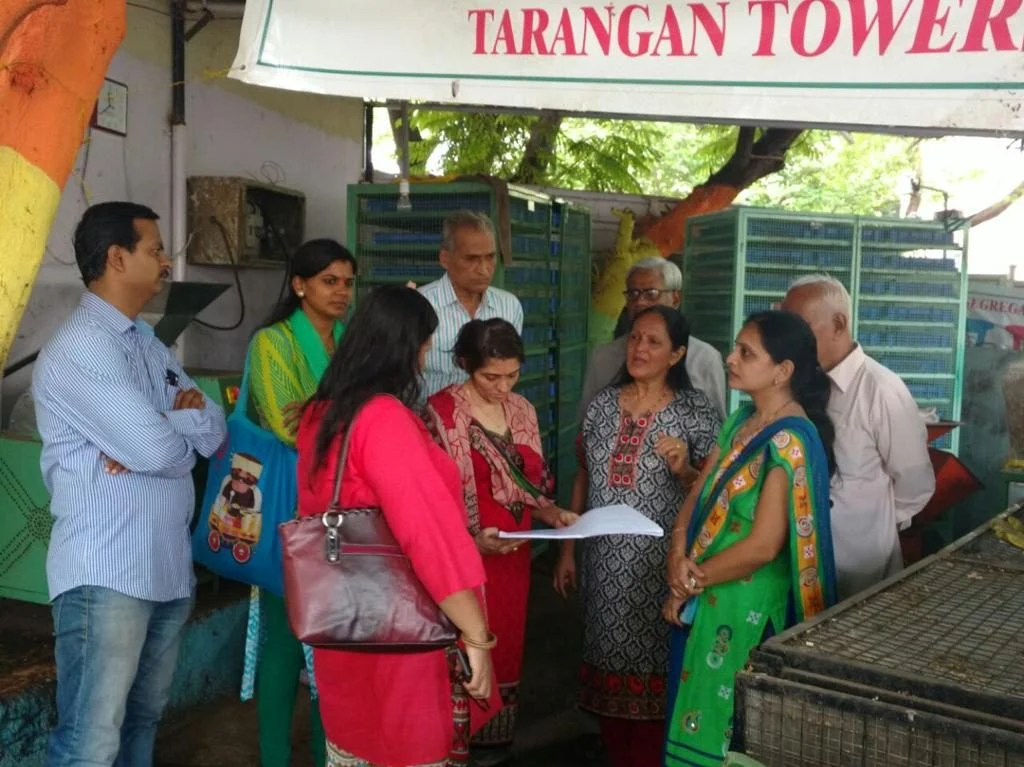
Getting started
Both the societies installed a bio-composting unit called Bhoomi Butti. There were many trials and errors before a suitable location was identified and a foolproof method of composting was achieved. The bio-composting unit consists of a shredder, currying system with racks to place trays and a big stainless steel bin for the composting process. Since two years, the system has been working well on auto-pilot mode with regular upkeep financed with a part of the monthly maintenance fees.
The housekeeping staff has been thoroughly trained to carry out composting activities professionally. They also receive additional payment every month for doing this job. The society has also financed the purchase of separate dustbins for three-way segregation.
The entire process isn’t just handled by MC and housekeeping staff alone. The residents have been engaged too. Education about the importance of segregation and composting was handled by the children of the society. Each child was an ambassador who carried the message of sustainable waste management to their homes.
The success of community composting in these two societies has a distinct flavour to it. Since it wasn’t just carried out as a mandate, but as a shared duty, it became an immersive experience for residents of all ages. They have not only participated in the efforts to set up and run the composting unit, but have also made waste management best practices a part of their lifestyle. The consistent efforts over the last six years have unified everyone and brought about a palpable change in the overall quality of life. Residents feel pride in having made the right step in the direction of a clean and green India.
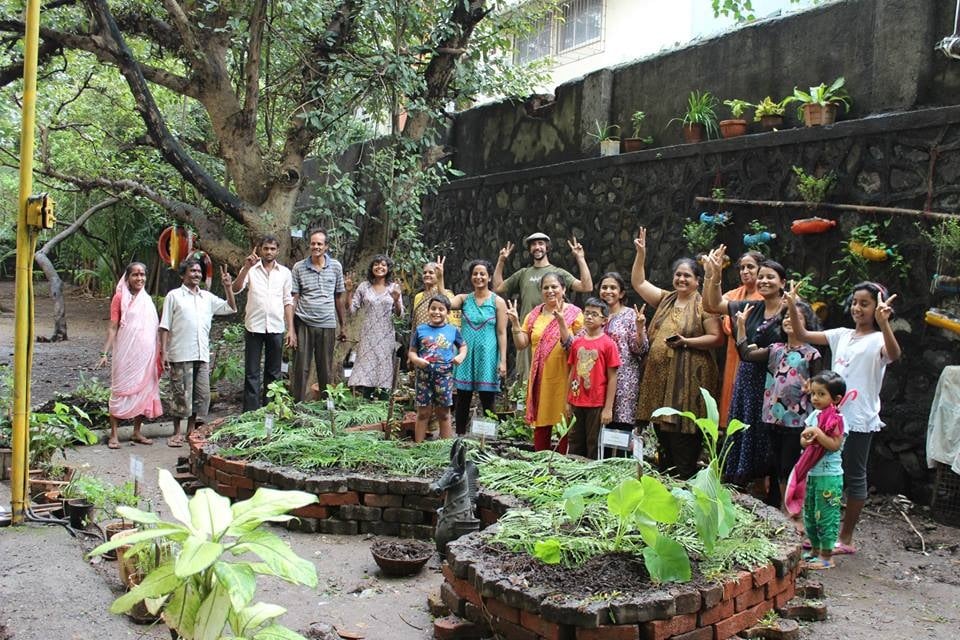
Overcoming challenges
There were challenges in the beginning, some expected, some unexpected, but these were handled with practical strategies.
“The initial location of the composting unit in the society’s compound was an eyesore to many. So we grew an organic garden around it to beautify the place and create a natural and fresh aesthetic. When we started bio-composting, the smell was also a problem initially. So we decided to move the system to the terrace and that worked out well. It is now odour-free and no one has any complaints,” says Dr Lata.
However, the biggest challenge was to make the entire system financially viable. This is because of the availability of municipal waste collection services that don’t refuse mixed waste and collect it for free. If such wrong practices become a habit, no one feels compelled to get together and pay money for something they’d have to be accountable for. But gradually, mindsets must be changed and responsibilities should be shared equally by the citizens and the government.
Anand Society generates 30 – 35 kgs of wet waste daily while Tarangan Society generates around 120 kgs, one-third of which is turned into compost. The compost is used by the society and is also donated for free to residents. They also sell the compost to friends and family at Rs 10 per kg.
The societies and the stakeholders, aided by Dr Lata’s guidance, intend to sustain the waste management and disposal efforts and continue them well into the future, while expanding their activities to other societies who are willing to take the lead in composting. Dr Lata advises housing societies. “Accepting your responsibility as a good citizen is the first step in waste management. The rest can be handled with planning and commitment. The key takeaways for societies planning to venture into composting are not giving up at the first sight of obstacles. Sometimes, the lack of participation or the challenge of financial planning can take a toll on your perseverance. But finding workarounds is always better than giving up. As long as awareness and a responsibility towards waste management are your guiding motivation, everything can be resolved, says Dr Lata.
All’s well that ends well, and in the case of Anand Society and Tarangan Society, the journey towards sustainability has been especially rewarding because it has made the entire community more resilient, responsible and collaborative.
Images courtesy Dr Lata Ghanshamnani.
The Central Park South Society can be likened to the Phoenix rising from the ashes in the aftermath of the Chennai floods in 2015. The natural disaster opened the residents’ eyes to the unfortunate reality of waste management in India. What followed is a story that can inspire many societies around the country.
The apartment complex is spread over 2,86,344 sq ft with 172 apartments in 11 blocks. It is difficult to miss as it is centrally located and has direct access to the main road. But this location proved to be a bane during the 2015 floods when the society was among the worst affected apartment complexes in the city. More than 5 feet of stormwater entered the complex and wreaked havoc.
“The floods did however, make us sit up and question why this happened. Some of the answers were very obvious. Unplanned development, encroachment of wetlands which are natural sinks, poorly designed drainage systems, increasing landfills, and so on,” says Sumitha Iyer, resident waste warrior, who led a brave new movement from the front. The society decided to solve its problem from the roots rather than fix it superficially.
From awareness to action
Even before the flood,s the society members had understood that waste segregation was the way forward to reduce our ever-growing landfills. They had a process in place for segregating household waste but it entailed separating dry waste only. There was no provision for wet waste management. “After the floods, we decided to take it to the next level by implementing 3-way segregation”, Sumitha says.
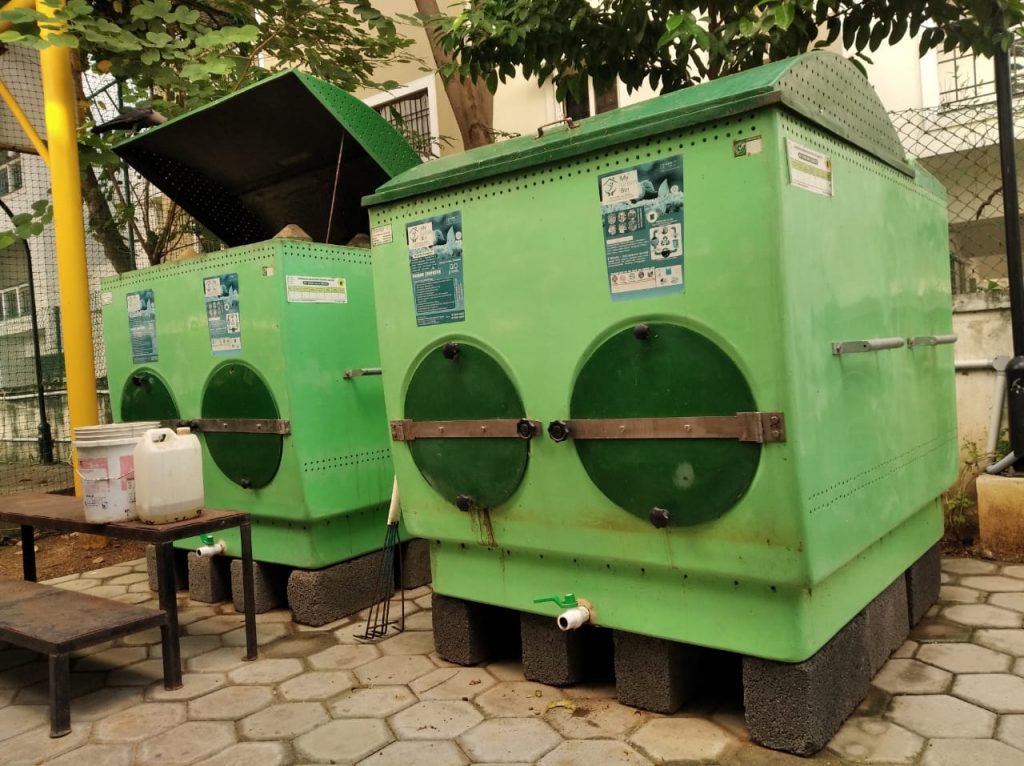
Getting started
They adapted the 2bin-1bag model, which was introduced to them by a Bangalore-based waste management company called WasteWinn. This model uses two-coloured bins (green and red) to collect organic and reject/hazardous domestic waste, respectively, and a bag to collect the recyclables. Once the implementation plan was formulated, the core team carried out an extensive door-to-door campaign to educate the residents, housekeeping staff, and domestic hel,p such as house help and cooks. For the first 50 days, active resident-volunteers accompanied the housekeeping staff to every house to clear the doubts and re-educate residents wherever required.
Central Park South Society produces about 80-100 kg of organic waste every day, making it a bulk generator required to handle wet waste management and disposal onsite. After the awareness generation campaign was done, the team began the research and groundwork in order to begin composting. They eventually zeroed in on My Green Bin composters, investing in two composting units of 2,000 litres capacity each. The composting process was started in earnest.
Trench composting (burying waste directly into trenches in the garden) was initiated as well. The team used one part of the organic waste in trench composting, wherein a pit about 4X4 with a depth of 2-3 ft was dug, and every day about 20 kgs of organic waste was dumped into it. This was then covered with dry leaves and mud. This process is continued till the pit is full and closed.
The team of volunteers worked closely with the housekeeping staff to ensure the smooth functioning of the composting system. Reports were sent daily via a WhatsApp group between the block representatives and the housekeeping staff. The team members continued to educate newcomers since it was imperative to keep the positive momentum going without missing any links in the chain. The society also monitored the different aspects of the whole process to see if any corrective measures were required. The wet, recyclable, and other waste was regularly weighed and recorded.
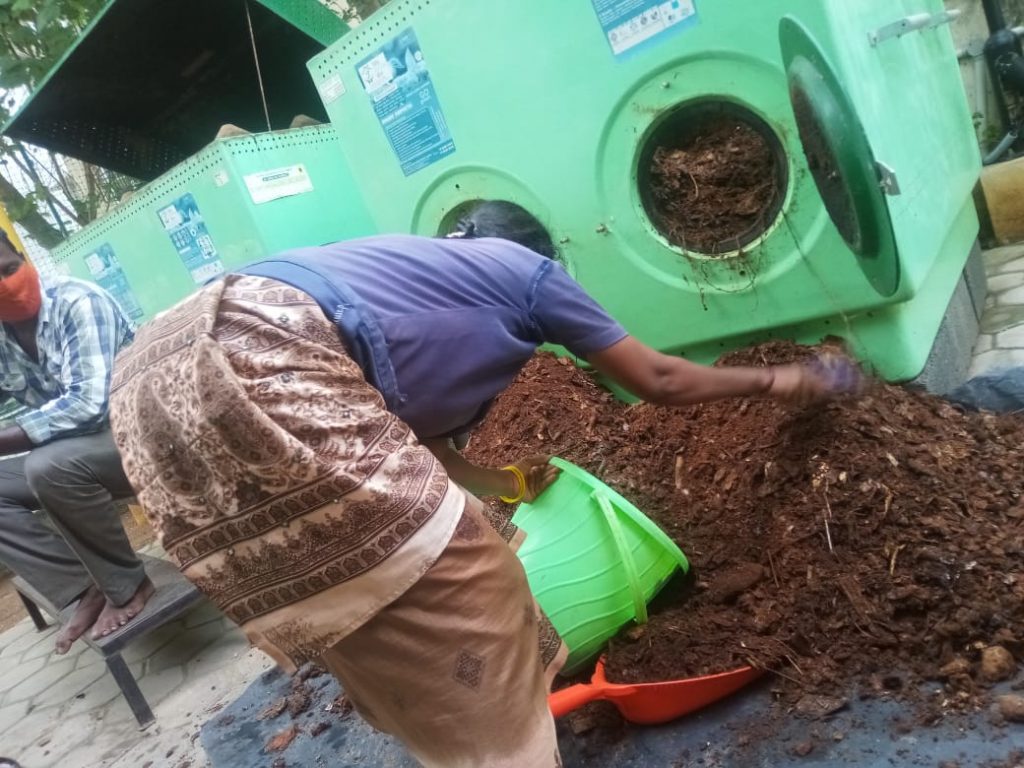
Tasting success
At first, there were challenges such as bad odour, but after tweaking the composting procedure and identifying loopholes in the system, the process took off smoothly.
Today, Central Park South Society produces about 300-400 kgs of compost per month. The society provides the compost to the residents for free. The compost is also used for vegetable gardening and for building a green belt of plants around the buildings. Dry waste is recycled. The society gets Rs 2000-3000 per month from the sale of its recyclables. The proceeds are distributed among the housekeeping staff as an incentive.
Sumitha says, “Our efforts are bearing fruit. Residents who were hesitant earlier are now active participants in this initiative. Most importantly, it’s overwhelming to see our kids learning the right practices of waste management at a young age. The real icing on the cake is when we received the Green Award from the Chief Minister of Tamil Nadu last year. This award was instituted by the Tamil Nadu Pollution Control Board for RWAs doing exemplary work in the field of solid waste management, among other things.
The society, led by Sumitha and team, plans to sustain its efforts and expand them further. They are already minimising the amount of hazardous waste generation and sharing their waste management practices with other apartment complexes that are willing to start their own journeys towards green living.
Lessons for other societies
“Composting is not an exact science. Sometimes we need to learn by trial and error to get the process running smoothly. Communities looking to do in-house composting should not give up when there are small hiccups. Always try to find practical solutions and keep it going,” says Sumitha.
She recounts the initial hurdles in convincing fellow residents to segregate waste into 3 categories. “Those who were used to using plastic liners had to now spend some time and effort to put the waste in the correct bins or bags. They had to clean their bins every day as no liners were allowed. Sanitary and medical waste had to be wrapped in newspapers before disposal, while all recyclables had to be cleaned and dried before placing them in the disposal bag. All this requires patience and perseverance, especially since it is a long-term behaviour change. But the residents showed true dedication to the cause from inception to execution.
Central Park South Society has successfully created a waste management system that not only works efficiently but also serves as a fine example of the spirit of a community that never gave up on the collective vision of clean and green India.
Introduction
In March 2020, the World Health Organisation (WHO) declared COVID-19 as a pandemic. This declaration meant that the SARS-CoV-2 coronavirus was a matter of global concern and was affecting millions of people daily. Today, there are various ways of determining if a person is infected by the SARS-CoV-2 virus.
Antibody tests require medical experts to obtain the patient’s blood samples for testing, and there is a chance that someone previously infected with a mild case of the disease might not have antibodies. Another way of testing for COVID-19 is antigen testing. Antigen testing is the fastest testing method for COVID-19 as it involves a rapid test kit, which is typically used along with a nasopharyngeal swab to get results in under 15 minutes. Lastly, we come to the most commonly used testing method known as the RT-PCR test, which has proven to professionals that it is the most accurate COVID-19 test to date.
What is RT-PCR?
RT-PCR, also known as a molecular test, is a test for COVID-19 designed to detect the genetic material of SARS-CoV-2 using a technique called Reverse Transcription – Polymerase Chain Reaction (RT-PCR). The patient’s samples are collected by a trained professional through nasal swabs or oral swabs inserted into the back of the throat.
The type of RT-PCR used by modern scientists to detect SARS-CoV-2 is called real-time RT-PCR. Real-time RT-PCR has previously been used to diagnose diseases like Ebola and Zika fever. It is the preferred choice of most scientists worldwide because it is a more efficient variation of the conventional RT-PCR test. In real-time RT-PCR, the use of fluorescent markers to detect targeted genetic material allows professionals to see the test results almost immediately. On the contrary, the conventional method will only give you results at the end of the test.
What is Ct Value in RT-PCR Tests?
Ct stands for cycle threshold, which is a value reflected in an RT-PCR report that helps professionals determine the amount in which the virus is present inside the patient’s body. After collecting the swab samples from the patient for an RT-PCR test, professionals extract the Ribonucleic Acid (RNA) and convert it into Deoxyribonucleic Acid (DNA) using Reverse Transcription. After converting the RNA into DNA, multiple copies of the specific DNA are made through various cycles until SARS-CoV-2 is present in a detectable amount. The number of RT cycles required to reach an amount perceptible in the test is called the Ct value in an RT-PCR test. A lower Ct value in PCR tests indicates that the patient is more infectious than others. On the other hand, a higher Ct value in RT-PCR means that the patient is less contagious and has a lesser quantity of the virus in their bodies. Scientists believe this theory because samples having more of the SARS-CoV-2 pathogen present in them will require less amplification to reach enough copies of the pathogen for detection.
What Are The Factors Affecting Ct Value?
Although the Ct value in a person’s RT-PCR test indicates how much of the SARS-CoV-2 pathogen they have been carrying in their throats, several other factors can also cause variations in the Ct value shown in the results. Due to this, the Ct value can not determine how sick a person is or what course of treatment a doctor should offer to them based on their viral load. The factors that affect Ct Value in patients are:
- What was the amount in which the SARS-CoV-2 pathogen was present in the person’s throat during sample collection?
- What is the effectiveness of the collection method used to obtain the sample?
- What were the storage conditions of the sample after collection?
- What was the time of sample collection?
- What was the type of sample used for testing (nasopharyngeal, saliva, sputum, and so on)?
Why is The Ct Value Important in RT-PCR Tests?
According to the Indian Council of Medical Research (ICMR) in New Delhi, the patient will be considered positive for COVID-19 if the Ct value is below 35. This number means that if the SARS-CoV-2 pathogen gets detected in the patient’s DNA sample after 35 cycles or earlier, the patient will be considered positive for COVID-19.
Not too long ago, the state of Maharashtra, which has the highest number of COVID-19 cases amongst all Indian states, wrote a letter to the ICMR requesting them to lower the benchmark Ct value required for a patient to be deemed positive for COVID-19. The globally accepted Ct value for RT-PCR results ranges between 35 and 40 globally.
Having the current benchmark of 35 cycles means that more people, even with a lower viral load, will also test positive for COVID-19. Therefore, ICMR had to reject Maharashtra’s request to lower the threshold. The reason stated by the ICMR was that reducing the required CT value of RT-PCR tests would result in many comparatively milder cases going undetected, leading to many infectious patients going undiagnosed, which would, in turn, result in increased transmission of COVID-19. Doing this would result in a false decrease in the positive cases. Many patients with a lower viral load of SARS-CoV-2 in their bodies can also be severely ill without being diagnosed with COVID-19.
Do Severe Cases Have Lower Ct Values?
The Ct value tells us how much of the virus is present in the person’s body. Having a lower Ct value does not indicate that a person will be sicker than someone with a higher Ct value. There are cases where people have a viral load high enough to be detected in a low number of cycles but show no symptoms of COVID-19 whatsoever. The Ct value tells us about the viral load of SARS-CoV-2 in the patient’s throat and not the lungs. Getting to know the Ct value of a patient helps doctors determine how infectious the patient is, not how severely they are affected by COVID-19.
What to do if Someone Near You Has a Low Ct Value?
Thanks to security management apps such as MyGate, you can easily find out if someone in your society has been diagnosed with COVID-19 or is showing symptoms of the disease. If someone has a Ct value below 35, they will test positive for COVID-19. The infectivity of these patients is lesser than patients with comparatively lower Ct values. If someone near you has a lower Ct value than average, you should take more precautions than you normally would since the chances of you getting infected are much higher due to the high viral load of the patient.
Contact tracing is particularly important for patients who show a lower-than-average Ct value in pcr, as having a lower value in Rtpcr means they can spread the virus more than other infected patients. The quarantine of such patients should only end once their RT-PCR tests show a Ct value high enough for them to not be a danger to society.
Conclusion
With newer, more infectious strains of the SARS-CoV-2 virus, such as the Omicron variant sprouting up in different parts of the world, it is extremely important for us to know what the Ct value in an RT-PCR test means. Due to the highly infectious strains of today, it is becoming increasingly common for patients to have Ct values that are much lower than 30. This means that the SARS-CoV-2 virus has evolved to become more infectious than it was before, and we need to be extra cautious about our habits and activities.
You may all know how to read some of your blood reports. What you may not know, however, is how to read the RT-PCR test results. It can be confusing, especially if you are not familiar with the terminology. In this blog, we will break down what each term means and what it tells you about your test results. So, let’s get started.
What is coronavirus?
Coronaviruses (CoV) are a large group of viruses that can cause a wide range of illnesses, from common colds to acute respiratory tract infections. Symptoms of the infection can include pneumonia, acute respiratory syndrome, and even death.
A coronavirus is a virus that can cause respiratory infection. The most common infection detected is the common cold. In some patients, more serious diseases were diagnosed, such as SARS. The coronavirus is so named because it has a crown-like (corona) appearance when viewed under a microscope.
China’s Hubei Province’s city of Wuhan reported mysterious cases of pneumonia on December 31, 2019. Symptoms of the disease were first identified as COVID-19 by the WHO on January 7, 2020, which was due to a new coronavirus (2019-nCoV). More than 210 different countries and territories have been exposed to the virus after spreading out from the Wuhan region of China.
The symptoms of coronavirus infection include fever, headache, and muscle aches. The illness is usually mild, and most people recover without treatment. However, the infection can be more serious in some cases and may lead to pneumonia.
The symptoms were similar to those of the common flu and, in some cases, there were no symptoms at all because it is a new disease. Detecting and preventing the spread of Covid-19 was difficult; so, Covid-19 tests became mandatory for every traveller.
Diagnosis of Covid-19
Coronavirus is diagnosed by taking a sample of mucous from the nose or throat and testing it for the presence of the virus. This can be done using various techniques, including viral culture, RT-PCR assay, and immunofluorescence assay.
The RT-PCR assay is the most sensitive test for diagnosing coronavirus, as it can detect even small amounts of the virus. This assay involves using a reverse transcription-polymerase chain reaction (RT-PCR) to amplify the viral DNA so that it can be detected.
The assay results will help your doctor decide on the best course of treatment. If you have a positive result for coronavirus, your doctor may prescribe antiviral medications to help you recover. If you have a negative result, your doctor may still recommend taking antiviral medications as a precaution.
How to read coronavirus test results
The coronavirus result determines the presence or absence of a particular virus in a sample. The RT-PCR report is a laboratory report that documents the results of a reverse transcription-polymerase chain reaction (RT-PCR) assay to detect a particular coronavirus.
A positive result indicates that the virus is present in the sample, while a negative result indicates that the virus is not present. An equivocal result means that the test cannot determine whether the virus is present or not.
However, a negative result does not necessarily mean that the virus is not present; it may only mean that the virus count was too low to be detected by the assay.
RT-PCR test process
The RT-PCR process begins with RNA extraction from a tissue or cell sample. RNA is a type of molecule that carries the genetic information of cells. Next, a particular enzyme called reverse transcriptase converts the RNA into DNA. The DNA is then amplified, or copied, using a process called polymerase chain reaction (PCR). The amplified DNA can then be detected and measured.
Reading an RT-PCR report
To read an RT-PCR report, you need to understand what each of the terms in the report means. The report will include the following terms:
- Test name: The name of the test that was performed
- Sample type: The type of sample that was tested
- Positive result: A positive result means that the virus is present in the sample.
- Negative result: A negative result means that the virus is not present in the sample.
- Equivocal result: An equivocal result means that the test cannot determine whether the virus is present or not.
- CT value: The cycle threshold (CT) of the SARS-CoV-2 coronavirus is determined during RT-PCR testing. When an RT-PCR test is performed, RNA is extracted from a patient’s swab. RNA is then converted into DNA and amplified using amplification technologies.
- Viral load: This denotes the amount of viral RNA in the sample. This is reported as a number (e.g., “positive at 10 copies/mL”). An infection requires a certain amount of virus to take hold in every infectious disease. How much virus an individual can handle is determined by their immune system. Regardless of non-pharmaceutical interventions (NPI), such as physical distance, masks, well-ventilated spaces, or quarantine, the higher the viral load, the greater the risk of serious disease, hospital admission, and transmission to others. It is likely that a patient with a lower virus load is not capable of transmitting viruses.
- The report will also include a diagram of the RT-PCR assay, which will help you to understand how the test was performed.
Are there any risks involved?
RT-PCR is a safe and widely used laboratory test. There are no known risks associated with the RT-PCR process.
How can I get an RT-PCR test done?
An RT-PCR test can be administered by a healthcare professional. If you are concerned that you may be infected with the coronavirus, you should speak with your doctor about getting a test. There may be a fee associated with the test, but most insurance plans will cover it.
In light of the Covid-19 pandemic, a coronavirus RT-PCR test result is an important piece of information that can help people determine one’s risk of exposure. Always consult a healthcare professional if there is any doubt about whether or not someone has been infected with the coronavirus.
Ultimately, a coronavirus RT-PCR result should always be interpreted in conjunction with other information, such as symptoms and recent travel history.
What does the RT-PCR report mean?
The numbers in an RT-PCR Report indicate the likelihood that someone has been infected with the coronavirus. The higher the number, the more likely it is that someone has been infected. A lower number means that the person is less likely to have been infected.
Final takeaway
You can tell if you’ve been infected with the coronavirus by looking at an RT-PCR report. Understanding an RT-PCR report can help you and your loved ones protect their health.
Three vaccines are used in India’s vaccination program, including Oxford University – AstraZeneca’s Covishield vaccine (manufactured by the Serum Institute of India), Bharat Biotech’s Covaxin, and Russia’s Sputnik V.
However, it is important to note that these numbers are not always 100% accurate. You must always consult the doctor to know what your reports mean.
If you are looking to buy a house, you will know that there is a ton of jargon and terminology that you have to familiarize yourself with. One such term is ‘Plinth Area’. The meaning of plinth area is defined by the Indian Standard (IS) 3861-2002 as the “constructed covered area calculated at the floor level of the basement or of any storey”. It is also referred to as the ‘built-up’ area.
But, practically, how do you calculate the plinth area? And why is it important? Let’s get into the meaning, inclusions, and exclusions you need to be aware about when looking at property.
What is plinth area?
It’s important to fully understand the meaning of plinth area if you are a prospective homebuyer or even if you are buying commercial property. The term ‘plinth area’ or ‘built-up area’ is used when referring to the area of a home or property. When the plinth area is mentioned, it is usually around 10% to 20% more than an apartment or a flat’s carpet area (the usable floor area). This is because it is measured as the covered built-up area at the floor level of any floor in a building or the building’s basement floor level. So it includes the carpet area as well as the area taken by walls (both internal and external), elevator doors and other areas in the building too such as the parasitic area.
How to calculate plinth area: Plinth area rate estimate with example
A plinth area cost estimate is done according to the building’s plinth area. This cost estimate is derived by multiplying the building’s plinth area with the current plinth area rates (based on buildings with similar characteristics in similar locations).
The Plinth area formula is Building cost = Plinth area X Plinth area rate.
The result will be the approximate building cost. Each storey in a building will get its own plinth area estimate before the entire property gets an approximate cost according to those individual plinth area costs.
Here is a plinth area cost estimate example. If the plinth area of a building is 1000 square metres and the plinth area rate is Rs 4000 per square metre, then:
Building cost = Plinth area X Plinth area rate
That is, Building cost = 1000 square metre X Rs 4000 = Rs 40,00,000
What is not included in the plinth area of a building?
According to the IS 3861-2002, the list of areas below are not to be included in the plinth area of a building:
- Area of the loft
- Cornice, architectural elements, etc
- Projections such as sun breakers that are vertical, box louvre or projecting slabs for flowerpots
- Area of the terrace
- Service and spiral staircases, landings, open platforms, turrets, machine rooms and structures such as domes and sunshadesthat go above terrace levels
- Area of cantilevered porches
- Areas for seating in auditoriums, halls, theatres, etc.
- Garbage chutes greater than two square metres and other sanitary shafts of that size inside the building
What does the plinth area of a building include?
According to the IS 3861-2002, the list of areas below are included in the plinth area of a building:
- The area in total of all the building storeys at the floor level. If two buildings have a shared wall, half of the wall will be included in each building’s plinth area.
- Electric, telecommunications and firefighting necessities, as well as garbage chutes and sanitary infrastructures of less than two square metres within the building.
- Staircase room that is on any level but the terrace level
- Parasitic area and multi areas at the level of the building terrace
- Elevator opening area
- Porch areas and machine room but not cantilevered areas
- Air conditioning ducts and lift landing and lift well
- Open projections of veranda, balconies and parapets. If the area is covered by projections, then the entire area will be included in the plinth area. If the space is not protected by projections, then only 50% of the area is included in the plinth area.
Plinth area vs Carpet area: What is the difference?
Plinth area: It is the built-up area that is measured at the floor level of the basement of a building or any storey of the building.
Carpet area: Measured from wall to wall, it is the area of what is useable in a room, ie the total area in square feet that a carpet can be laid down.
Plinth area: Plinth area is also called built-up area.
Carpet Area: Carpet area is also called livable area or usable area.
Plinth area: It includes the building carpet area, wall area of internal and exterior walls, parasitic area, area of elevator opening, etc.
Carpet area: It does not include the area of the inner and exterior walls of the building. Carpet area the built-up area with the area of the walls subtracted.
Plinth area: The plinth area is usually around 10-20% larger than the carpet area.
Carpet area: The carpet area is usually around 10-20% smaller than the plinth area or built-up area.
What is the difference between plinth area and built-up area?
The terms plinth area and built-up area are used interchangeably. Both refer to the area covered at the floor level of any floor in a building or the building’s basement floor level. This area includes what is covered by internal and external walls of the building. Often, plinth area is more commonly heard when referring to standalone houses such as villas. Built-up area is generally used more often to describe the square footage of apartments and flats.
What is the difference between plinth area and floor area?
Carpet area, floor area, plinth area… you would have heard these terms used a lot when looking to buy property.
Carpet area: It is the useable area of a room – the total area in square feet that a carpet can be laid down.
Floor area: It is the total area of the floor within the walls. To put it simply, the floor area is the plinth area without the area that is occupied by the walls. Area covered by pillars and other supports are not taken into account when calculating floor area.
Plinth area: It is the total area that lies within the exterior dimensions of the walls of a building at any floor level.
What is the difference between plinth area and covered area?
As mentioned above, the plinth area is the built-up area that lies within the exterior dimensions of the walls of a building at any floor level. It usually measures at 10% to 20% higher than the calculated carpet aarea.
Covered area refers to the area under the roof of the building. This includes structures such as the walls, balconies and pillars. When measured, it is usually around 8% to 10% greater than the calculated carpet area.