

Paying your society charges, and keeping track of past payments, can be a hassle. MyGate puts an end to these problems by offering a quick and easy way to pay and manage your charges via the app. Also, stand a chance to win amazing cashback and boost your household savings every month.
Pay NowBenefits of paying on MyGate
- Home savings with exciting monthly cashback and bank offers
- Contactless one-click digital society charges payment
- View charges by date, month, and year on the dashboard
- Download receipts of paid chargess and other society bills
- Pay via credit cards, debit cards, UPI, or e-wallet options
- Payments will be acknowledged via SMS/Email
- Access entire transaction history in a single place
- Get updates on the current status of your payment
- Connect with MyGate support for payment related queries
- NRI Customers can transfer funds at the domestic rate for Credit Cards
Here’s how you can pay…
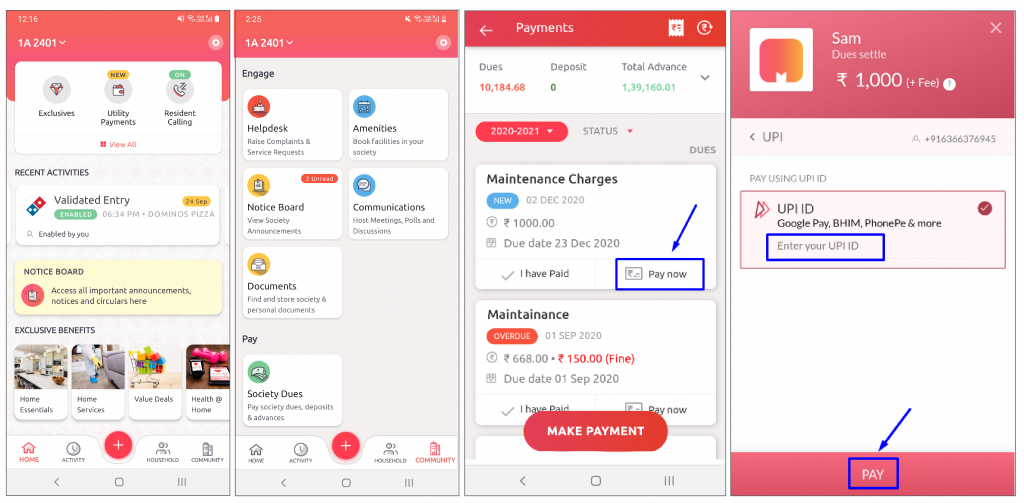
1. Tap on the ‘Community’ tab
2. Click on the ‘Society Charges’ card
3. Click on ‘Pay Now’ on the invoice raised
4. Select the mode of transaction – UPI, Debit/Credit Card, Net Banking, Wallet and click on ‘Checkout’
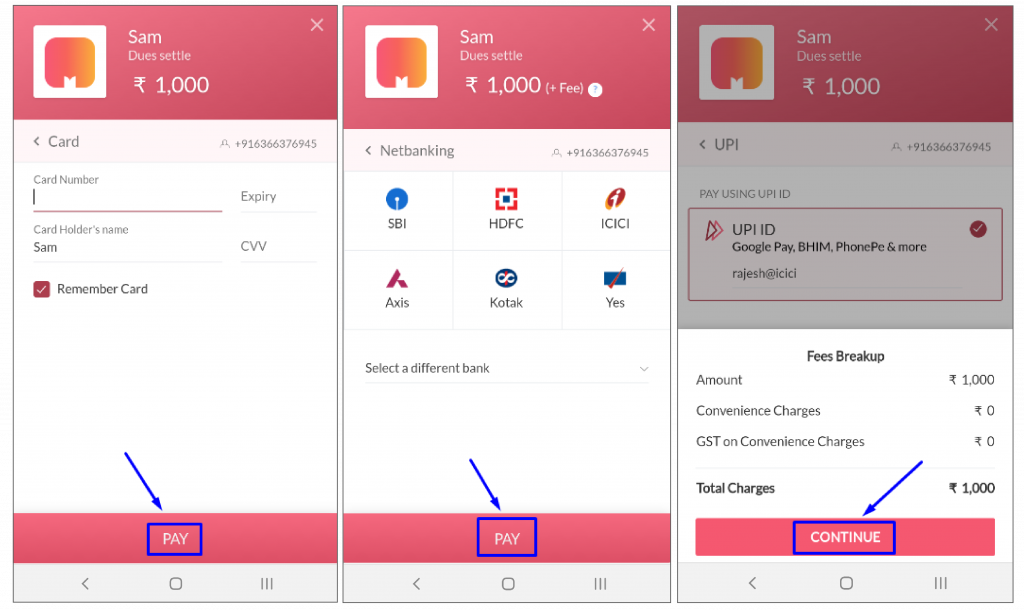
5. Enter the details and click on ‘Pay’ STEP-5
– For UPI, enter the UPI ID For Debit/Credit Card, enter the card details
– For Net Banking, select the bank and login
– For wallet, select the wallet and login
6. The convenience charges are displayed on the screen. Click on ‘Continue’ to make the payment
You can now avail of cashback benefits even if your society is not using MyGate ERP package. Learn more.
Benefits for the Management Committee:
- Avoid manual receipt entry for payment collection
- Ensure zero physical interaction between residents & society office
- Avoid the hurdle of cheque deposit & clearance, save time and effort
- Effectively manage collection from residents
- Save bank interest while dealing with cash & cheque
- Flat numbers in the society bank statements simplify the reconciliation process and save time during auditing.
- Helps aggregate category-based payments to selected bank accounts
- Avoid confusion & complications around collection date & late fee
- Reduces the dependency with accountants, which saves cost & ensures transparency
- Saves cost during yearly auditing
What’s new on MyGate
Your house rent is probably one of the biggest spends you make in a month. You may not have the liberty to skip paying the amount since it’s essential to make timely rent payments. This is why Mygate has introduced RentPay on the app. You can now pay your house rent via Credit Cards and get exciting monthly Credit Card rewards and 0% fee via UPI & Rupay Debit cards.
Pay NowWhy pay your rent using Mygate?
- Home savings with exciting monthly cashback and bank offers
- Free up cash and get a 45 to 60-day interest-free credit period
- Enjoy the lowest transaction charges on payments via credit cards
- Make UPI payments at zero transaction cost
- Set reminders so you never miss a due date
- Manage all your household payments in one place
- Download rent receipts to claim maximum HRA tax benefits
Here’s how you can get started….
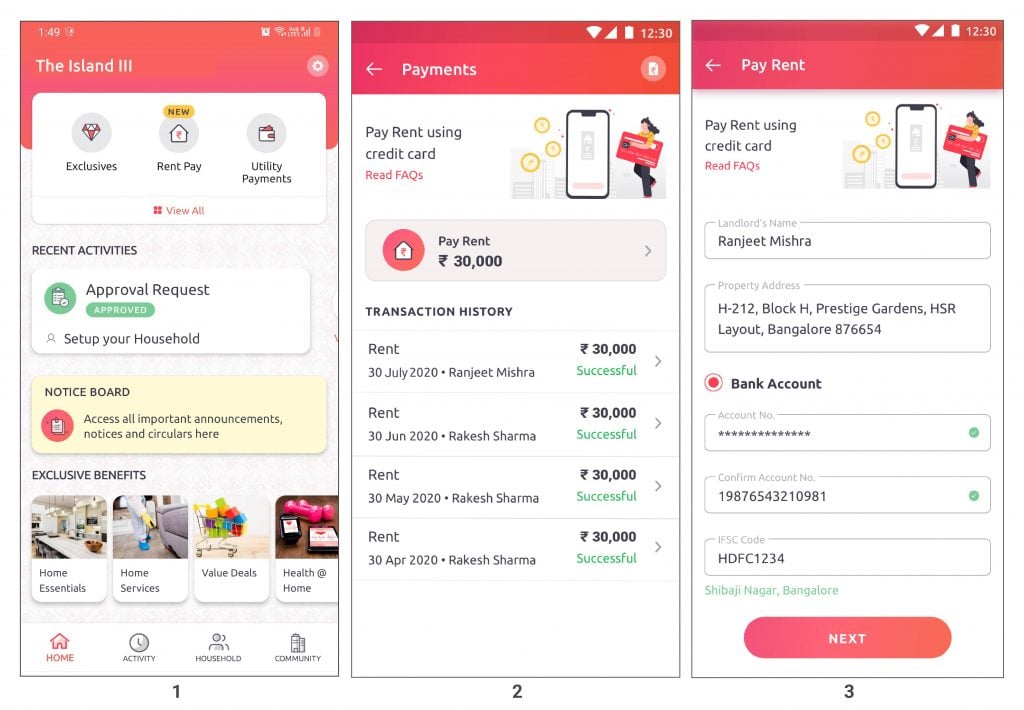
1. Click on the Rent Payment widget on the app
2. Click on ‘Pay Rent’
3. Add the Landlord’s name, the property address, the Landlord’s Bank account details and click on ‘Next’
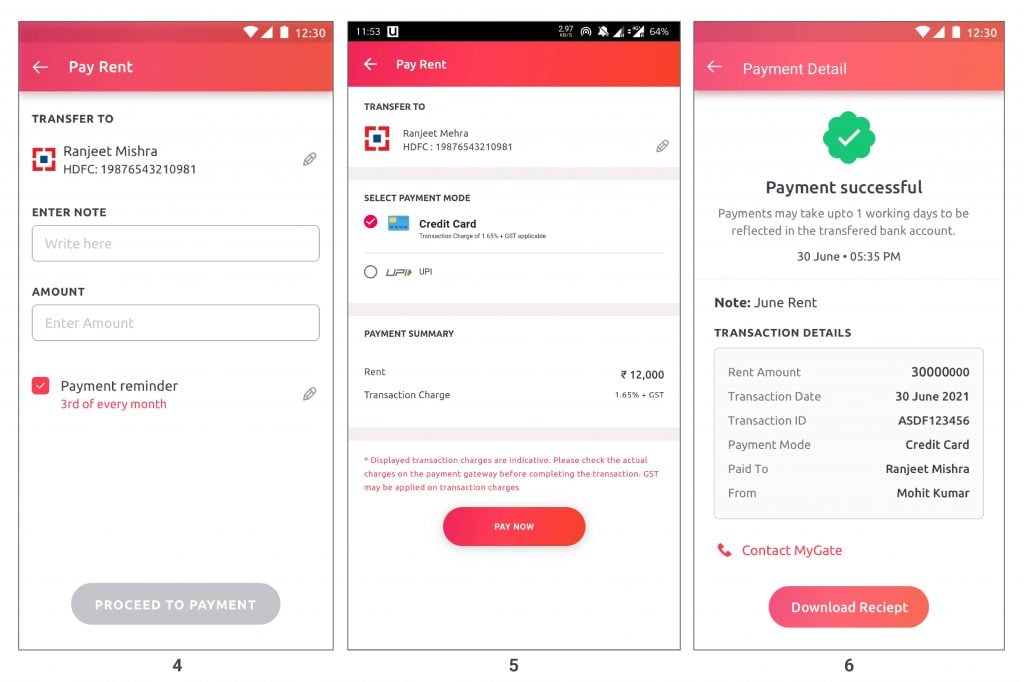
4. Add a note, enter the amount that has to be paid. You can check ‘Payment reminder’ and edit the date. Click on ‘Proceed to Payment’
5. Select the payment mode and click on ‘Pay now’
– For UPI, enter the UPI ID
– For Debit/Credit Card, enter the card details
6. View the payment status and download the receipt
For more details please contact your management committee.
It’s the start of the month, there are a lot of bills to settle, and domestic staff salaries to pay. The process is equally scattered across cash, cards, notes, and reminders as much as it is scattered in your head. But not anymore, thanks to MyGate Payments – a quick and easy way to pay and manage your home and community bills via a single app, with INR 4 charges for payments via UPI, and to also enjoy cashback and Credit Card offers every month.
Why MyGate Payments?
- Exciting cashback, rewards, and bank offers every month
- Pay and manage home & community bills in a single place
- Pay rent using a credit card & get an interest-free credit period*
- Options to pay securely via credit cards, debit cards, UPI, or e-wallets
- Transaction history of all your utility payments
- Download receipts of paid charges and society bills
- Payments acknowledged via SMS/Email
- Updates on the current status of your payment
- MyGate support for payment related queries
Let’s get started…
A. How to pay for your house rent
1. Click on the Rent Payment widget on the app
2. Click on ‘Pay Rent’
3. Add the Landlord’s name, the property address, the Landlord’s Bank account details and click on ‘Next’
4. Add a note, enter the amount that has to be paid. You can check ‘Payment reminder’ and edit the date. Click on ‘Proceed to Payment’
5. Select the payment mode and click on ‘Pay now’
– For UPI, select the preferred UPI app
– For Credit Card, enter the card details
6. View the payment status and download the receipt
Enjoy 0% fee via UPI on your house rent. Pay Now!
B. How to pay your society dues
1. Click on ‘Society Dues’ under the Community tab
2. Click on ‘Pay Now’ on the invoice raised
3. Select the mode of transaction – UPI, Debit/Credit Card, Net Banking, Wallet and click on ‘Checkout’
4. Enter the details and click on ‘Pay’ STEP-5
– For UPI, select the preferred UPI app
– For Net Banking, select the bank and login
– For wallet, select the wallet and login
5. The convenience charges are displayed on the screen. Click on ‘Continue’ to make the payment
Watch the video below for a complete walkthrough…
Enjoy SBI Credit Card & MobiKwik offer on your July society charges. Pay Now!
MyGate’s ERP Package is an end-to-end community management system that comes with a number of other useful features including quick access to essentials, healthcare at home, digital society updates, and emergency alerts in case of crisis. To enable it, contact your management committee or MyGate relationship manager.
C. How to pay for your utility bills
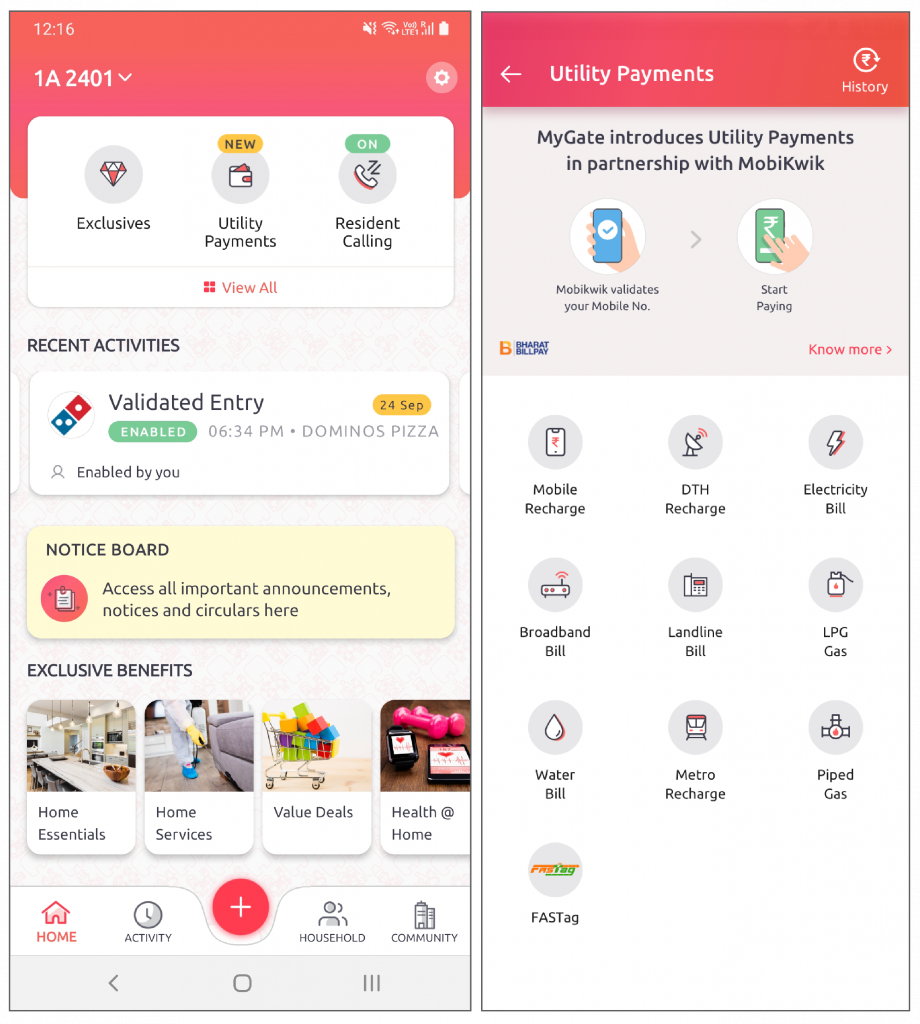
1. Click on the Utility widget on the app
2. Sign up and validate your mobile number
3. Select the payment you want to make – mobile, DTH, Electricity, Gas, or others – and proceed. You will remain signed in to the ‘Utility Payments’ section for 90 days.
4. Post 90 days, validate your mobile number again with OTP for security reasons
5. Transaction History for all the Utility Payments is available in the top right corner
Open the app link to pay your bills today!
D. How to pay your domestic help salaries
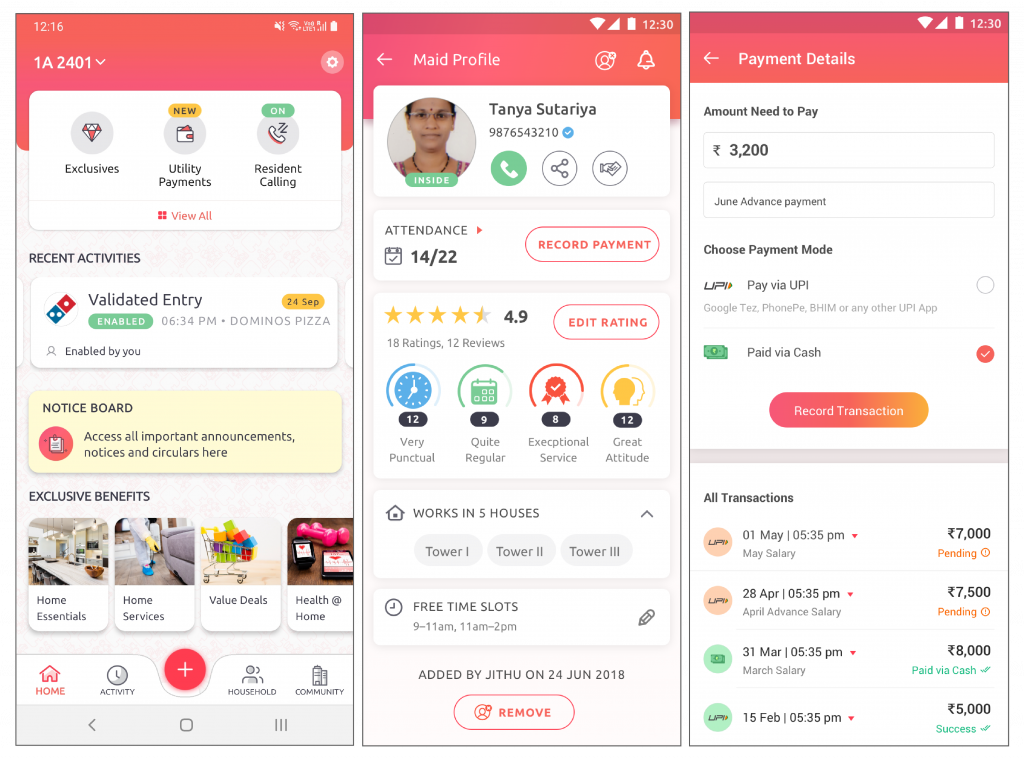
1. Select the ‘Household’ tab on the app home screen
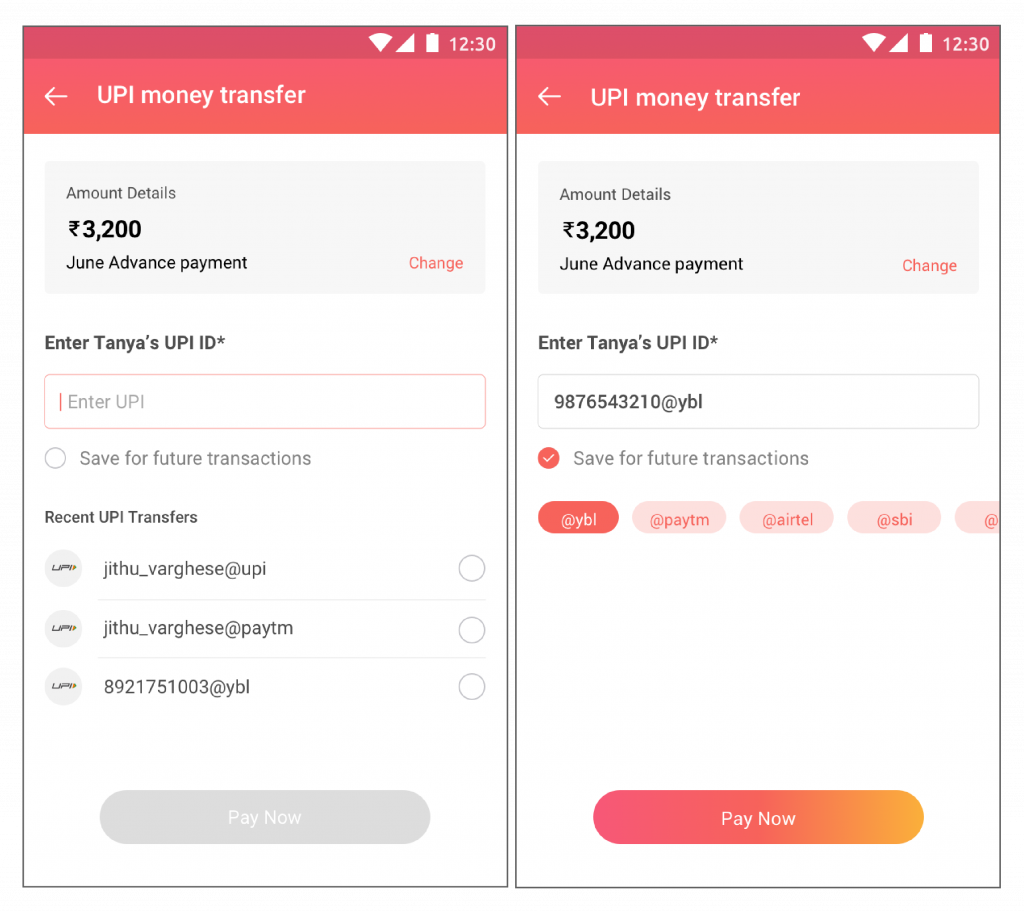
2. Got to your domestic help’s profile and hit the ‘RECORD PAYMENT’ button
3. Enter the amount to be paid and the transaction description
4. Choose payment mode as UPI
5. Click on ‘Proceed to Payment’
Get started with MyGate today and unlock the convenience of one-click payments! Get in touch with your society admin for details.
*Interest-free credit period is different for all banks.
What’s new on MyGate

Ramadan (Eid al-Fitr) also called the “Festival of Breaking the Fast”, is the ninth month of the Islamic calendar, observed by the followers of Islam worldwide as a month of fasting (sawm), prayer, reflection and community bonding. The period of Ramadan is a profound time for individuals of Islamic confidence. During this holy month, individuals fast during the day, starting before sunrise and breaking it only after sunset. The 30 days of abstaining ends with the celebration of Eid-ul-Fitr.
Ramadan, the blessed puts great significance on togetherness and this plays a big part in the feasts prepared to break the fast, usually attended by a large number of family members and friends. The Iftaar or breaking one’s fast is a joint undertaking that is held in mosques or homes or social areas. During such a time, society must come together to show their spirit of togetherness – a great way to do this could be organising an Iftaar party for the members of the community in your apartment.
Do’s and Don’ts of Organizing Ramadan feast in your apartment Community
Anyone living in a housing society can take the lead in organising the Iftaar as Ramadan is a festival that celebrates solidarity and love among individuals. The feast can be organised in any public gathering space in your apartment – the clubhouse, the playground or the lawn after obtaining the required permissions from the management committee. Members of any faith can take an active part in the festivities. There are however some do’s and don’ts that make organizing this affair much easier. To start with, it is advisable to discuss the celebration with the neighbours and decide on a suitable time and date that is convenient for all.
Do’s
- Decorate society: Transform your society with bold and vibrant colours to celebrate Ramadan and welcome Eid-Al-Fitr. The entire complex can be decorated using Heena lanterns, hanging streamers and decorative banners.
- Welcome the guests: Meet and greet is the main custom of organising a community feast – this allows you to meet the members of society and build the feeling of community. With a warm wish, welcome the individuals to the event. You could also explain about the festival and the purpose of organising the feast.
- Pray together: Traditionally, a small prayer is said before breaking the fast. Assign a separate space like the amphitheatre, clubhouse, guest rooms for men and women where the individuals in attendance can pray. Arrange enough prayer mats as per your guest counts.
- Break the fast: Traditionally light food items such as dates, milk, water, fruit and starters such as samosas, cutlets etc, are served to the guests, to break the fast. Iftaar menus traditionally include hearty dishes such as biryani, kebabs, soups, gosht and a variety of desserts and non-alcoholic drinks. When deciding on the menu, it is important to ensure that you have plenty of healthy options like salads and fruits and also ample vegetarian and kid-friendly options. Alternatively, you could also organise a potluck or take opinions before deciding on the menu.
- Organize community engagement activities: As a host, you can organise games, discussions and other engagement activities such as watching a film or quizzes to forge togetherness. Ensure that the atmosphere is genial and there are no events that may lead to disagreements.
- Zakat and Fundraising: Zakat is a significant part of Islamic culture. Since Ramadan is all about giving and the community spirit. You can tie up with non-profit organisations to help a charitable cause. Guests must be informed beforehand about the fundraising activities and Zakat, so that they come prepared with their items to donate. You could organise a donation drive where residents can give away garments, food or other items for the needy. Residents could also get together with the apartment association to organise a feast for the poor. You could also ask the guests to donate to the local orphanage, old-age home or a hospital directly.
Don’ts
- Avoid drinking or smoking in public places: Advise your guests to not to drink or smoke in public, which is not ideal in a community setting.
- Avoid playing loud music: Playing loud music may disturb other residents, cause a nuisance or break noise pollution laws.
- Don’t waste the food: Make sure none of the food is wasted. Arrange to donate the leftovers beforehand.
- Don’t engage in any disputes: Make sure the guests do not get into fights, arguments, debates, or engage in abusive language during the celebration.
Celebrating Ramadan in your housing society will help the residents know each other better and allow individuals of different faiths to become familiar with and appreciate the customs of other religions. With care, organisation and the spirit of brotherhood, your community can successfully celebrate this beautiful festival.
Paying your society dues, and keeping track of past payments, can be a hassle. Mygate puts an end to these problems by offering a quick and easy way to pay and manage your dues via the app and without hefty convenience charges.
Benefits of paying on Mygate
- Contactless one-click digital society dues payment
- View dues by date, month and year in the app
- Download receipts of paid dues and other society bills
- Pay via credit cards, debit cards, UPI or e-wallet options
- Payments will be acknowledged via SMS/Email
- Access entire transaction history in a single place
- Get updates on the current status of your payment
- Connect with Mygate support for payment related queries
Here’s how you can pay…
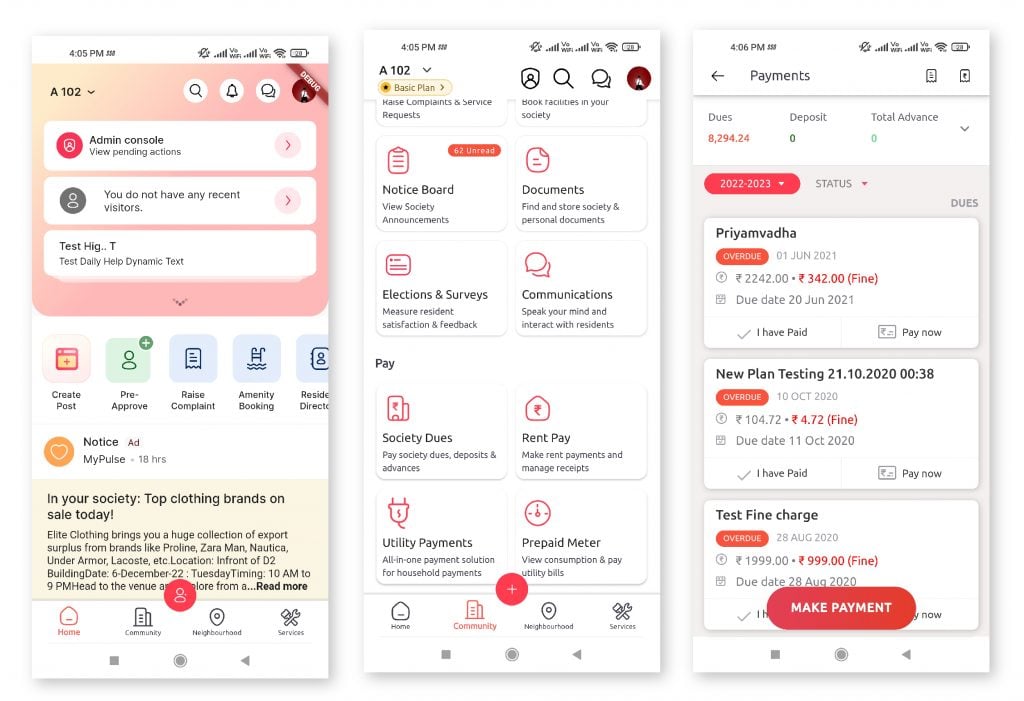
- Tap on the ‘Community’ tab
- Click on the ‘Society Dues ’ card
- Click on ‘Pay Now’ on the invoice raised
- Select the mode of transaction – Pay Later, UPI, Debit/Credit Card, Net Banking, Wallet and click on ‘Checkout’
- Enter the details and click on ‘Pay Now’
- For Pay Later, select the option and enter the details
- For UPI, enter the UPI ID
- For Debit/Credit Card, enter the card details
- For Net Banking, select the bank and login
- For wallet, select the wallet and login
- The convenience charges are displayed on the screen.
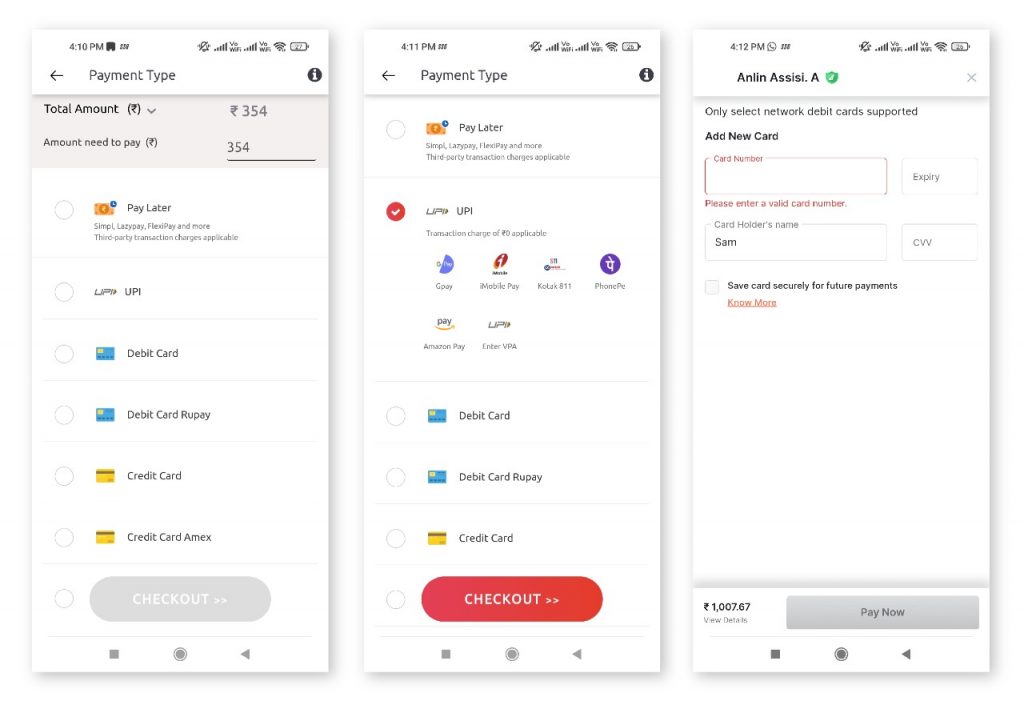
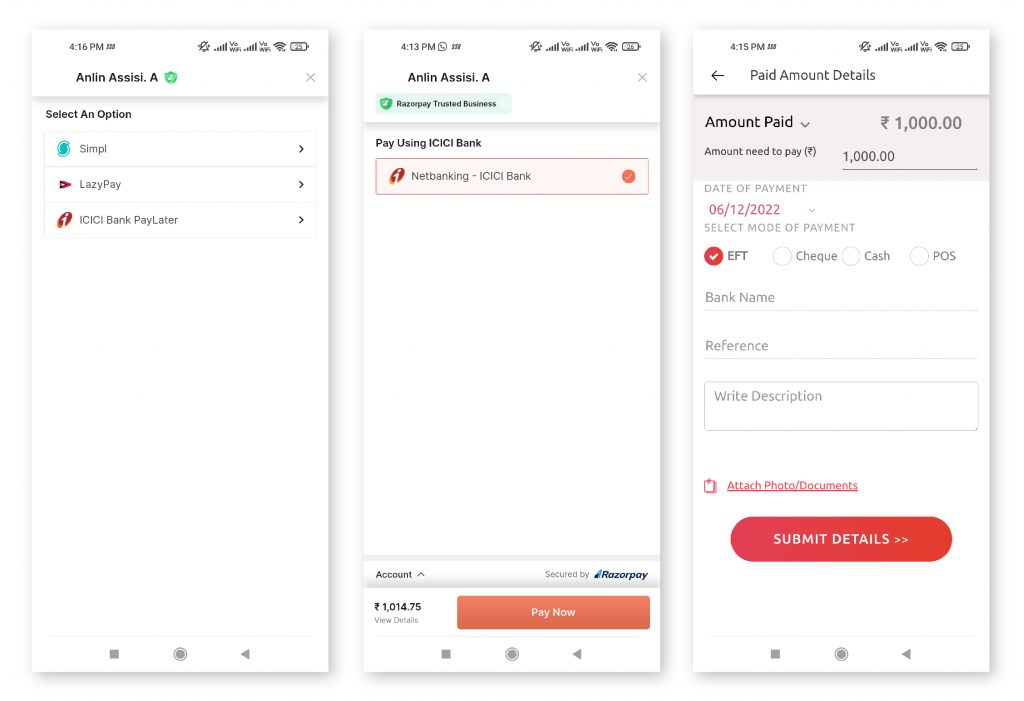
**This feature is available under Mygate’s ERP Package. The end-to-end community management system comes with a number of other useful features including quick access to essentials, healthcare at home, digital society updates, and emergency alerts in case of crisis.
Contact your management committee or Mygate relationship manager to enable Payments for your society today!
Termites are known to be pesky intruders who can silently damage your property and assets if unchecked. Even though they do not cause harmful health effects to humans, they’re known to cause structural swelling, eat through wood, and at times cause allergic reactions in humans. If not treated, a termite infestation can cause serious damage to the foundation, floors, and ceilings of the home. Here’s how to make your dwellings termite-free.
Know where termites live
Termites are dry wood, damp wood, or subterranean. There are certain places where they like to hide like furniture, walls, doors, windows, floorboards, dry wood, or ground; subterranean termites prefer sources of moisture above ground. You can also find termites living inside cracks of walls, tree trunks, and house plants. They have huge underground colonies that might surface on top too. These are especially common on ground floors where homes are in close contact with the dirt.
How to identify termite activity in your house?
Tap on wooden furniture and walls. If it sounds hollow, there may be termites festering within. Another sign is holes in walls or wood. They may also make quiet knocking/clicking sounds from the insides of the walls. If doors and windows are tightening up and difficult to open and close it may be yet another sign if the surface feels porous. One of the most obvious symptoms of termite infestation is the presence of termite droppings. This is a dust-like brownish powder that gets collected on the ground or surface due to termite dropping their feces. It looks like sand or sawdust and can be light/dark brown or black, depending on the color of the wood.
Keep your apartment uncluttered
Prevention is better than pest control. Keep your inner and outer surroundings neat and clean in order to generate healthy living conditions. Don’t let waste, leftovers and discarded items linger in or around the house for too long. Declutter your home from unnecessary junk in storage areas (newspapers, old magazines, cardboard, etc) cupboards, drawers, underneath the furniture, inside the loft and other places which have piles of dusty things. Termite may not directly grow on all household objects, but the presence of clutter, moisture and wet dirt encourages its growth. If the atmosphere is too humid in and around the home, you might want to invest in a couple of dehumidifiers. Keep your home dry and adequately ventilated. Don’t let garbage pile up and take out trash frequently. You must maintain an 18-inch gap between soil/mud and wooden partitions of your home for prevention.
Preventive scrubbing, spraying and care
Regularly disinfect your countertops, cabinets, furniture, floorboards, door and windows (any other surfaces) with termite resistant spray made at home or good quality store-bought anti-termite sprays. Choose something with instant kill ingredients against termite and borers. While painting, you could also make termite killing spray at home. Mix half a cup of white vinegar with four tablespoons of lemon in a spray bottle and scrub surfaces thoroughly. Orange oil is another powerful treatment for preventing dry wood termites. Other than that, when you’re painting wood and walls, you can use an oil-based termite-resistant additive. Inspect cracked seals for termites and have them sealed by professionals.
Another solution is to sun dry pest-infested objects and furniture. Dry/steam clean mattresses and beddings to control bed bugs and wash linen at high temperatures. Use organic bug killers to get rid of cockroaches, fleas, etc., but make sure you read the label to differentiate between indoor and outdoor pests.
Inform tenants, staff and other society members
Ask family members, domestic help, watchmen, tenants, etc. to be on the lookout for signs of termites and report it immediately. Oftentimes, inhabitants such as tenants ignore the signs of termite activity thinking it’s not their responsibility if the situation worsens. Even if they’re not responsible for getting rid of the termites, they most certainly should inform the landlord of termite damage. Maintenance and service staff of your apartment complex should inspect all areas of the premises and common spaces because even if the infestation may not be in your home but can spread if it originates in any other part of the building.
Hire certified pest control services
Professional expertise is necessary when things go out of hand and termites have already entered the property. It’s best not to take the risk of DIY pest management as you might not even be aware of the extent of damage and prevalence of termite activity. It’s best to hire a vendor after reading reviews and reputation. Agencies will inspect the damage and recommend scientific techniques for removal and protection. You can also opt for yearly contractual agreement.
Other than traditional methods, you could also opt for eco-friendly extermination techniques so that there are fewer health and environmental hazards. They’re targeted at killing specific pests without causing strong smells and using chemicals. This is also useful because over time, pests may build resistance towards chemical agents.