

Since a housing society is a self-sustained, self-governing entity that requires participation from all the residents, its financial efficacy and soundness are top of the priority list for the management committee.
From the standpoint of legal compliance, a State Auditor audits the society’s financial accounts once every year, taking stock of statements, ledgers, cashbooks, profit-loss balance sheets, expense reports, loans, investment, borrowings, lending of the funds by the society and the interest paid and received along with the related agreements with outside agencies. Not only that, come Annual General Body Meeting, the society has to produce a detailed analysis and account of all the financial reports pertaining to the year so that the residents are privy to the health and the legitimacy of the society’s financial affairs and undertakings.
If the Secretary, Treasurer, or Accounts Manager of the society is found mismanaging the funds or happens to be slacking in keeping accurate records of income and expenses, being negligent of discrepancies, there could be serious damages in the form of penalty and/or removal from the managing committee.
At the same time, the MC is responsible for timely collection of all dues from the members, pay service staff and vendors, paying utility bills, managing the sinking fund/repair and maintenance fund, society’s bank account transactions, and filing yearly income tax returns as per government mandate.
Listed below are the main income sources and expenses of a housing society:
Society Income Sources
1. Internal Income Source
- Maintenance charges
- Non-occupancy charges
- Parking fees
- Property transfer fees
- Membership deposit
- Interest generated by dividends, fixed deposits, and investment
- Interest earned from defaulting members
2. External Income Source
- Advertisement/billboards on society premises
- Mobile tower rentals
- Store rentals – Medical, Grocery, Boutique, stationery stores, etc
- Income from renting open spaces/common spaces to vendors
Society Expenses
- Maintenance staff/office manager salaries
- Repair, maintenance, and reconstruction of premises, equipment, assets, amenities
- Lift maintenance
- Common light and water bills
- Annual maintenance charges for lift, pool, and other electronic equipment
- Hired labor for maintenance and cleanliness of common areas, society streets
- Plumber, electrician charges
- Property tax payment and insurance payment
- Spends on cultural, religious and celebration activities
- Installation of the waste treatment plant, solar system, rainwater harvesting, smart meters, etc
Why digital management of revenue and income is important
A substantial number of medium to large residential societies in tier I and II cities in India have moved from pen-and-paper ledgers and invoicing to digital account management.
Going paper-free with your accounting is not only environment-friendly but highly practical with the availability of modern-day society accounting software that helps you stay organized effortlessly.
Sure, a WhatsApp group chat is enough for day to day communication and swapping stories but when it comes to a serious numbers game, a professional accounting tool is a must. Below are the reasons why:
1. Search, don’t dig
Who has the time to find an invoice or a receipt from a crowded and messy filing cabinet? With a simple bulk upload and search option on an accounting dashboard, one can easily locate past and present transactions without wasting time.
2. Eliminate manual errors
With multiple automation features, you can schedule your invoices without manual inputs while auto-calculating the amount to be charged per resident including fine-tuning discounts, predetermined rates, arrears, settlement from advance payments, etc. These helpful features keep your accounting clean for government audits and member reviews.
3. Manage multiple complex accounting activities with transparency
No matter how big the task, you can find ease with generating reports like BS, P&L, GST Report, TDS, etc., along with individual resident collection reports, graphical income/expense reports, daily electronic cashbook, automatic payment reconciliation, balance sheet, security deposit reports, dues and defaulters reports, cash or bank transfer, and general ledgers.
4. Make dues payment easy and comfortable for society members
Create auto-billing options for members with timely reminders to pay maintenance fees and other dues. You can also create group invoices with multiple line items in a single invoice or choose targeted invoicing for different buildings and wings. Additionally, you can avail settings for charging defaulters with fines through rates that can be constant or set as a percentage of overdue as well as generate credit reports for charges on issued invoices.
Digital account management can also integrate online payments from residents and allows MC members to track overdue payments. This is especially useful when you’re dealing with hundreds of incoming monthly payments in a residential society with multiple wings and high-rise buildings.
Once an online or advance payment is made by the members, digital accounting features can auto-generate receipts and auto-reconcile payments as well.
In summation
Essentially, the toughest and the most tedious job of income and expenditure management can be a smooth sailing task for the stakeholders in a housing society with prudent and smart use of technology.
Years and piles of paperwork can be easily uploaded or downloaded digitally, immaculate reports can be generated by one click, and constant back and forth for dues collection can be transitioned to an app-based framework. Access to billing and accounting can be granted to the inner sanctum of the MC so that financial security is never compromised as opposed to physical account keeping which is vulnerable to tampering.
If your housing society has been considering going digital in terms of financial management, now is the time to explore new and efficient options. The benefits will be manifold and the convenience invaluable.
Has a resident or a visitor wrongly parked his car within the society premises? Wondering how the security guard can trace him? Using the Mygate Guard app, guards can now call vehicle owners in the following case scenarios:
- The vehicle is parked in the wrong parking spot or No Parking zone at the society
- The vehicle’s lights are on, fuel is leaking, any damage to the vehicle, etc
- The resident wants to reverse his/her own car and needs to contact the vehicle owner whose car is blocking his/her car
- Any other vehicle emergency
Steps for the guard to make a call…
- On the Guard app passcode page, the guard can toggle the passcode screen to vehicle search
- Enter the 4-digit vehicle number and the search results associated with the vehicle number will pop-up
- Click on the call icon visible against the search result
- This will initiate a call to the vehicle owner
Conditions to call different types of vehicle owners
| All residents | Flat IVR1/2 should be updated, and vehicle number should be updated in My Vehicles or by Admin so, the call symbol pops up |
| Service providers | Their mobile number and vehicle number has to be updated in their Service Provider profile so, the call symbol pops up |
| All visitor types & pre-approved guests | Their mobile number and vehicle number has to be captured during entry so, the call symbol pops up |
Society settings – internal conditions
| Society Settings | Guard app > Enable Calls > Society Setting should be on |
| Society Settings | Guard app > Resident Directory > Society Setting should be on if the guard wants to contact vehicle owners who are residents |
| Inventory | SIM on the guard device must have incoming & outgoing calls. (All our SIM cards are currently data SIMs. Contact your Mygate representative to activate calls without data.) |
As the number of Covid cases rises, so does the number of households going into home quarantine. The waste generated by such households has to be handled and processed carefully so as to curb the spread of the virus.
In July, the Central Pollution Control Board (CPCB) issued separate guidelines for ‘Handling, Treatment & Disposal of bio-medical waste generated during Treatment/Diagnosis/Quarantine of COVID-19 patients’ which gives guidance on management of COVID-19 related bio-medical waste including that generated by households.
What qualifies as Covid waste?
Covid waste is recognised as Hazardous Biomedical Waste and governed by the Biomedical Waste Management Rules 2016. This is infective biomedical waste that must be segregated and stored separately in non-chlorinated yellow bags. It includes:
- Used facemasks, gloves, tissues, toiletries, swabs contaminated with the blood/ body fluids of Covid-19 patients
- Syringes, medicine bottles used by the patient
Other Covid waste:
- Masks and gloves used by the patient’s caregiver and other family members
- Leftover food, disposable plates, glasses, water bottles, Tetrapaks, toiletries, sanitiser bottles, kitchen waste, paper, plastic & packaging waste, floor cleaning dust generated by the quarantined household
Protocol for Covid waste management in housing societies
Housing societies should follow segregated waste disposal. One fixed place should be identified and used for dumping waste in separate bins by the residents. All Covid waste must be collected by a separate team of Covid waste collectors sent by the local authorities twice weekly.
If the number of quarantined households is low, a separate team appointed by the common biomedical waste treatment and disposal facility (CBWTF) operators may be appointed to collect the waste from quarantined homes.
The CPCB guidelines also state that biomedical waste can be deposited at designated centres established by Urban Local Bodies. This is an alternative in case Covid waste collection does not take place in your society. Find nearby common waste deposition centres for the collection of waste (e.g. a Dhalao, if one is established by your municipality) and deposit the waste there securely. All Covid waste is to be safely disposed of by local civic bodies in a CBWTF.
Handing over mixed or unlabelled Covid waste to regular waste collectors puts their health at risk and increases the spread of the virus since they may not be trained or equipped with PPE needed to handle biomedical waste.
As per CPCB guidelines, if your home has a Covid positive person, you can:
- Hand over the yellow bags containing biomedical waste at your doorstep to authorized waste collectors engaged by local bodies
- Hand over the biomedical waste at your doorstep to a waste collector engaged by the CBWTF operator
- Deposit the biomedical waste in yellow bags at designated deposition centres identified by the local authorities
Pre-disposal steps for quarantined households
- Designate a healthy family member (without any pre-existing conditions) to take care of the sick patient. Only that individual should be allowed to handle and dispose Covid waste
- Designate a separate Covid waste area in your house (preferably the patient’s own room)
- Wear all essential PPE while handling/ disposing waste, including mask, goggles, an apron and gloves when handling the patient’s waste
- All infective biomedical waste produced by the Covid patient must be securely wrapped in non-chlorinated bags and stored separately in a closed bin
- Other waste from the household must be bagged and stored separately. Do not mix this waste with the infective biomedical waste of the Covid positive person
- Tightly wrap sharp objects like needles so that they don’t tear the bag or harm sanitation workers
- Instruct other members of the household and domestic help not to handle the Covid waste bags
- If the patient isn’t able to use the toilet and uses a bedpan, their excreta is to be collected in diapers and disposed of in the yellow bags
- Linen, pillow covers, towels and clothes used by the patient may be stored in a disposable bag for 72 hours and then washed at home using commonly used detergents
- Masks and gloves used by the caregiver and other household members must be shredded and stored in a paper bag for 72 hours before disposal to avoid reuse
Disposal steps to follow
- Do not dump Covid waste into the society’s general waste bins or in open areas. Place yellow Covid waste bags in an appropriate-sized dustbin outside the doorstep before the arrival of collectors
- Do not combine Covid waste with the general solid waste of the society. The problem with mixing general solid waste with Covid waste is that the incinerators are not designed to process regular waste, and thus the system produces more emissions and ash, leading to environmental hazards and health problems to all in the vicinity
- Hand over the waste to authorities assigned ONLY for Covid waste collection, whether they be from the municipality or the local CBWTF team
- Before and after handling the waste, sanitise yourself and disinfect the bag before it’s tied. As an added safety precaution, seal the waste bag when it’s 70% filled to avoid accidental contact with infectious waste and use an extra bag to ensure twice the safety
- Sanitize as per protocol or shower after handling waste
- You can also label the bag as ‘Covid waste’, ‘used Covid masks’ etc. so as to warn potentially unprotected handlers
Responsibilities of the society’s MC
Government authorities are responsible for sealing the apartment of the affected person/s, displaying a Quarantine Alert on individual homes, mentioning the isolation period and declaring the home as a containment zone. Nearby floors may be declared as buffer zones.
Follow the Do’s and Don’ts below to ensure that the Covid waste in your society is handled carefully:
Do’s and Don’t of Covis Waste
Do’s:
- Strictly forbid the waste from quarantined homes from being disposed in the society’s common garbage collection area or from being mixed with the general waste
- Give masks and gloves to all members of the housekeeping staff. Ensure that they are educated about the risks of coming in contact with Covid waste, the protocol and safety measures to be followed to avoid contact with Covid waste
- Educate all residents about the correct steps for Covid waste management
- Ensure that door-to-door collection by designated ULB waste collectors or CBWTF members takes place regularly from quarantined homes
- Ensure that waste collectors are made aware about the households under isolation/ quarantine so they can take the necessary precautions
- Report any lag in service/careless handling (by either municipal waste collectors or CBWTF operators) to the zonal officer of your ULB
- In case Covid waste is not being collected from the society, the MC can make arrangements for the quarantined/ isolated household to compost its wet waste separately. In case of dry and sanitary waste, ensure that it is bagged as soon as it is generated. After 72 hours, it should be double-bagged and stored until collection takes place. Double bagging after a 72-hour gap renders the virus inactive on the outer covering
Don’ts:
- Don’t allow regular housekeeping staff to handle Covid waste (yellow bags) or regular waste from quarantined homes
- Do not allow Covid waste to lie around in the building as it could put residents at risk
- Don’t permit delivery agents to directly deliver items to the quarantined home as they might inadvertently come in contact with the Covid waste in and outside the quarantined home
In case of accidental handling of waste by housekeeping staff or in the event that the patient has touched common surfaces in the home or society (such as lift, lobby, gates, etc., the domestic/ housekeeping staff should be trained to:
- Wash hands with soap and/or use a sanitizer
- Wear PPEs while disinfecting any surfaces touched by the patient
- Wear masks and gloves at all times within the premises/quarantined homes
How to coordinate with civic bodies for waste management
As soon as the patient is identified as Covid positive, the lab/hospital is required to alert the municipal authorities, who are immediately responsible for sealing, fumigating the patient’s home and disinfecting commonly used surfaces as well as arranging for waste transportation.
If all the required actions are not taken, the society should call zonal Covid helplines or seek help from nodal officers (if assigned) by the State to handle public grievances regarding Covid pandemic. Societies should not only strictly adhere to Covid waste guidelines, but also ensure that the local authorities are complying and cooperating in following them completely.
Millions of Mygate users pay their society maintenance bills via the app and here’s how they benefit…
- Contactless one-click digital society maintenance payment
- A multitude of payment options to choose from, credit/debit cards, Netbanking, UPI, etc
- Maintenance overdue reminders
- Access to entire transaction history in a single space
- Complete visibility into transaction records
- INR 4 charges on UPI and RuPay Debit Card Transactions
..and more!
Know your payment status
Did you make a transaction that was unsuccessful? Are you confused about the status of your payment? With Mygate, not only you have complete visibility into your payment records but also complete clarity on the status of individual transactions.
Here’s how…
- View all your transactions at a single place on the app; the ‘Payment History’ screen
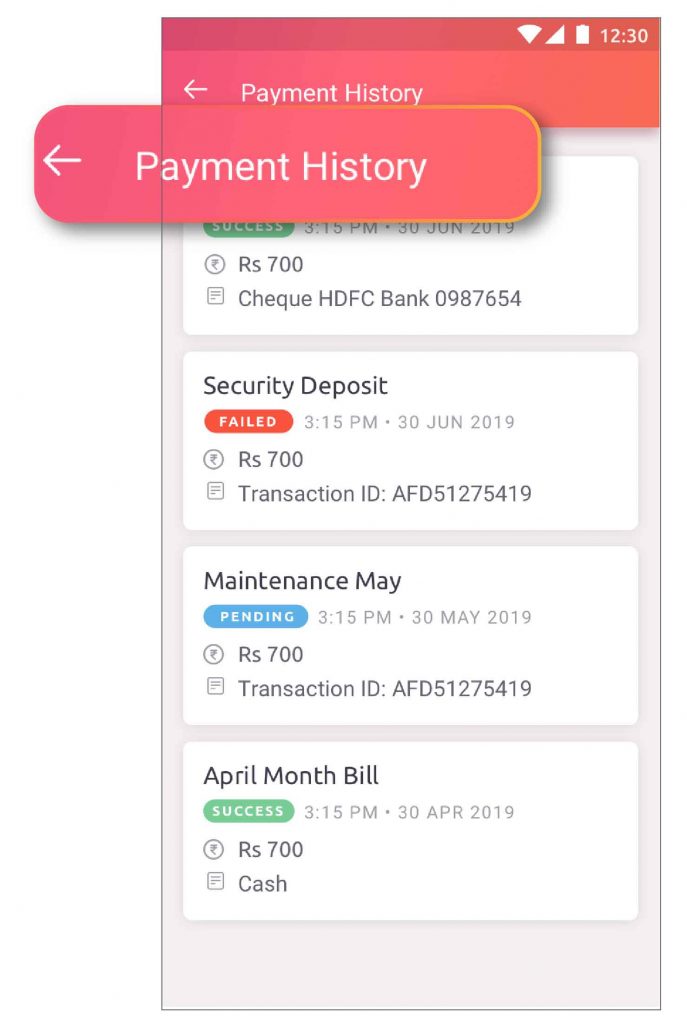
- Know the status of your individual transactions; whether they were successful, failed or pending
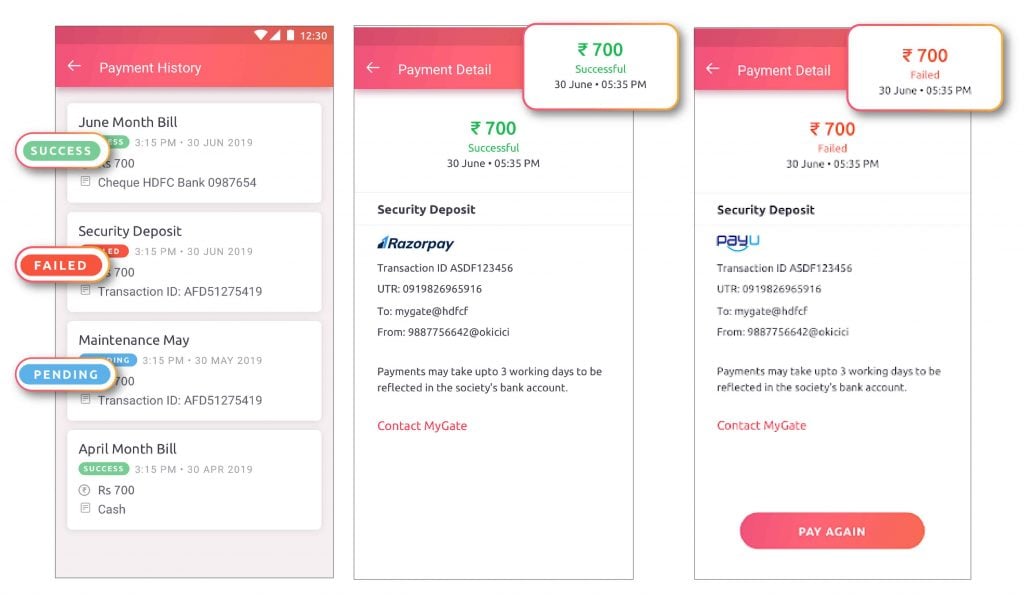
- Receive an actual response from the payment gateway about your transaction
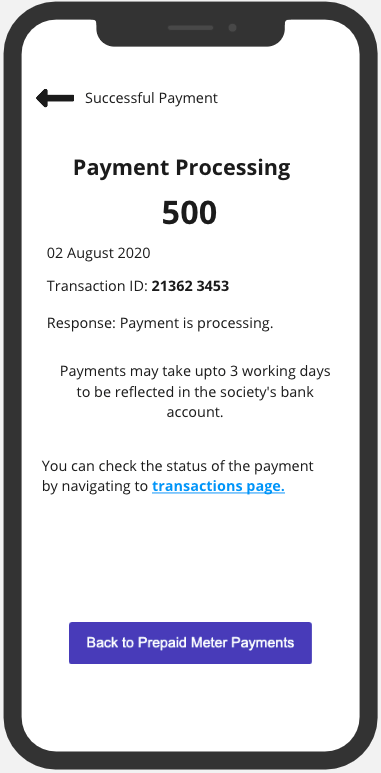
For more information, get in touch with your society admin.
When dealing with buying or selling property, the possession certificate of that property is extremely important. It is essential that the seller of the property hands over the possession certificate to the buyer of the property, which will state the date of possession. In rural areas, the possession certificate is usually issued by the Tahsildar. In urban areas, the possession certificate is issued by the RDO (Revenue Divisional Officer).
The possession certificate has many uses besides confirming the ownership of the property and the date of possession. It is used as proof when securing a home loan from a bank. It is also important when entering the property in the land revenue records.
Without the proper issuance of a possession certificate, it becomes unclear whether the possession of a property has in fact been transferred from one party to another. This can lead to complicated legal issues regarding possession and ownership.
If you are planning to buy property, it’s essential you know how to obtain a possession certificate, what it contains and all the documents required to obtain it to ensure your purchase is hassle-free.
What is a possession certificate?
A possession certificate is a legal document that hands over the possession of land from the owner to the buyer. Once the land has been bought by the buyer for a sum of money, the possession certificate is given to the buyer by the previous owner to signal the transfer of the property.
The possession certificate is extremely important when it comes to buying a home or property as it proves that the property has been sold legally to the buyer and that they (the buyer) own all the rights to the concerned property.
When it comes to buying property from a builder or developer, the possession certificate is usually issued within 30 days. It is important that a resident obtains it as, without a possession certificate and registration documents, the buyer cannot prove to have rights to the property and the builder still owns it by law. This is problematic as the builder can then vacate the buyer (resident) lawfully.
The possession certificate will be issued only if the building has been constructed according to the proposed plans and adheres to the design rules and fire safety rules. It will also need to have a certificate of completion. The laws regarding this may vary from one state to another so it is best to check with your local authorities about how to go about getting the possession certificate in your area.
What are the contents in a possession certificate?
The possession certificate indicates the change in ownership – it is issued by the buyer. The ownership certificate will show that the property ownership has been given to the buyer. This ensures that the buyer has full interest in the property. Both parties have to register for the property. So, the developer has to sign the declaration that the property is no longer his and the buyer signs to take over the property. The possession certificate also includes the additional features of the property (parking area, garage, etc) that have been mentioned in the sales agreement.
What is a conditional possession certificate?
A conditional possession certificate or a conditional possession letter is a document that is used when the buyer of a property is not completely satisfied with the conditions of the property.
For example, reasons for dissatisfaction could include things such as repairs needed, low-quality construction, the wrong materials used or even a delay in the occupancy certificate. When the buyers are not happy with certain aspects of the property, they can send their concerns to the seller or builder along with the possession letter so that the seller or builder makes the needed changes that we agreed upon.
If the project happens to be delayed, the buyer can also ask for compensation from the builder for the losses incurred due to the delay.
Documents required
If you need to get the possession certificate of a property, you need the following documents:
- Sale deed agreement copy
- Identification proof of the applicant
- Signature proof of the applicant
- Encumbrance certificate
- Registered sale agreement copy
What are the rights of the holder of the possession certificate?
The person who has the possession certificate has certain rights with regard to the property. These are listed below.
- It gives the purchaser complete authority on the property. They can decide to do as they wish with the property.
- They have the right to sell the property.
- The purchaser can do enhancements to raise the value of the property.
- They have the right to rent out the property and take the rent money.
- The seller of the property has no rights and cannot claim any benefits regarding the property.
- The buyer has rights to the details of the property plans by the regulatory authorities in charge, as well as the schedule, the structure plan and other documents that may be relevant.
Differences between possession certificate, occupancy certificate & completion certificate
1. When are each of these certificates issued?
Possession certificate: After the initial paperwork has been submitted and a down payment has been made.
Occupancy certificate: The builder applies for this document (the occupancy certificate) after obtaining the completion certificate.
Completion certificate: The completion certificate is issued when the property has been constructed and is by the state’s regulations and norms.
2. Which authority issues each certificate?
Possession certificate: The possession certificate is issued by the RDO (Revenue Divisional Officer) in urban areas. In rural areas, it is issued by the Tehsildars.
Occupancy certificate: The municipal body of the area where the property is in will issue the occupancy certificate.
Completion certificate: The authority that is in charge of declaring that the construction process of the property has ended will issue the completion certificate of that property.
3. What are the key contents of each certificate?
Possession certificate: It includes all the timelines that the new owner has to adhere to regarding making the final payments of the property.
Occupancy certificate: It states that the property follows all the necessary building codes and is ready to be occupied.
Completion certificate: It will state that the project has been finished according to the building plans that were submitted. It also states that the property adheres to the state norms and lists the clearances that the property has.
4. What does each of these certificates signify?
Possession certificate: It shows that the property rights have been transferred from one party to the other party.
Occupancy certificate: It signifies that the property can be occupied by the buyer.
Completion certificate: Completion certificate implies that the property is constructed fully according to the building plans that were proposed and agreed upon.
Checking the status of the possession certificate online
It is easy to track the status of the possession certificate of your property online through these ways:
1. E-district portal
Go to the E-District portal from the state you are from. Click on “Transaction History” and enter the application number. You can then see the status of your possession certificate.
2. Meeseva portal
You can see the status of the possession certificate of your property on the Meeseva portal. Log in to your Meeseva account. Click on the option to track your application status – this will be on the homepage. Fill in the application number and click “Track Application Status” to see the status of your application.

Everyone imagines owning a home one day – a place to call your own. But as property prices go higher and higher, the reality of owning realty can sometimes seem a distant dream. Renting, even in expensive cities, then makes more financial sense. But how do you decide whether renting or buying property is best suited to your situation?
The decision can be complicated – budget, personal and long-term financial goals all come into play. Let’s evaluate the pros and cons of renting and buying a house.
What are the benefits of renting?
There are several benefits to renting a home – especially if you do not have the savings for a downpayment. Here are the main reasons why renting makes sense:
1. The financial investment is not a lot
Perhaps the reason why most people choose to rent over buying a home is that the investment is lower. Paying monthly rent leaves you with much great financial flexibility than putting down a large downpayment in addition to monthly EMIs. There are also other costs that you can save on when you rent. For instance, if you rent a fully-furnished home, you do not have to shell out a large amount of money buying furniture and kitchen appliances. Most household renovations and repairs are usually taken care of by the landlord, too.
All these terms and conditions are usually stated in a rental contract that has been agreed upon and signed by both the landlord and the tenant.
2. You aren’t tied down geographically
When you rent a home, it is always easy to relocate. This can be especially useful when you work in a field that requires you to move every few years. It’s also helpful if you have not decided on which city you would like to live in for the long haul. Renting gives you the freedom to take on work at new locations without having to worry about the financial constraints of having to keep paying an EMI on a home loan. You can be adventurous and move across the country for new professional opportunities and experiences every few years. This is usually a big draw for younger individuals who are still deciding on where to set up base.
3. There is no investment risk
Buying property is not always the best investment. Investing in real estate can turn out to be a high-risk and low-return investment for a middle-class Indian. Often, you have to empty out your life savings in order to buy a property and then take out a home loan for decades, too. As far as investments go, buying a home isn’t always a safe bet. If you don’t want to sink your savings into property investment, renting can be a good option.
Appreciation isn’t the only worry when buying property, risks also include getting duped, construction integrity, and development delays when buying under-construction property. Buying in developing areas may yield higher appreciation than buying in already developed areas but it can be a gamble as development isn’t always guaranteed and you could be left with a low return on your investment. If you are looking to invest for good returns, perhaps shares, mutual funds and other investments can better suit your financial goals.
4. You know exactly how much you will need to pay
When you rent your home, the monthly rent is fixed and agreed upon so you know exactly how much money you need to set aside each month. However, if you take a home loan (with a floating interest rate) your EMIs can fluctuate according to various economic factors. When the interest rates go up, your EMI could increase significantly, needing you to reevaluate your monthly budget and spending.
5. There’s less paperwork
When you buy a home, you have to go to banks to apply for a home loan, submit paperwork and adhere to various guidelines and checks. This can be a lengthy and time-consuming process. Every detail in the contract needs to be read and understood carefully before signing and often requires consultation from a legal professional. The whole process can take weeks to months. With renting a house, a leave and license agreement is drawn up and signed with relatively few hassles as the risk involved is generally very low as the duration of the agreement does not exceed 11 months.
What are the benefits of buying a house?
Buying a home is a dream for many and it certainly has its advantages. Here are some important benefits of investing in a home.
1. It is an emotional purchase
Buying a house is sometimes less about the investment and more about feeling emotionally and physically secure that you have a place of belonging; a space you can call your own. We all dream about living in our own ‘owned’ homes when we are young. Our parents usually owned their home and it’s something that has been ingrained in us since childhood. With the cost of homes increasing drastically year by year, buyers often take the ‘the sooner, the better’ approach, putting down a down payment as soon as finances allow them to avoid paying even more in the future.
2. You can live as you want
When you have a place of your own you can decorate, renovate or reconstruct exactly as you would like it. If you have strong design and style ideas, having your own home is the perfect canvas to showcase your personal tastes. When you rent, however, you are obliged to get permission from the landlord for as little as a drilled nail into the wall. If you rent an already furnished home, you will be stuck with furniture and decor that don’t necessarily suit your taste and personality.
3. Enticing offers
As Covid-19 hit the real estate market pretty hard, builders are giving potential buyers attractive incentives during this recovery phase. Developers may offer good payment schemes and special deals to secure their commitment. For those looking to buy property, now is the time to benefit from such offers.
4. Feeling financially secure
If your EMIs are comfortable for you to pay, taking out a home loan can feel like a step toward embracing greater financial freedom in the future. Regular mortgage payments can cost a little more than monthly rent in some places and the benefit is that you are getting your own place at the end of it. Renting can seem like a waste of money to some people, especially in big cities where the rates can be unreasonably high and unpredictable.
5. Appreciation
When an area is developing, it is likely that property in that area will appreciate simultaneously. Therefore, if you happen to live in a location that shows signs of rapid development and you plan on staying in this area for a while, buying property can be a sound investment. For one, you will have a place to stay, of course. Secondly, you could end up with good returns on your investment rather than just spending money on rent.
Is renting or buying better in 2023?
Investing in property has always been seen as a positive long-term investment in the Indian market. With the government focussing on development and infrastructure, property prices are likely to continue to rise. However, whether this matches up to other investment returns depends on a host of factors. Owning a home is much more about your personal standing and desires than investment for many. But if you are set on getting the most bang for your buck, perhaps you will find that renting is more suited to your needs.