

Now with rapid urbanisation paired with space constraints, more buildings are growing taller vertically, which makes fire safety and rescue a highly complicated mission in high-rise residential buildings. In a few instances of residential fire breakouts in big cities, fire officials could not clearly determine the cause of the fire and the buildings were found lacking in fire safety equipment and detection systems. Leading causes of fires in residential societies are believed to be cooking gas mishaps/explosions and electrical short circuits.
Let’s understand the measures required to keep our high-rise residential buildings and their occupants safe in case of emergency fires.
Fire safety requirements in residential buildings
All residential buildings are classified as Category A (including lodgings, dwellings, dormitories, flats and hotels) and require prior approval from the Director of Fire (or his official) before construction. After examining the required fire safety features, an Officer issues a NOC to the builder.
Every high-rise building (15 metres high and above according to the National Building Code) should have the following built-in fire fighting features and equipment:
- Wet riser: a vertical pipe connected to the water tank built underground
- Down commer: vertical pipeline for overhead tank
- Dry riser: vertical pipeline kept dry at all times so the water doesn’t freeze.
- Hydrant: horizontal pipeline connected to the water tank.
- Water tanks: Underground water tank (capacity between 50,000 to 2,50,000 litres) and terrace water tank (capacity between 10,000 and 20,000 litres).
- Automatic and manual fire alarm systems.
- Fire detection system.
- Manual/automatic sprinkler system.
- Fire extinguishers
- Stand by the generator as an alternate power source (to run corridor lights, pressurization fans, blowers, etc).
- 2-way communication for evacuation scenarios.
- (public address system)
- Escape routes
- Illuminated exit signs
- First aid fire fighting appliances
- Hose reels and boxes
Staircase provisions and rules
According to the fire safety rules for high-rise residential buildings, each high-rise building should have two staircase exits with a width of 1 to 2 metres so that there’s no panicked rushing in case of an evacuation. One of the other staircases can be used as a fire escape route if the fire has broken out in one.
The staircase should be enclosed, properly ventilated and not be made to extend to the basement (a separate staircase should lead from ground to basement) to stop fire and smoke from spreading.
Fire doors should be made with 2-hour fire resistance and placed on escape routes and at the entrance of the lift lobby and staircase.
Elevator usage and provisions
Even though rules state that every high-rise building should have a lift that can carry 545 kgs, as a rule of thumb, lifts are not used for evacuation during a fire.
High-rise buildings should also have one high-speed Fire Lift which should be installed with “Fireman Switch” so that the firemen can reach floors faster than regular lifts.
Fire detection system and sprinklers
- As per the risk present in the area, complex and simple detection mechanisms are to be installed.
- Automatic detectors, interlinked public address (2-way comms) and speaker mike should be present on every floor.
- Each floor can have its own automatic sprinkler system however they are a MUST-HAVE in basement, parking, piped gas system installation where the risk of combustible substances is really high.
- Fire dampers, corridor lights, boiler room should be installed as per the requirements laid out by NBC.
Evacuation and safety measures
Each high-rise building should have its own fire safety plan and evacuation procedure that should have instructions on how to avoid starting fires, how to extinguish fires and finally, how to escape them when they break out. Fire safety plans should include emergency services (local numbers of fire, police, ambulance, etc).
A residential building can organise different types of fire drills like surprise drills, confidential drills, silent drills once a year to check escape readiness.
Make sure that your building has an automatic sprinkler system. If not, urge the MC to install one.
Typically, a high-rise building deploys a phased evacuation procedure where residents are warned using multiple warning systems. Residents of the floor where the fire originates, and the floor above and below, are signalled and moved to four floors below the floor where the fire originates.
Tips for evacuation
- Know the nearest fire exits in your building and the position of manual fire alarm boxes in your building (usually placed near the exit door), which you should pull immediately in case of fire.
- Make sure that emergency exit doors are always unlocked and no obstructions or equipment are placed against them.
- Don’t panic or cause a stampede. Allow children and women to exit first.
- On your way out, check if the exit door handle is hot or cold. If it’s hot, find another exit staircase.
- On your way out, close all doors behind you. While taking exit stairs if you find there’s too much smoke, crouch and stay close to the ground.
- Carry a wet cloth through which you can breathe and restrict smoke.
- If you’re not in a position to get out of your apartment on account of fire and smoke, don’t lock the door, stay inside and wait for firemen to arrive.
- If you’re trapped inside, gather fire dousing supplies like water, fire extinguishers and stay away from doors and windows, unless there’s a fire escape that you can escape from.
In the end, the calmer and the more proactive you are, the less panic and confusion you create. At an individual level, every resident must handle flammables responsibility and educate themselves thoroughly on the building’s fire safety plan. All’s well that ends well.
Key improvements include:
Central dashboard: You no longer have to navigate between multiple tabs when handling everyday tasks. Multiple widgets display actionable insights about accounting, visitor entries, helpdesk data, security messages and service providers.
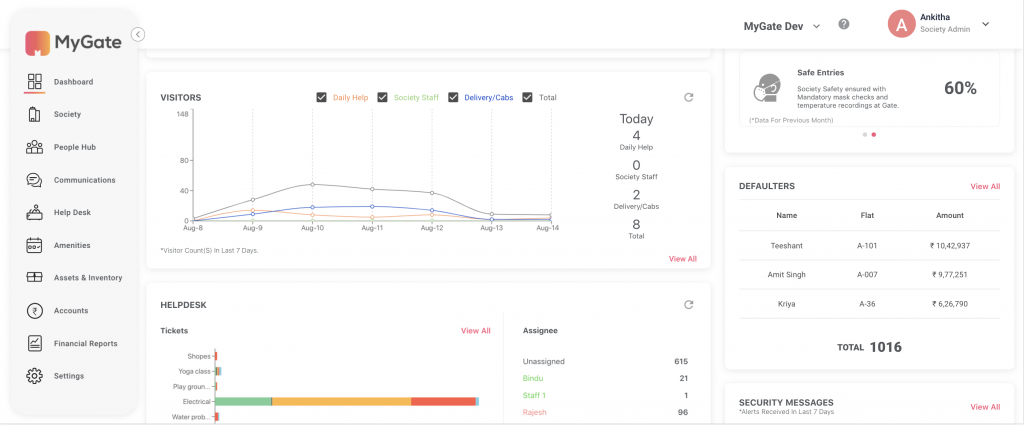
Easy navigation: The intuitive interface features a restructured menu that allows you to effortlessly access important functions quickly.
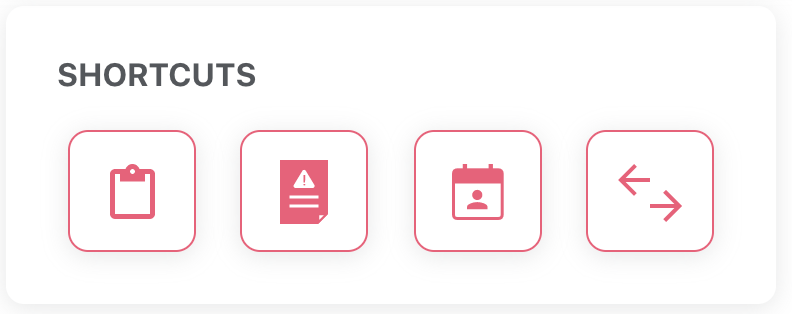
Quick action shortcuts: Frequently used features like create notice, raise complaint, entry exit report and attendance report can be easily accessed via important shortcuts on the top left corner.
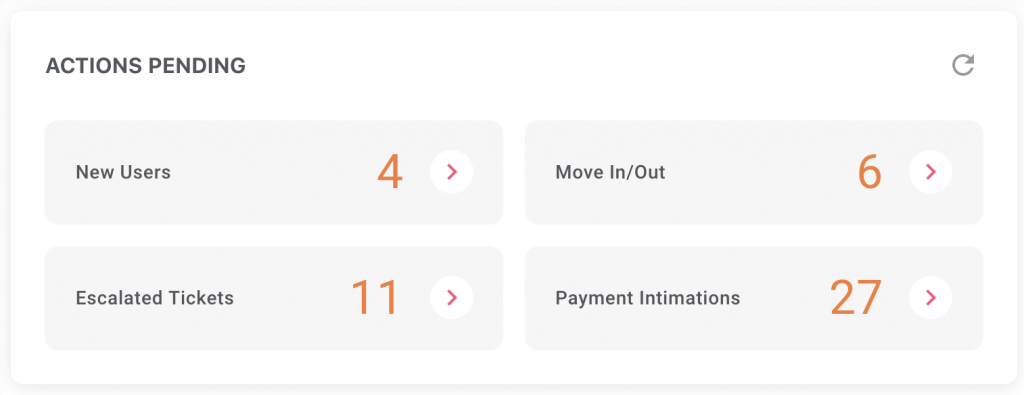
Daily updates: Know about pending items to address every time you log in, this allows you to action the critical items immediately. Vital stats on digital payments, safe entries etc., can also be viewed once you log in.
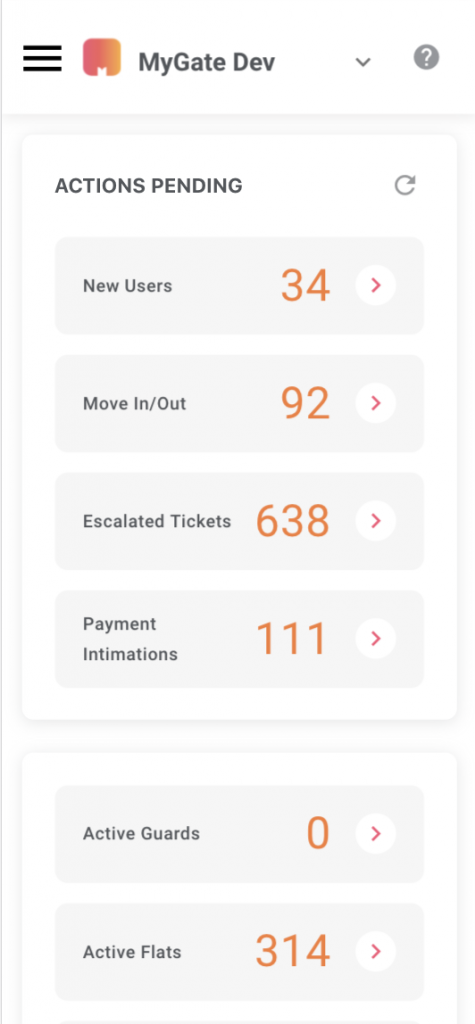
Mobile-friendly design: The new improvements are specifically designed to meet the requirements of a mobile device, allowing you to manage your community from anywhere.
Simple access control: You can now assign roles from a predefined list via “Admin User List”. You can provide or revoke access to Society Manager, Helpdesk Manager, Accountant and Society Admin roles without any external mediation.
The latest version of the ‘Society Dashboard’ is now live in all Mygate societies.
During these tough times, RWAs are doing all they can to ensure better safety for residents and society staff. At the same time, we too are doing our best to make societies safer from COVID-19.
MyGate has now introduced ‘COVID Protect’ on the app.
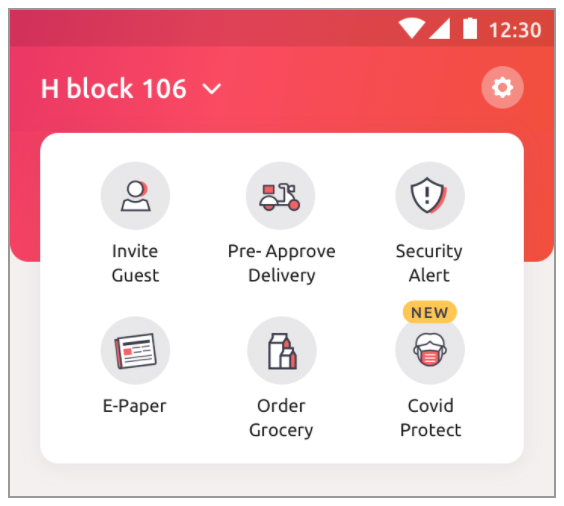
COVID Protect includes:
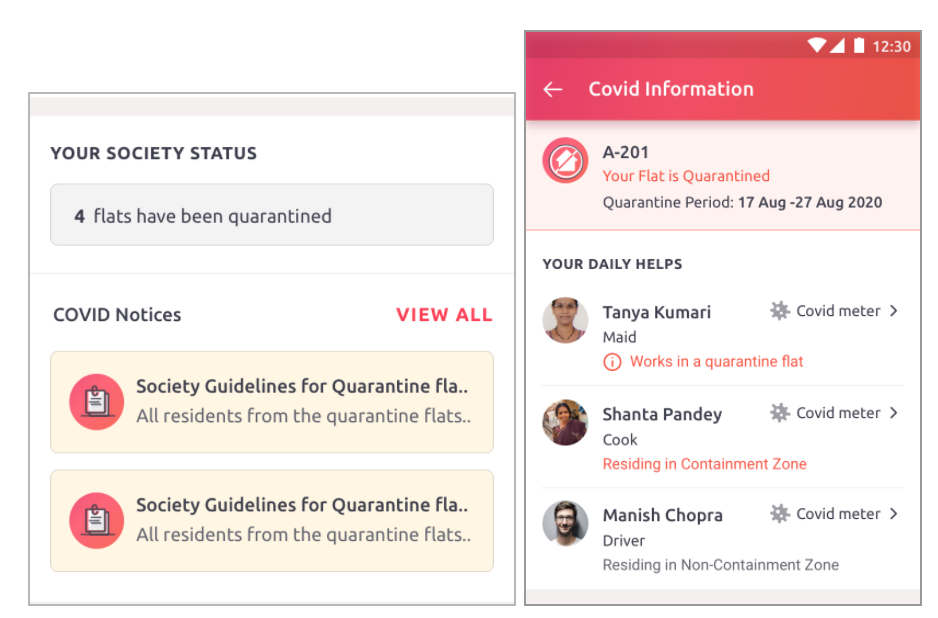
1. Comprehensive COVID Management for Communities (CCMC) to ensure better safety
MyGate has developed CCMC – a set of covid control features built to curb the spread of COVID-19. CCMC comprises of the following features:
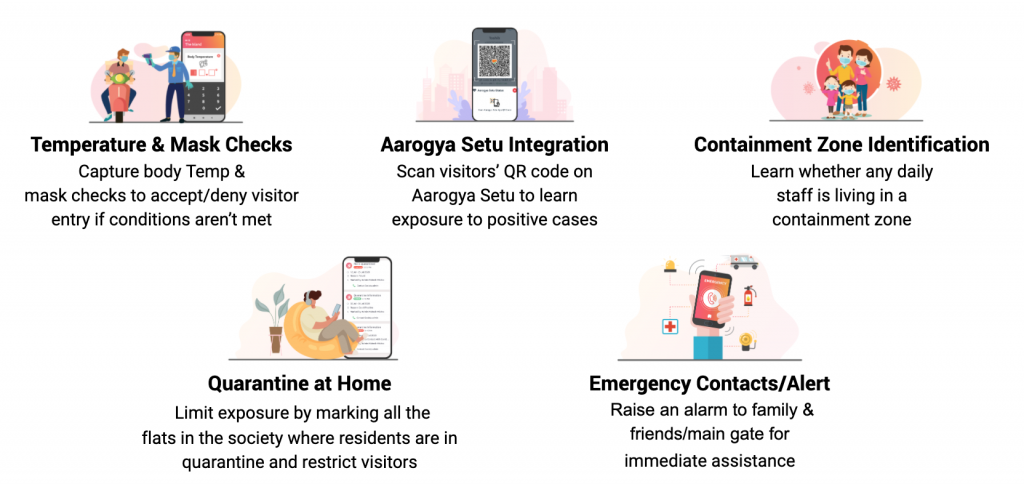
…and many more.
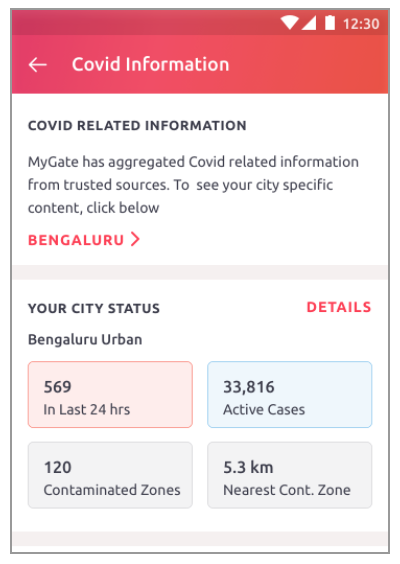
2. COVID updates & information for your city
Team MyGate & Newschecker brings to you COVID updates and the latest information from your city.
Bangalore | Chennai | Delhi | Hyderabad | Kolkata | Mumbai | Ahmedabad | Surat | Pune | Others
Fight Fake News
Now easily find out whether any information you receive is TRUE or FAKE. Simply WhatsApp a link, image or PDF to Newschecker.
 Whatsapp Newschecker
3. Exclusive MyGate partnerships to combat COVID
MyGate has partnered with Portea and Nightingales to help societies manage COVID emergencies with proper medical assistance.
Portea Medical, India’s largest home healthcare service provider, is offering the COVID Armour to MyGate societies to help manage COVID in a much safer, accessible, and affordable way.
Nightingales, a Mahindra Collaboration with over 24 years of expertise, brings the Home Quarantine Program to MyGate societies to support individuals and families quarantined at home with proper medical assistance to do so.
To know more, click here.
MyGate also brings to you Corona Kavach Policy from IFFCO TOKIO in collaboration with Willis Towers Watson. Corona Kavach Policy is a specialised, pocket-friendly insurance policy covering the COVID healthcare services provided by Portea & Nightingales.

The urban sprawl has left a lot of people hunting for houses in metropolitan cities. People looking for jobs are relocating to cities like Delhi, Mumbai, and Bangalore day by day but the hassle of looking for a good house is stopping many of them from starting a comfortable life.
Renting property is always a tricky task for both the owners and the tenants. When looking to rent a house in a housing society, tenants will have a number of questions like, what are the tenant rules and guidelines? Can the tenant be asked to evacuate without proper notice? Can the housing society deny the tenant a house etc? If you are looking to rent an apartment, we have the answers to all your questions.
Here’s all you need to know before renting an apartment in a housing society:
Housing societies can frame their own by-laws
A number of housing societies can frame their own laws. When a Resident Welfare Association (RWA) is formed, at the time of registration, the members create broad guidelines or by-laws. These tenant rules and tenant guidelines are crucial for any housing society’s day-to-day functioning.
A resident welfare association is a Non-governmental organization that represents the interests of the residents of a specific urban or suburban locality.
1. Housing society by-laws hold strong precedence
The by-laws created by the housing society association members are strong since they have been framed under the Co-operative Societies Act which is a central act. The by-laws help societies lay out specific guidelines and structure for the governance of the association, accounting practices, common area maintenance rights etc. According to experts, this Act gives society the flexibility to add the tenant guidelines of their own. For example, if the tenancy agreement states that the tenant cannot park their vehicle in the allotted parking space, then the housing society has every right to enforce this rule.
2. Housing society by-laws can be challenged in the court of law
If any of the society’s by-laws affect the fundamental or basic human rights of an individual, these by-laws can be challenged in court. Every citizen of the country has the right to reside anywhere without any discrimination. A tenant can file a police complaint against any housing society that hasn’t been fair to the tenant. The tenant can claim that it’s a violation of his or her right as a citizen.
3. Housing societies can overrule a flat owner
It is within the legal right of the owners to lease their property to whoever they want but the housing societies have a major role to play. Even though they have no constitutional right, housing societies are legally empowered to deny tenancy based on their by-laws. In case these by-laws affect the basic human rights of a person, they can be challenged in the court of law.
4. Housing societies can charge more from owners leasing their property
Housing societies can impose additional maintenance charges on apartment owners who have leased out their property. Housing societies are legally allowed to do so under The Societies Act. After all, formalities are in place with the rent agreement from the flat owners, the tenant is required to provide a letter to the society for tenancy.
5. Housing societies can deny housing to single tenants
Are you single and looking to rent an apartment? It is a common occurrence in metropolitan cities for bachelors to be denied tenancy by landlords and gated communities who are often legally empowered to do so. RWAs believe that as compared to families living on rent, bachelors are not able to provide stable incomes because of their jobs. A number of times, tenants are denied tenancy based on their food preferences and in some worse cases, even based on their religion. If the owner of the house agrees to give the house on rent, it’s a difficult task to get a no-objection certificate (NOC) from the housing society.
With people flocking to the urban areas, housing societies offer a one-stop solution with great apartments and facilities. Living on rent in a housing society is a whole new ballgame if you haven’t experienced it before. With societies forming their own by-laws, the housing society tenants rules have been set in place for the society’s smooth running. If you fit the bill, you can rent and live in your dream house.
Breast cancer is by far the most common cancer observed in women worldwide. With early detection and diagnosis, the chances of a cure are much higher. In conjunction with Breast Cancer Awareness Month, MyGate has joined hands with Niramai Health Analytix, a pioneer in breast health screening, to raise awareness via free webinar and live Q&A every Friday all through October. Participants can also get a free online breast health risk assessment.
Webinar and Live Q&A Details
Date: Every Friday this October
Time: 4 PM to 6 PM
Sign Up Now
About MyGate
MyGate is India’s largest gated community management app, benefiting thousands of housing societies, developers, society facility managers, and millions of homeowners in every Indian city.
We are delighted to announce that MyGate has been named Best Community Management Solution at Times Business Awards 2020. At a virtual summit held on October 6, Vijay Arisetty, our CEO & Co-founder, was felicitated by Padma Shri Shankar Mahadevan and award-winning actress Raveena Tandon. It’s an honour to have received this award and a great time for us to recall how our product has evolved over the past 12 months, enabling us to retain our strong leadership position.
Pioneering The Better Community Experience
In the past four years, MyGate has pioneered the vast majority of innovations in the community management space, and its solution is now in over 12,000 gated communities across the country, from major metros like Mumbai and Chennai to smaller areas like Nashik and Dehradun. The 2-million-plus residents of these communities now enjoy better security, as all visitors are validated at the gate, and a number of conveniences, from the ability to pay all society bills online to finding top-rated daily help via the app.
The utility of MyGate’s Community Management solution, though, has perhaps been most noticed since the introduction of lockdowns, as the company has built numerous partnerships and features to help its users better manage the COVID situation. ‘COVID Protect’ is a single platform for all COVID concerns where societies can find out how many flats are in quarantine, view the risk status of the residents using the Aarogya Setu app, check for facts and fake news with Newschecker, manage COVID emergencies with MyGate healthcare partners and much more. With these latest enhancements to the app, MyGate has made it easy for communities to get back on track.
Introducing the Data Privacy Gold Standard
The MyGate commitment to user security is comprehensive. And this means ensuring the privacy and security of user information, too. To strengthen our commitment in this regard, we enabled the data privacy gold standard, the General Data Protection Regulation (GDPR) guidelines, in MyGate societies this June. This change enables all MyGate users to always retain full control over their personal information. Under the GDPR guidelines, visitors don’t have to share their phone number at the gate, visitor data is deleted from the systems after 180 days by default, residents can choose for their personal data to be deleted, residents also have access to the data log and all personal information is masked.
The MyGate team has worked tirelessly in making a product worth believing in. A big thank you to the MyGate team for making this happen, showing persistence and ingenuity even in these challenging times. We also thank Times Business Awards for hosting this event and recognizing us as the Best Community Management Solution.