

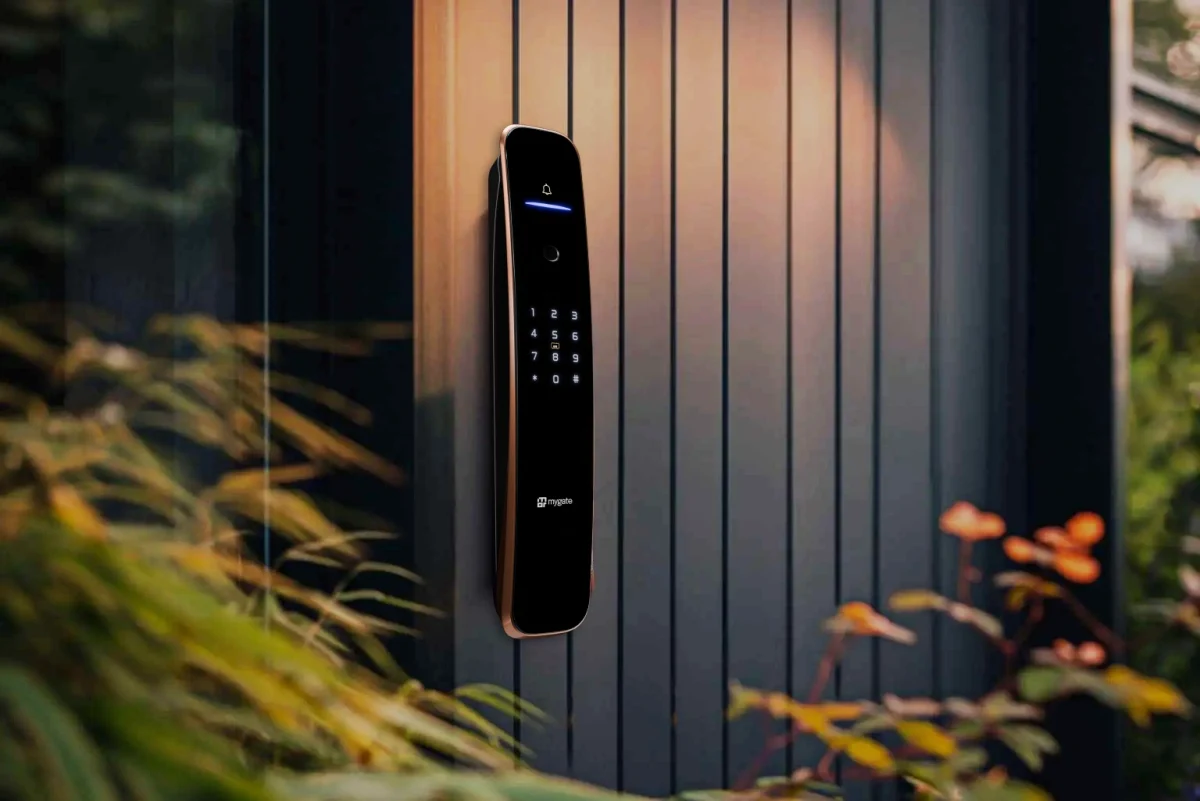
Most people in India still use a traditional key lock for their main door. You turn the key, slide in the bolt and feel safe. But in the last few years, digital locks have become common in apartments and villas across Bengaluru, Hyderabad, Mumbai and Delhi. Friends start asking whether you should switch.
The honest answer is not simple. Digital locks are better in many ways but they also have trade-offs. This article looks at security, convenience, cost, reliability and what works for Indian homes. If you are thinking about buying a smart lock, you will find real details here.
What is a traditional lock?
A traditional lock is the metal lock you have seen in every Indian house for decades. It uses a physical key. You put the key in the cylinder, turn it and the bolt moves. Most main doors have a mortise lock or a cylindrical lock with a deadbolt.
Traditional locks are simple. They do not need batteries. They do not need Wi-Fi. You can open them even if the power goes out. The downside is that you must carry the key. If you lose it, you need to cut a new one or change the whole lock. Keys can get stolen too.
What is a digital lock?
A digital lock is also called a smart lock. It opens without a key. You use a fingerprint, a PIN code, a phone app, an RFID card or a temporary OTP. Many models also have a manual key as backup.
Digital locks connect to your phone. You can see who opened the door and when. You can lock or unlock the door from anywhere. Some models send alerts if someone tries to tamper with the lock.
The main difference is that digital locks use layered authentication instead of a single key.
Security comparison: Digital vs traditional
Traditional lock security
Traditional locks can be picked, prised or bumped open by someone who knows the technique. A weak key cylinder can break if you pull hard. Old locks on apartment main doors are often easy targets.
The good part is that a traditional lock does not rely on software. There is no app to hack and no Wi-Fi to breach. But physical attacks are real.
Digital lock security
Digital locks use layered security. Many models combine fingerprint recognition with PIN codes and alarm systems. If someone tries too many wrong PINs, the lock freezes. Tamper alerts go to your phone if the lock body is touched forcefully.
Some people worry about hacking. In practice, most digital locks for homes use Bluetooth or Wi-Fi with encryption. The risk is lower than you think, especially if the brand updates its firmware regularly.
The real advantage is behaviour. Digital locks encourage better habits. You do not leave keys inside the door. You lock the door automatically. You get alerts if the door stays open. These habits make your home more secure than a traditional lock alone.
Convenience: Where digital locks win
This is the biggest win for digital locks.
With a traditional lock, you must carry the key. You forget it. You lose it. You lock yourself out. Guests come and you must be home to give them the key. Household help needs a spare key you cannot track.
With a digital lock, you use your fingerprint. You walk up to the door, place your finger and it opens. No key. No fumbling. You can also use a PIN if your finger is wet. The app lets you unlock for guests. You can send a one-time OTP to a delivery person or a visitor.
Homeowners in Bengaluru say this changes daily life. You do not worry about keys anymore. You know when your child comes home. You can check if the house help entered at the right time.
Cost: Traditional locks are cheaper
Traditional locks cost between ₹500 and ₹5,000 for a good mortise lock. Installation is simple and cheap.
Digital locks cost between ₹15,000 and ₹45,000 for a good brand. Smart locks like those from Mygate range from basic models for starter users to premium versions with face unlock and rechargeable battery. Installation is typically free with Mygate and they give a multi-year on-site warranty.
You also need to think about batteries. Digital locks use batteries that last 6 to 12 months. You get alerts when the battery is low. Traditional locks need no power.
If you count cost over five years, digital locks become competitive because you do not replace keys, do not call a locksmith and do not worry about lost access.
Reliability and power failure
Traditional locks work always. No power, no problem.
Digital locks need batteries. Most models have a low battery alert. When the battery dies, you can still open with the manual key. Some models have an external power port where you can attach a battery pack temporarily.
If your home has stable power and you check the battery once in six months, reliability is good. Smart locks send battery alerts and have a backup key option.
What do Indian homes need?
Most Indian apartments have wooden main doors with mortise locks. Door thickness is 35 to 45 mm. This matches the supported range for modern smart locks.
Villa and independent house owners often have thicker doors (45 to 60 mm). Premium digital locks support these dimensions and add three strong deadbolts for extra security.
Mygate smart locks work for anyone living in any type of home in India. You do not need to live in a Mygate community apartment to use them. The smart lock is a standalone product that installs on your main door and works with the Mygate Smart Devices app. Your community does not need to be a Mygate gated community.
Real benefits of smart locks in India
Smart locks offer features that traditional locks cannot match:
- Fingerprint entry for quick access
- Real-time notifications when the lock is used
- Tamper alerts if someone meddles with the lock
- Remote unlock via the app
- Quick OTP for visitors
- Recurring timed access for staff
- Detailed activity logs for 30 days
These features give peace of mind. You know who accessed your home and when.
When traditional locks still work
Traditional locks are still fine if:
- You rent and cannot change the lock
- Your door is damaged or very thin
- You do not want to spend on batteries or apps
- Your building does not allow smart lock installation
- You prefer simple technology
In these cases, a good quality mortise lock with a strong deadbolt is enough.
Installation and warranty in India
Traditional locks take one hour to install. A local locksmith can do it. Cost is low.
Digital locks need professional installation. Good brands include free installation and give a multi-year on-site warranty for repairs and replacements. They have long-term service coverage and a proper help centre with compatibility, warranty, returns, delivery and payment information.
This matters in India. You want a brand that will support you after purchase.
Security habits matter more than lock type
From a physical mechanism, a digital lock is not necessarily more secure than a traditional lock. But you have gains from improved habits.
With a traditional lock, people leave keys inside. They do not lock the deadbolt. They forget to check if the door is closed.
With a digital lock, you get auto-lock behaviour. You get door left open alerts. You see activity logs. You set timed access for staff. These habits make your home safer.
Final verdict: Are digital locks better?
Digital locks are better if you want:
- Keyless entry with fingerprint, PIN, app or OTP
- Remote access and real-time notifications
- Tamper alerts and auto-lock features
- Activity logs and user management
- Modern security for Indian apartments and villas
Traditional locks are better if you want:
- Lowest cost
- No batteries or apps
- Simple technology that always works
- No installation changes in a rental
For most Indian homeowners who want security and convenience, digital locks are the better choice. A good brand gives you reliability, warranty and support.
Before buying, check your door thickness, lock type and frame clearance. Most wooden doors in Indian apartments (35–45 mm) are compatible with modern smart locks. A simple five-minute measurement can ensure a smooth installation.
Your home security should not depend on a key you might lose. It should depend on a system that tells you who comes in and when. That is what digital locks offer.