

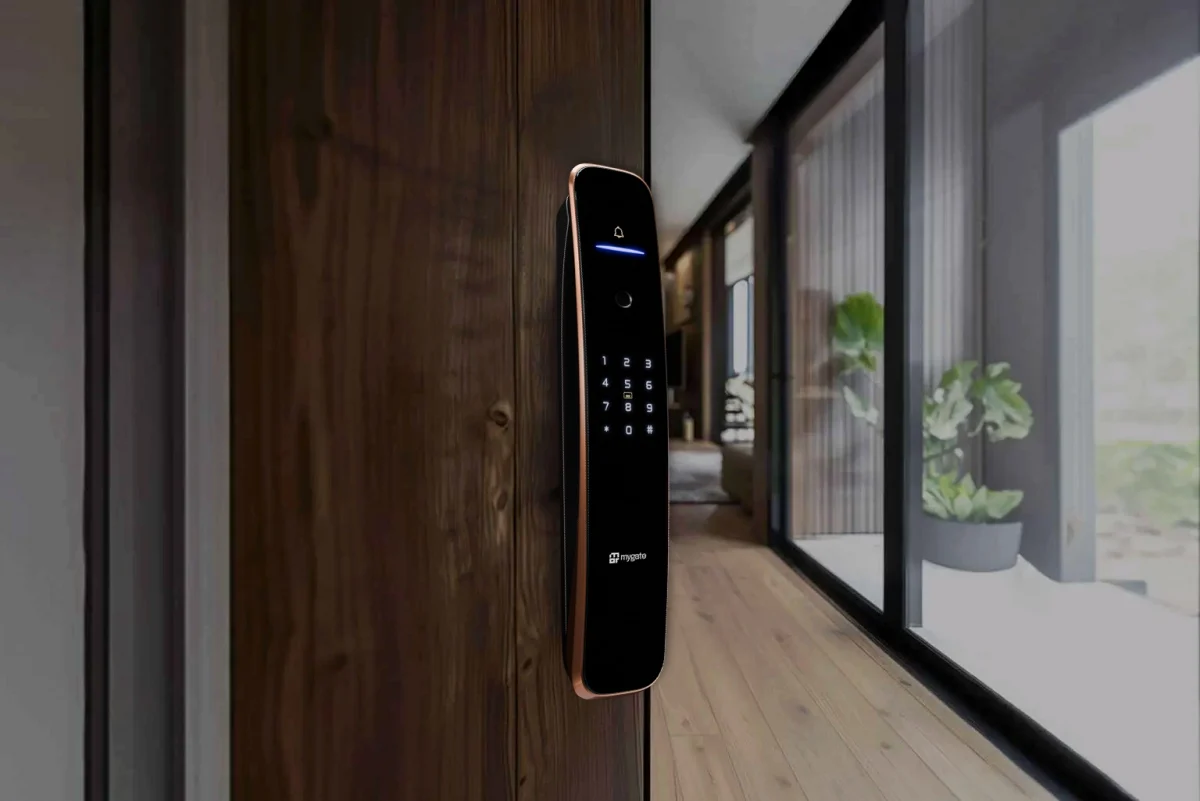
Wooden doors are the most common main entrance type in Indian homes, whether that is an independent house, a villa, or an apartment. This raises a genuinely practical question for anyone considering a smart lock. Does the existing door need to be replaced, or can a smart lock be fitted onto the wooden door already in place.
The short answer is that most smart locks can be installed on existing wooden doors without replacing them, provided the door meets a few basic requirements around thickness, material, and the condition of the existing hardware cutout. This guide covers what actually determines compatibility, how the installation process typically works, and the specific issues that come up with wooden doors that do not apply the same way to metal or glass doors.
What actually determines compatibility?
A smart lock is not a universal fit for every wooden door, but the requirements are narrower and more specific than most people assume. Compatibility generally comes down to three factors.
Door thickness matters because the lock’s internal mechanism, whether it is a mortise unit or a cylindrical body, needs to physically fit within the door. Most smart locks are designed for a standard thickness range, commonly somewhere between 35 and 50 millimetres, which covers the vast majority of residential wooden doors in India. Doors outside this range, either unusually thin or unusually thick, may need a specific model variant or additional fitting adjustments.
Door core construction matters more for wooden doors specifically than for other materials. A solid wood or solid core door provides a stable, dense surface for mounting the lock body and its internal components securely. A hollow core door, common in some lower cost or older constructions, can be more difficult to fit a smart lock into properly, since the lock mechanism needs enough solid material to anchor into rather than open space inside the door panel.
Existing hardware cutout refers to whatever lock or hardware is currently installed. If the door already has a standard mortise lock cutout, many smart locks can use the existing cutout with only minor adjustment, which significantly simplifies installation. If the door has a very old or non standard cutout, some carpentry work may be needed to adapt it, though this is usually a straightforward adjustment rather than requiring a new door altogether.
Mortise vs rim vs cylindrical locks on wooden doors
Different smart lock designs interact with wooden doors in different ways, and understanding this helps set the right expectation before installation.
Mortise style smart locks fit into a cavity cut directly into the edge of the door, similar to how many traditional deadbolts are installed. This is the most common configuration for wooden main doors in India, since most existing wooden doors already have a mortise cutout from a previous lock, making replacement relatively straightforward.
Rim locks mount on the surface of the door rather than being recessed into it. These can be a useful option for wooden doors where the existing cutout does not match a mortise unit’s requirements, since a rim lock avoids needing to modify the door’s internal cavity at all.
Cylindrical locks, which use a round bore rather than a mortise pocket, are less common as a starting point for retrofits but are sometimes used when a wooden door already has a compatible cylindrical bore from a previous lock installation.
For most wooden main doors already using a standard mortise lock, sticking with a mortise style smart lock tends to be the simplest path, since it works with the existing door preparation rather than requiring new cuts.
Do you need to replace the door, or just retrofit the lock?
In the large majority of cases, replacing the entire door is not necessary. Retrofitting a smart lock onto an existing, structurally sound wooden door is the standard approach, and most installation processes are specifically built around this rather than assuming a new door.
Replacement becomes a more realistic consideration only in specific situations, such as a door that has significantly warped or swollen over time and no longer closes flush within its frame, a hollow core door where there simply is not enough solid material to properly anchor a lock mechanism, or a door frame that has deteriorated to the point where any lock, smart or traditional, would not sit securely regardless of installation quality.
If the existing door and frame are in reasonable structural condition, which covers most wooden doors in regular use, a smart lock can generally be fitted directly onto it without needing carpentry beyond minor adjustments to the existing cutout.
Common issues specific to wooden doors
A few problems come up with wooden doors that do not apply the same way to metal or glass entrances, and it is worth knowing about these before installation rather than discovering them afterward.
Warping from humidity. Wood naturally expands and contracts with humidity and temperature changes, which is particularly relevant during monsoon season in much of India. A door that has warped slightly may no longer close as precisely as it did originally, which can affect how well a smart lock’s bolt aligns with the strike plate on the frame. This is worth checking before installation, since a door that does not close flush will cause alignment issues with any lock, not just a smart one.
Older doors with worn frames. Doors that have been in place for many years sometimes have frames that have shifted slightly or hardware cutouts that have worn beyond their original dimensions. This does not usually prevent installation, but it may require additional fitting adjustment during the process rather than a straightforward swap.
Painted or varnished surfaces. Reinstalling hardware on a door with thick paint or varnish buildup around the original cutout sometimes requires minor surface preparation to ensure the new lock sits flush and functions smoothly, particularly for the bolt mechanism.
Weight and swing. Solid wooden doors are generally heavier than hollow core alternatives, which is actually beneficial for smart lock installation, since the added weight and density gives the lock more stable material to mount securely.
None of these issues typically prevent installation altogether, but they are the kind of details that make working with an experienced installer valuable, since these adjustments are routine for someone familiar with wooden door retrofits but can be frustrating to handle without prior experience.
The typical installation process
While the exact steps vary slightly between lock models, installing a smart lock on an existing wooden door generally follows a consistent sequence.
The installer first measures the door thickness and checks the existing hardware cutout against the specific lock model’s requirements. If the existing cutout is compatible, the old lock is removed and the new smart lock body is fitted into the same opening, with only minor adjustment typically needed. If the cutout does not match, some careful adaptation of the opening is done to accommodate the new unit, still generally without requiring a full door replacement.
Once physically fitted, the lock’s electronic components are connected and tested, including registering fingerprints, setting a PIN, and confirming the mechanical key backup functions correctly alongside the electronic access methods. Alignment with the door frame’s strike plate is checked and adjusted as needed to ensure smooth, consistent locking and unlocking, which is particularly important for wooden doors that may have minor natural warping.
This entire process, for a straightforward retrofit onto a compatible existing wooden door, is generally completed within a few hours by an experienced installer, rather than requiring an extended renovation timeline.
Why does professional installation matter more for wooden doors?
While some smart lock installations are simple enough for a confident DIY attempt, wooden doors specifically benefit from professional installation more than other materials, given the variability in door age, condition, and existing hardware discussed above.
An experienced installer can quickly assess whether a door’s existing cutout is compatible, identify early signs of warping or frame issues that could affect alignment, and make the small adjustments that come up often in older wooden doors without damaging the door in the process. This is one of the areas where installation quality has a real, lasting impact on how well the lock performs day to day, since a smart lock that is slightly misaligned due to a rushed installation is a common source of frustration and premature wear, particularly on wooden doors where minor movement over time is more likely than with a rigid metal frame.
Mygate, for example, builds professional installation support into its smart lock offering specifically to handle this kind of variability, since Indian homes commonly have wooden doors of varying age and condition rather than a single standardised type. Its locks are also designed to be fitted without requiring major structural changes to the door, which matters directly for wooden doors where owners are often specifically trying to avoid the cost and disruption of door replacement just to add a smart lock.
When you might genuinely need a new door instead?
There are a small number of situations where retrofitting is not the right answer, and being upfront about this avoids setting the wrong expectation.
If a wooden door has warped significantly enough that it no longer closes flush within its frame under any reasonable adjustment, a smart lock will inherit that same alignment problem regardless of installation quality. If a door is hollow core with genuinely insufficient solid material for secure mounting, forcing a lock into it risks a mechanism that is not properly anchored, which undermines the security benefit the lock is meant to provide in the first place. And if a door frame itself has deteriorated structurally, rather than just the door panel, the issue extends beyond what a lock installation alone can resolve.
In these specific cases, addressing the door or frame issue first, whether through repair or replacement, is a better use of the investment than fitting a smart lock onto a door that will continue to cause alignment or security issues regardless of the lock installed on it.
A quick compatibility checklist
Before assuming a wooden door is ready for a smart lock, it helps to check a few things. Measure the door’s actual thickness and compare it against the lock model’s supported range. Confirm the door is solid or solid core construction rather than hollow, particularly for older or budget doors where this is not always obvious from appearance alone. Check that the door closes flush within its frame without needing to be forced, which indicates the frame and door are still properly aligned. And review the existing hardware cutout, since a standard mortise cutout generally simplifies installation considerably compared to a non standard or heavily worn opening.
Going through this checklist, or having an installer assess it during a site visit, before finalising a purchase avoids the more frustrating scenario of buying a lock only to discover during installation that the specific door needs additional work first.
FAQs
Can a smart lock be installed on an existing wooden door without replacing it?
Yes, in most cases. As long as the door meets basic thickness and construction requirements, a smart lock can typically be retrofitted onto an existing wooden door using the current or a slightly adapted hardware cutout.
Does a hollow core wooden door work with a smart lock?
It can be more difficult, since the lock mechanism needs enough solid material to anchor into securely. Solid or solid core wooden doors are generally better suited for smart lock installation than hollow core doors.
What thickness of wooden door is needed for a smart lock?
Most smart locks are designed for a standard thickness range, commonly between roughly 35 and 50 millimetres, which covers the majority of residential wooden doors, though it is worth confirming the specific range for the model being considered.
Does an old or warped wooden door affect smart lock installation?
Yes. A door that no longer closes flush within its frame due to warping can cause alignment issues with any lock, and this is worth checking and addressing before installation regardless of which lock is chosen.
Is professional installation necessary for wooden doors specifically?
It is strongly recommended, since wooden doors vary more in age, condition, and existing hardware than other materials, and an experienced installer can identify and handle these variables without damaging the door.
When would a wooden door need to be replaced instead of retrofitted?
Replacement becomes necessary mainly when the door has warped beyond reasonable adjustment, is hollow core with insufficient solid material for secure mounting, or the door frame itself has structurally deteriorated.
Conclusion
Most existing wooden doors, provided they are solid construction and in reasonable structural condition, can accommodate a smart lock without needing to be replaced. The details that matter most are door thickness, whether the door is solid or hollow core, and the condition of the existing hardware cutout, all of which a professional installer can assess quickly before any work begins. For the smaller number of cases where a door genuinely cannot support a secure retrofit, addressing that underlying issue first is a better investment than fitting a lock onto a door that will not hold it properly regardless of which model is chosen.