

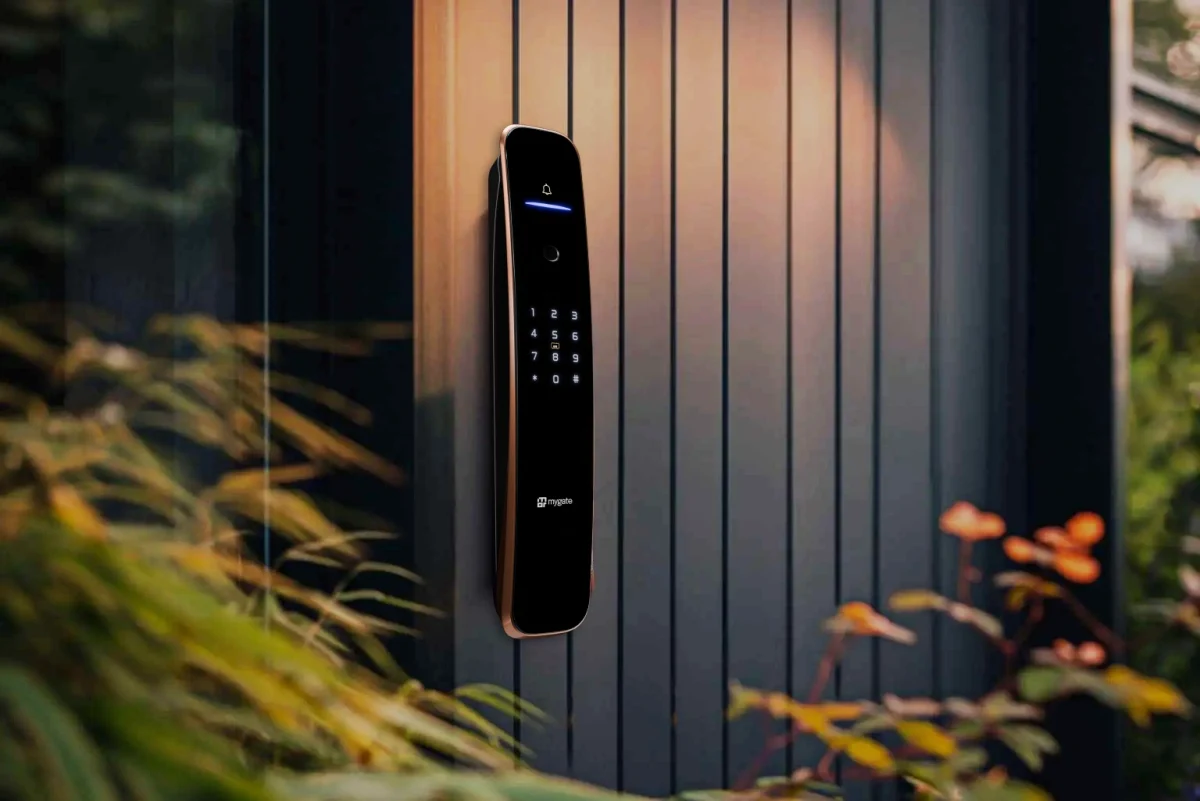
Spend enough time around Indian apartments and gated communities, and you see the same pattern repeat. Keys go missing, staff changes are frequent, kids come home at odd hours, and someone is always asking, “Who has the extra key?” Smart locks sit right in the middle of this mess and quietly fix a lot of it, which is why more people are now exploring smart locks for home as a practical upgrade.
In simple terms, a smart lock is still a proper door lock, but instead of only a metal key, you open it with a fingerprint, PIN, card or app. When installed and set up correctly, it reduces key-related headaches and gives you much better control over who can enter your home, and when.
What a smart lock is in day-to-day terms
A good smart lock has two parts:
- A solid mechanical lock body with proper bolts
- an electronic layer that lets you use fingerprints, PINs, cards and sometimes your phone similar to how a fingerprint lock for door works in everyday use.
So you are not trading security for convenience. You are taking a regular main-door lock and adding more ways to manage access.
In Indian homes, smart locks are usually used on:
- Main doors of apartments and villas
- Rental units and PG rooms
- Home offices or private rooms
- Small offices and clinics
Why smart locks suit Indian apartment life
Most urban homes have a small team: maid, cook, sometimes a babysitter, driver or part-time help. With a normal lock, your choices are to keep making duplicate keys or to be at home whenever they come. Neither scales well.
With a smart lock, you can:
- Give each staff member a separate PIN, card or fingerprint
- Remove their access in a few seconds if they stop working for you
- Avoid changing the whole lock every time staff changes
It makes staff turnover much easier to handle, which is one of the biggest reasons people start looking at the best smart locks for Indian apartments.
Kids and elderly family members
Children lose keys. Elderly parents do not always want to deal with smartphones.
Smart locks help by:
- Using fingerprints for older kids and adults
- Using simple PINs or cards for elderly parents
- In some models, letting you see when the door was opened, which is useful if you are at work
The main change is that nobody is stuck outside the door because a key was forgotten.
Busy corridors and deliveries
In towers and large societies, there is constant movement in the corridors: neighbours, security staff, building maintenance, delivery partners.
A smart lock on the main door gives you:
- Auto-locking after the door closes
- A clear locked/unlocked status
- Alerts or lockouts on repeated wrong PIN attempts in some models
You do not need to keep wondering, “Did I actually lock the door?” once you are already in the lift or parking.
Types of smart locks commonly used
Based on how they are installed
- Mortise smart locks
These replace the existing mortise lock set inside the door. They look clean, support multiple access methods, and are common on newer apartment doors and villas. - Rim / latch smart locks
These sit on the inside face of the door. They are useful when the door cannot easily take a new mortise body or when you are renting and want less carpentry work. - Glass door smart locks
These are mainly for glass cabins and some home offices.
Based on connectivity
- Offline / Bluetooth smart locks
Work with fingerprint, PIN, card and an app when you are near the door. No constant internet needed. For many homes, this is enough. - Wi‑Fi smart locks
Stay connected to your router. You can lock/unlock from anywhere, create temporary codes remotely and get basic alerts or logs. They depend on stable Wi‑Fi at the door.
Checks that matter before choosing a lock
1. Door and frame
Before looking at features, look at the door:
- Thickness and material (solid wood, engineered wood, metal)
- Current lock type (mortise, night latch, cylindrical, etc.)
- Opening direction and frame clearance
If the door is warped or the frame is weak, fix that first. A smart lock will not work well on a bad door.
2. How people will actually unlock
In real homes, you will see this pattern:
- Family members use fingerprint or PIN
- Staff use PINs or cards
- Owners sometimes use the app
- Mechanical key is kept only for emergencies
So, when you shortlist a lock, focus on:
- Fingerprint accuracy and speed
- Keypad visibility and ease of use
- How easy it is to add and remove users yourself
- Quality and location of the mechanical key override
The everyday experience depends more on these than on any extra features.
3. Hardware strength
Treat it as a main-door lock first, gadget second.
Look for:
- A strong lock body and solid bolts
- Smooth operation after proper installation
- Auto-lock options that match your family’s routine
- Proper engagement of bolts into the frame, especially in independent houses
If the hardware feels flimsy in hand, that is a warning sign.
4. Battery and power backup
Most locks use AA or AAA batteries. In practice, you should expect:
- Several months of battery life under normal use
- Clear low-battery warning well in advance
- A way to power the lock from outside for a few seconds (for example, a 9V contact point or type‑C port)
- A physical key you can use if everything else fails
Once people see actual battery life and alerts, battery worry usually goes away.
5. Installation and service
This part is often ignored at purchase and regretted later.
Ask:
- Who will install the lock and how experienced they are
- Whether on‑site service is available in your city
- Typical response times for issues
- Warranty duration for both electronics and mechanical parts
Good hardware with weak support is not a good deal for a main-door lock.
Apartments and independent houses: different angles
Apartments and gated towers
In apartments, owners usually care about:
- Neat installation on builder-supplied doors
- Auto-locking, as the door opens to a common corridor
- Easy access for family and staff
- Optional Wi‑Fi features for alerts and remote unlock
Many residents combine this with society-level visitor systems: the guard controls entry at the gate, the smart lock controls entry into the flat.
Independent houses and villas
For independent homes, priorities shift slightly:
- Stronger focus on physical lock strength
- Consideration for weather exposure (if the door is directly facing rain and sun)
- Multiple doors (main, side, back) to plan for
- Remote access and alerts for days when the house is empty
Here, smart locks often sit alongside cameras, lights and sometimes video doorbells.
Real-world use cases
Working couple with changing staff
- Each staff member gets a separate PIN or fingerprint
- When someone leaves, their access is removed the same day
- No key collection or rekeying every few months
Kids with different schedules
- Older kids use fingerprint
- Younger kids use an easy PIN
- Parents can check unlock logs on supported models if they are away
Elderly parents at home
- Parents use a simple PIN or card
- Children keep app control and backup keys
- In an emergency, a neighbour or doctor can be let in without passing physical keys around
Renting out a room or flat
- Tenants or guests get their own PIN
- When they move out, you revoke the code
- No need to physically change the lock every time
A simple way to select the right lock
You can walk through it like this:
- Check door type and condition.
- List who needs access and how comfortable they are with tech.
- Decide whether you really need Wi‑Fi or if offline is enough.
- Set a budget that allows for decent hardware and support, not just the lowest price.
- Confirm service and warranty in your city before finalising.
Living with a smart lock
Once installed correctly, a smart lock should become part of the background. A few simple habits keep it that way:
- Fix alignment issues during installation, not after complaints start
- Review and clean up access when staff or tenants change
- Replace batteries when the first warning appears
- Decide as a family how auto-lock and access sharing will work
For most Indian homes, a smart lock for home is not a showpiece. It is a practical upgrade that cuts down key problems, makes staff changes easier, and gives you more control over who enters your home. When you treat it as a serious security product and pick hardware and support accordingly, it becomes one of the most useful devices on your door.