

Analysis
Highlights
- A striking 77% of gated communities face tensions between pet owners and non-pet owners.
- These disputes often stem from noise complaints (25%), pet waste issues (60%), safety fears (44%), and allergies (17%).
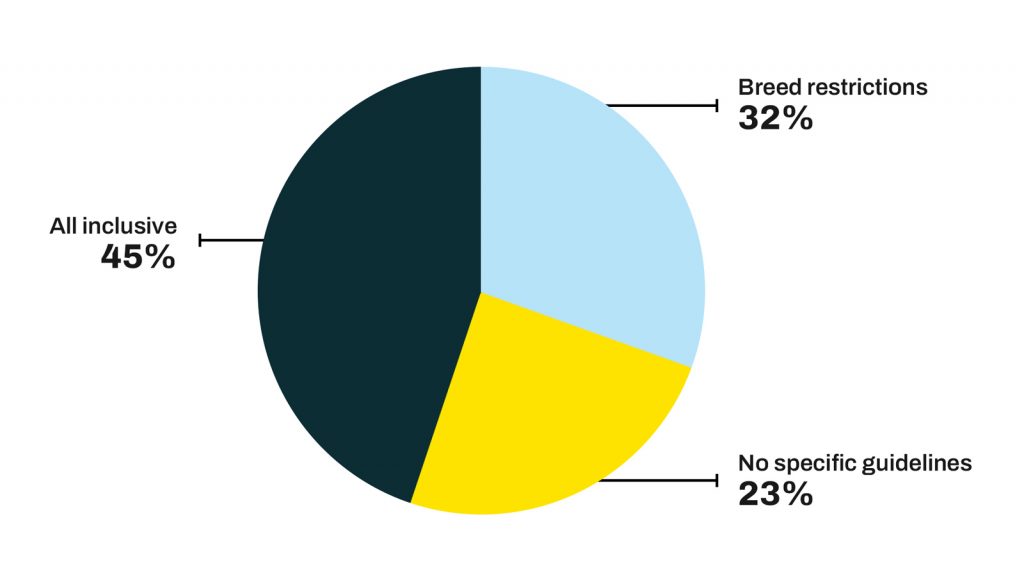
- Only 10% of communities enforce strict breed restrictions, while a notable 45% aim for inclusivity while ensuring everyone’s comfort and safety.
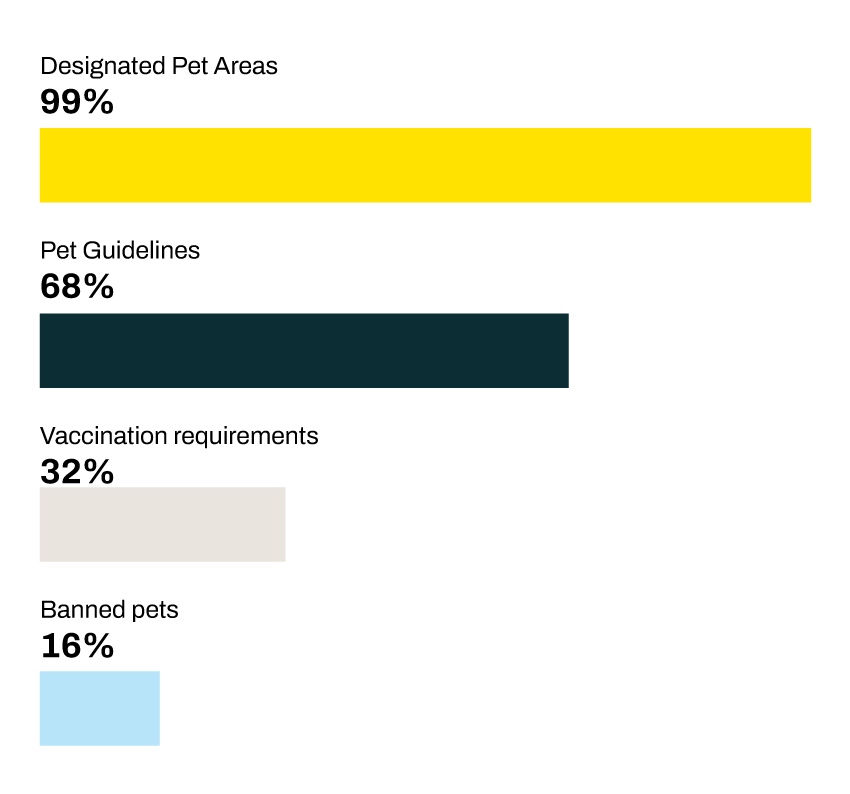
- Nearly all RWAs (99%) maintain designated pet areas meticulously to uphold community standards.
- A significant 68% establish clear guidelines for pet behaviour and owner responsibilities to foster mutual respect.
- 32% of communities create specific zones for pet activities to minimize conflicts, promoting peaceful coexistence.
Over the past year, pet management in gated communities has sparked nationwide debates and protests, from allegations of discrimination against pet owners to serious pet accidents. To understand this issue, we conducted a survey in Mygate communities, revealing significant tensions and diverse perspectives on pet ownership & management.
Community pets often strays, live freely within communities. They sleep, eat, and interact as they please, leading to mixed reactions from residents.
A substantial 80% of Resident Welfare Associations (RWAs) voiced complaints, seeing these pets as sources of conflict between pet owners and non-pet owners. Mini from Mumbai highlighted a common sentiment: “It’s unheard of in other countries—stray dogs in gated communities. Dogs should have owners.”
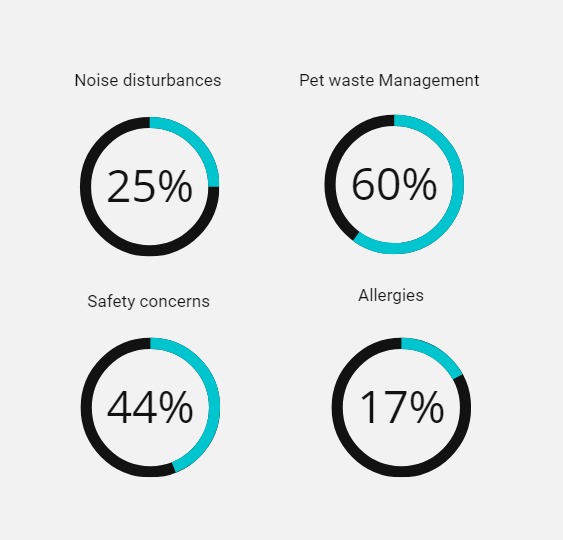
In contrast, indifference toward community pets is prevalent in places like Chennai, although resident-owned pets spark high emotions and divisions. Our survey revealed that 77% of gated communities experience conflicts between pet owners and non-pet owners. Common issues include noise disturbances (25%), pet waste management (60%), safety concerns (44%), and allergies (17%).
Residents like Shahdab from Sarjapura, Bengaluru, face challenges due to a lack of designated pet areas, forcing them to walk pets outside the premises. Souvik Das from Akshayanagar, Bengaluru, shared that despite the community’s pet-neutral stance, some residents object to pets in common areas, leading to frequent disputes.
The type of pets and their breeds also influence conflict frequency. Communities with certain dog breeds often face more disputes, prompting RWAs to implement specific policies. About 10% of communities enforce breed restrictions, while 45% prioritize inclusivity while ensuring safety and comfort. RWAs adopt various strategies, such as maintaining designated pet areas (99%), setting clear pet behaviour guidelines (68%), and enforcing vaccination & health check requirements (32%).
A Noida RWA member emphasized the recurring issue of pet-related accidents. In contrast, a Bengaluru pet committee member highlighted the community’s focus on education and responsible pet ownership over strict breed restrictions, promoting a harmonious environment.
Strategic initiatives by RWAs have shown positive outcomes. Residents appreciate the efforts such as dedicated pet zones to balance the needs of pet owners and non-pet owners, fostering inclusivity and support.
Examples of successful policies include pet registration on Mygate and the vaccination program, which reduced health concerns and enhanced community cohesion.
Effective pet management in gated communities requires a holistic approach, blending empirical data with resident experiences. By understanding conflict’s root causes, implementing inclusive policies, and fostering respect and responsibility, RWAs can create harmonious environments for pets and people. “It’s about creating a community where everyone feels valued, regardless of their pet companions,” noted a Delhi RWA member.
This exploration is crucial amid rising polarized social media debates over pets. Understanding the varied and often positive interactions between pets and humans can inform the creation of pet-friendly solutions that enhance community living for all.
An Emergency Response Team may sound like an alien concept to implement in a housing society but its many versions are commonly known to us all. A neighborhood watch or a SWAT team, or in more recent times, an ERT of medical practitioners. These are the first-hand responders in times of trouble. Let’s explore further.
What is an Emergency Response Team?
Also known as an Incident Response Team, it’s a group of people who are appointed to solve crises, and respond to emergencies (in a calm and collected manner) with practical action plans. Such a team consists of members who are qualified and prepared to handle emergencies (volunteers or designated members).
Why is an ERT needed in a housing society?
A housing society faces emergencies quite frequently. Some examples are listed below:
- COVID-19 (or other medical) cases that can escalate quickly.
- Lack of essentials during continuous lockdowns or unavailability of specific medicines and daily needs.
- Incoming (forecasted or otherwise) natural calamities like flooding issues, storms, earthquakes, etc.
- Accidental fires or structural breakdown in the building.
- Failure of society assets like composting units, electric/smart meters, fire alarm systems, etc.
- Domestic or community conflict (in some cases, physical assault).
- Intruders, robbers, and vandals are causing damage to property and disturbing the privacy of residents.
- Mishandling of hazardous materials during maintenance and repair.
Any such incidents need to be handled with caution so as to prevent any physical, monetary, psychological, and emotional distress to the spirit of community living.
How to form an Emergency Response Team (ERT) in your housing society?
Step 1: Identify the categories of emergencies within the desired Incident Response Team and appoint points of contact for each.
Points of contact for:
- Medical/Covid-19 emergencies
- Domestic/internal conflicts
- Technical failure, equipment malfunction
- Natural calamities or accidents within the premises
- Elevators safety and malfunctioning with people trapped inside.
- Any other categories as per the needs of your housing society
Step 2: Select members based on needs and qualifications
Circulate a notice to form ERT among group chats and notice boards and announce that volunteers are welcome.
Usually, the responsible members who are willing to help will step forward. Alernatively, if you already know the members who would do a good job as a reliable point of contact, you can approach them directly after discussing it within the MC meeting. Use both approaches as you’d be able to appoint a secondary point of contact through willing volunteers as well.
What will be the responsibilities of the ERT?
After you’ve appointed the primary and secondary points of contact for each category, formulate their core responsibilities and the action plan needed for their roles.
Here’s a sample.
1. ERT points of contact in society for accidental fire and natural disasters should have:
- An action plan for evacuation
- Fire safety plan
- A drill practiced in advance
- A plan for securing vehicles and other property of the society.
- Train the security guard and maintenance staff in damage control.
2. Points of contact in society for internal conflicts, robbery, vandalism should:
- Be able to intervene immediately.
- Hear out all parties involved, devise a fair judgment, and impose it.
- Apprehend the perpetrators immediately and hand them over to the local authorities.
- Set up a neighborhood patrol if needed.
3. ERT points of contact in society for Medical/ Covid-related emergencies should be responsible for:
- Arranging for first aid and CPR, temporary solutions like bandaging wounds, PPE /isolation protocols.
- Providing a list of nearby health facilities and doctors on call.
- Distributing safety measures for children, elderly family members of the patient.
- Making medicines or supplements available.
4. Points of contact in society for equipment failure should:
- Maintain a list of all associated vendors and their contact information.
- Be trained in emergency lift rescue protocols (usually, the guard and facilities manager should be able to handle such scenarios).
- Solve minor technical glitches or get someone from within the society premises to help immediately.
Above are some examples. However, each point of contact can create their own action plans and acquire skill sets to implement them based on society’s requirements. A society can set aside funds for ERT activities or go ad hoc for funds if needed. Team members can be from the MC/RWA as well as regular members.
Common rules for ERT members
- Protect people first, the property later.
- Be available at all times to respond.
- Choose ERT members with specific skill sets (e.g. medical health professionals, engineers, people with necessary life experience who may be in managerial/leadership roles in their careers or experienced business owners.)
- They should be self-trained in their ERT roles with periodic retraining to maintenance staff and guards.
- Each ERT member should make their own checklist along with an action plan to stay on top when an emergency strikes.
- Firefighting/escape and drills and basic medical emergency, first aid skills should be taught mandatorily to all ERT members.
An Emergency Response Team should be able to act swiftly, think on their feet, and consider the good of the many above selfish motives.